Understand carpal tunnel treatment options: A Clinical Overview of Diagnostic and Management Strategies
Clinical Perspectives on Identifying Carpal Tunnel Syndrome
Carpal tunnel syndrome (CTS) is a prevalent peripheral nerve entrapment disorder, impacting approximately 1 in 20 adults 3. The condition is characterized by the compression of the median nerve as it traverses the narrow carpal tunnel in the wrist, often manifesting as numbness, burning, or tingling in the thumb, index, middle, and parts of the ring finger 2, 5, 9. Accurate diagnosis typically begins with a clinical history, where physicians assess patterns such as nocturnal symptoms or numbness during activity 1. The CTS-6 clinical prediction tool has emerged as a highly effective diagnostic instrument, demonstrating performance comparable to electrodiagnostic testing 3.
Diagnostic confirmation may involve various methodologies, though their clinical utility varies. While X-rays are useful for excluding structural issues like fractures or arthritis, they do not directly confirm CTS 1. Ultrasound imaging and electromyography (EMG) or nerve conduction studies are frequently employed to quantify nerve compression and electrical activity within the affected muscles 1. Practitioners must distinguish these symptoms from other neuropathies, particularly when sensations extend into the little finger, which is not innervated by the median nerve 1.
Non-Surgical Interventions and Conservative Management
For many individuals, particularly those presenting with mild to moderate symptoms, initial management focuses on non-surgical or conservative approaches. Wrist splinting is widely considered a foundational treatment, specifically intended to maintain the wrist in a neutral position to reduce nocturnal pressure on the median nerve 2, 7. Because the hand naturally swells at night, keeping the wrist straight helps mitigate the compression caused by nighttime flexion 7. Many clinicians also emphasize the role of lifestyle modifications and ergonomic adjustments to alleviate daily strain on the wrist joint 2, 9.
Beyond bracing, therapeutic exercises and clinical treatments offer additional avenues for relief. Nerve gliding exercises are designed to improve the mobility of the median nerve within the tunnel structure 9. While non-steroidal anti-inflammatory drugs (NSAIDs) are sometimes used for temporary pain management, they do not address the underlying mechanical compression of the nerve 9. Corticosteroid injections represent a more targeted intervention for reducing inflammation and pressure, though evidence suggests these results are typically short-term rather than curative 3, 8, 9.
Comparative Analysis of Advanced Therapeutic Modalities
Emerging research has expanded the understanding of how various treatments perform over time. A network meta-analysis of randomized controlled trials highlighted that combining corticosteroid injections with splinting ranked highly for short-term functional outcomes 6. In the mid-term, extracorporeal shock wave therapy (ESWT) showed strong potential, particularly for symptom severity reduction in mild to moderate cases 6. Platelet-rich plasma (PRP) injections have also shown promise in short-term management, suggesting that non-invasive therapies remain a primary consideration before moving toward surgical options 6.
| Intervention | Expected Outcome Context |
|---|---|
| Splinting | Primary for nocturnal symptom relief |
| Corticosteroid Injection | Temporary inflammation reduction |
| ESWT | Mid-term symptom severity management |
| PRP Injections | Short-term efficacy in mild-moderate cases |
Surgical Decompression and Its Indications
Carpal tunnel release surgery is generally reserved for cases that prove resistant to conservative measures, or where there is clear evidence of muscle atrophy and significant nerve damage 5, 9. The primary goal of the procedure is to cut the transverse carpal ligament to increase the volume of the carpal tunnel, thereby relieving the pressure on the median nerve 5, 9. Surgeons may perform this via an open incision or through endoscopic techniques designed to minimize tissue trauma 8.
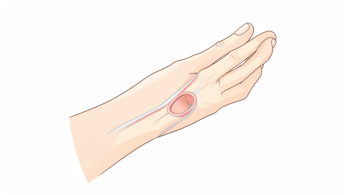
The shift toward surgical intervention often follows a failed trial of conservative therapy. Comparative data indicates that surgical patients may experience higher recovery rates than those receiving repeat injections. One randomized trial noted that a significant percentage of patients in a surgery-first group maintained recovery at 18 months without requiring further treatments, compared to a much smaller cohort in an injection-first group, where nearly half eventually required surgery to address persistent symptoms 10. Consequently, surgery is often viewed as the more definitive, long-term decompression method for severe or recalcitrant cases 8.
Postoperative Recovery and Rehabilitation Expectations
Recovery trajectories following carpal tunnel release vary based on the surgical technique used and individual health factors. While refinements such as mini-open and endoscopic approaches are aimed at expediting recovery, the restoration of full grip and pinch strength can take several months 8, 9. Postoperative protocols have evolved, and current clinical guidelines indicate that intensive physical therapy or extended immobilization post-surgery may not offer significant benefits compared to standard recovery practices 3.
Patients are typically advised that while surgical decompression alleviates the mechanical constraint on the nerve, the underlying neurological recovery depends on the duration and severity of the compression prior to the intervention. Surgeons emphasize that identifying and managing systemic contributors-such as diabetes, thyroid disease, or rheumatoid arthritis-is essential for sustaining surgical outcomes 5. Regular follow-up appointments allow clinicians to monitor the progression of sensory and motor function improvements as the median nerve heals.
The Role of Patient-Reported Outcomes in Long-Term Monitoring
Standardized measurement tools are critical for evaluating the effectiveness of both surgical and non-surgical treatments. Tools such as the Boston Carpal Tunnel Questionnaire (BCTQ), the Disabilities of the Arm, Shoulder and Hand (DASH) questionnaire, and the Patient Reported Outcome Measure Information System (PROMIS) are utilized to track functional recovery and symptom severity 4, 6. These validated instruments enable clinicians to move beyond subjective reports and gain objective data regarding how specific treatments affect a patient’s daily quality of life and dexterity 4.
Clinical management teams increasingly rely on these outcome measures to refine the 'ladder of care' for CTS. By utilizing these scores, providers can make evidence-based decisions on when to pivot from conservative management to more invasive decompression techniques. As the field continues to evolve, the integration of patient-reported data ensures that treatment plans remain aligned with functional recovery, helping to mitigate the long-term impact of nerve compression on occupational and daily activities 5, 6.
Sources
- Mayo Clinic - Carpal Tunnel Syndrome Diagnosis and Treatment (https://www.mayoclinic.org/diseases-conditions/carpal-tunnel-syndrome/diagnosis-treatment/drc-20355608)
- Harvard Health Publishing - What's the best treatment for carpal tunnel syndrome? (https://www.health.harvard.edu/bones-and-joints/whats-the-best-treatment-for-carpal-tunnel-syndrome)
- American Family Physician - Management of Carpal Tunnel Syndrome: Guidelines From the AAOS (https://www.aafp.org/afp/2025/0900/practice-guidelines-carpal-tunnel-syndrome)
- APTA Orthopedics - Hand Pain and Sensory Deficits: Carpal Tunnel Syndrome: Revision 2026 (https://www.orthopt.org/content/publications/pub-cpg/hand-pain-and-sensory-deficits-carpal-tunnel-syndrome-revision-2026)
- Johns Hopkins Medicine - Carpal Tunnel Release (https://www.hopkinsmedicine.org/health/treatment-tests-and-therapies/carpal-tunnel-release)
- British Journal of Surgery - Management of carpal tunnel syndrome: a network meta-analysis (https://doi.org/10.1093/bjs/znag018.169)
- The Well by Northwell - How to Treat Carpal Tunnel: What Really Works (and What Doesn’t) (https://thewell.northwell.edu/joint-health-orthopedics/carpal-tunnel-treatment)
- PMC - Evolution of Carpal Tunnel Syndrome Treatment: A Narrative Review (https://pmc.ncbi.nlm.nih.gov/articles/PMC12821589/)
- Acibadem Hospitals Group - Treatment for Carpal Tunnel: Signs and Options (https://acibademinternational.com/health-library/treatment-for-carpal-tunnel-early-signs-risk-factors-and-how-it-is-treated/)
- Harvard Health Publishing - Surgery may have an edge over injections for carpal tunnel syndrome (https://www.health.harvard.edu/diseases-and-conditions/surgery-may-have-an-edge-over-injections-for-carpal-tunnel-syndrome)
Authored by 24Trendz team