Early symptoms of Crohn's Disease you should know: A Clinical Guide to Recognizing Early Patterns
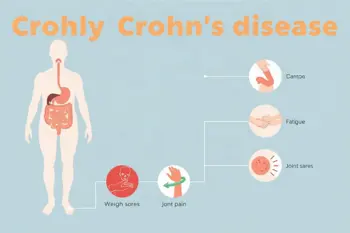
Early symptoms of Crohn's Disease you should know include persistent diarrhea, abdominal pain or cramping, unexplained weight loss, fatigue, appetite changes, and fever. Symptoms differ according to the location and severity of inflammation, and some people notice mouth, skin, eye, or joint problems before prominent digestive symptoms appear. 1
Digestive symptoms that may appear first
Diarrhea, abdominal pain, and cramping are the symptoms most consistently identified in clinical descriptions of Crohn’s disease. Loose or frequent stools may occur when inflammation affects the small intestine or colon. Some people also report bloating, constipation, or a feeling that a bowel movement is incomplete. The pattern can be intermittent because Crohn’s commonly involves flares followed by periods of remission. 12
Blood in the stool is another important digestive warning sign, although its presence and amount can vary with the affected area and intensity of inflammation. Nausea, reduced appetite, and vomiting may accompany intestinal symptoms. Pain that repeatedly disrupts daily activities, diarrhea that keeps returning, or visible blood should not be treated as a diagnosis by itself, because several gastrointestinal conditions can produce similar complaints. 247
Weight loss, fatigue, and whole-body changes
Unexplained weight loss can develop when inflammation reduces appetite, causes nausea, or interferes with normal nutrient absorption. Fatigue is also frequently reported and may reflect the inflammatory process or anemia. NIDDK lists anemia, tiredness, fever, nausea, appetite loss, and vomiting among symptoms associated with Crohn’s disease, while clinical references describe weight loss and fatigue as common presenting concerns. 15
Fever may accompany intestinal inflammation, and some people experience a general decline in energy before digestive symptoms are clearly recognized. These systemic features are not specific to Crohn’s disease, so they require context rather than self-diagnosis. A combination of recurring diarrhea, abdominal pain, weight loss, fatigue, or fever is more clinically significant than one isolated episode, particularly when symptoms persist or gradually intensify. 148
Symptoms outside the digestive tract
Crohn’s disease can produce extraintestinal manifestations, meaning symptoms outside the digestive tract. Joint pain or soreness, eye redness or pain, and skin changes such as red, tender bumps are recognized possibilities. Johns Hopkins also lists muscle or joint pain, skin rashes, and mouth sores. These findings may occur alongside bowel symptoms or, in some cases, become noticeable before the gastrointestinal pattern is obvious. 12
Mouth ulcers can resemble ordinary canker sores, while skin and joint symptoms may be attributed to unrelated causes. Their significance increases when they recur with diarrhea, cramping, appetite loss, fatigue, or weight changes. Extraintestinal symptoms do not establish Crohn’s disease, but documenting when they occur can help clinicians assess whether multiple complaints may reflect an inflammatory bowel condition rather than separate problems. 23
Anal and nutritional warning signs
Inflammation can affect areas around the anus, where symptoms may include pain, drainage, fissures, skin tags, or fistulas. Memorial Health System identifies pain or drainage near the anus as a possible symptom, while Johns Hopkins describes Crohn’s disease as capable of affecting the gastrointestinal tract from the mouth through the anal region. These symptoms can be particularly important when they occur with chronic diarrhea or abdominal discomfort. 28
Reduced appetite, nausea, vomiting, and weight loss can create nutritional concerns, while anemia may contribute to persistent tiredness. Crohn’s disease may involve the small intestine, colon, or both, and the location of inflammation influences the symptoms experienced. Because symptom severity and nutritional effects differ among individuals, a seemingly mild digestive complaint can still warrant assessment when it is recurrent, associated with weight loss, or accompanied by anemia-related fatigue. 14
Who can develop Crohn’s disease
Crohn’s disease can develop at any age or race, although Johns Hopkins reports that it is most commonly diagnosed in older children, teenagers, and young adults, especially between ages 15 and 35. NIDDK identifies ages 20 to 29, a family history of inflammatory bowel disease, Jewish descent, and cigarette smoking as factors associated with increased likelihood. These factors indicate risk, not certainty, and people without them can still develop the condition. 26
Researchers do not identify one confirmed cause. NIDDK describes possible roles for abnormal immune reactions, genes, the microbiome, and environmental influences, and reports that smoking may double the chance of developing Crohn’s disease. A parent or sibling with Crohn’s disease may also increase susceptibility. Risk factors should therefore be considered alongside symptoms, not used to rule the condition in or out. 1
How persistent symptoms are evaluated
There is no single symptom that confirms Crohn’s disease, and its complaints can resemble other conditions, including irritable bowel syndrome. A diagnosis generally relies on a combination of clinical assessment, endoscopy, tissue examination, and imaging. Merck describes colonoscopy, video capsule endoscopy, and computed tomography or magnetic resonance imaging as diagnostic tools, while StatPearls identifies endoscopy, histopathology, and cross-sectional imaging as part of diagnosis. 457
Medical evaluation is particularly relevant when diarrhea, abdominal pain, blood in the stool, unexplained weight loss, fatigue, fever, or recurring extraintestinal symptoms continue. Crohn’s often begins slowly and may worsen over time, with flares separated by symptom-free periods. A temporary improvement does not establish that inflammation has resolved. Professional assessment helps distinguish Crohn’s disease from other causes and determines whether treatment is needed to control inflammation and reduce complications. 678
Sources
- National Institute of Diabetes and Digestive and Kidney Diseases, Symptoms & Causes of Crohn’s Disease: https://www.niddk.nih.gov/health-information/digestive-diseases/crohns-disease/symptoms-causes
- Johns Hopkins Medicine, Crohn’s Disease: https://www.hopkinsmedicine.org/health/conditions-and-diseases/crohns-disease
- Everyday Health, Early Symptoms of Crohn’s Disease: 7 to Know: https://www.everydayhealth.com/digestive-health/early-crohns-disease/
- Merck Manual Consumer Version, Crohn Disease: https://www.merckmanuals.com/home/digestive-disorders/inflammatory-bowel-disease-ibd/crohn-disease
- NCBI Bookshelf, StatPearls, Crohn Disease: https://www.ncbi.nlm.nih.gov/books/NBK436021/
- American Medical Association, What doctors want patients to know about Crohn’s disease: https://www.ama-assn.org/public-health/prevention-wellness/what-doctors-want-patients-know-about-crohns-disease
- AARP, Don’t Ignore These 10 Warning Signs of Crohn’s Disease: https://www.aarp.org/health/conditions-treatments/crohns-disease-warning-signs/
- Memorial Health System, Crohn’s disease: https://www.mhsystem.org/health-library/con-20312395/
Authored by 24Trendz team