Natural remedies for sciatica: An evidence-based home-care report
Natural remedies for sciatica are commonly sought for home pain relief, particularly when symptoms travel from the lower back through the buttock and down one leg. Sciatica describes a symptom pattern rather than one diagnosis, so self-care may ease irritation but cannot identify or correct every underlying cause. 1
Understanding sciatica and its causes
Sciatica commonly involves shooting pain, tingling, numbness, or weakness along the sciatic nerve pathway. Reported causes include a herniated disc, spinal stenosis, degenerative spinal changes, bone spurs, injury, and, in some cases, tightness around the piriformis muscle. Symptoms often worsen during prolonged sitting because posture and sustained pressure can increase irritation around the lower spine. 3
Research summarized in the supplied clinical review states that physical examination and medical history are primary diagnostic tools. The same review notes that clinical guidelines generally emphasize nonsurgical care, with exercise showing meaningful effects in pain management. Sciatica is common, with some sources estimating that up to 40% of people experience it at some point in life. 2
Movement, walking, and posture
Gentle, low-impact movement is a central part of conservative home care. Walking and swimming can maintain mobility without the heavy strain associated with higher-impact activity, while prolonged bed rest may increase stiffness and delay recovery. Movement should remain within tolerable limits, because an activity that consistently increases radiating pain, numbness, or weakness may require professional modification. 1
Posture changes can reduce avoidable pressure during daily activities. A seated workstation should support an upright position, with regular interruptions to long periods of sitting. Lifting techniques also matter: the supplied home-remedy research advises bending the knees rather than the waist when handling heavy objects. These measures address mechanical aggravation, but they do not replace evaluation when symptoms persist or progress. 7
Stretching and therapeutic exercise
Targeted stretching may help when tight hips, hamstrings, or lower-back muscles contribute to discomfort. Commonly described movements include knee-to-chest, piriformis, gentle spinal mobility, and cat-cow exercises. The movements should be slow and controlled rather than forced. Increased leg pain, new tingling, or worsening numbness is a reason to stop that exercise rather than push through it. 4
Physical therapy can provide a more individualized exercise plan, particularly when symptoms involve weakness or have continued beyond the early phase. Core-strengthening work is often included to improve spinal support and reduce the burden on the lower back. The clinical review also identifies neural mobilization as a possible method for short-term pain improvement, although treatment selection depends on the cause and examination findings. 2
Heat, cold, and sleep positioning
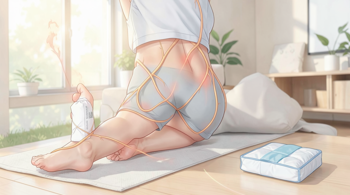
Cold packs may temporarily numb pain and reduce local inflammation, while heat can relax tight muscles and improve comfort. One clinical source recommends applying an ice pack wrapped in a towel for about 15 to 20 minutes, with limited daily repetition, followed by warmth when that feels more helpful. Direct contact between ice or a heating device and skin should be avoided to reduce the risk of injury. 7
There is no single universally preferred temperature treatment. Some people find cold more useful during a sharp flare, while others respond better to warmth for muscular tightness. Comfortable sleep positioning can also reduce strain, although the supplied sources do not establish one required position or mattress type. A practical approach is to use the position that reduces leg symptoms without producing prolonged stiffness. 1
Supplements and complementary therapies
Turmeric, curcumin, ginger, antioxidant blends, and magnesium are frequently discussed as natural options. The available research supplied for this article describes plausible anti-inflammatory or muscle-relaxing mechanisms, but it does not establish that these substances reliably treat the nerve compression causing sciatica. “Natural” therefore should not be interpreted as automatically effective or appropriate for every person. 3
Acupuncture, spinal manipulation, massage, and related hands-on methods may be considered complementary therapies. The clinical review reports that warm-needle acupuncture may outperform ordinary acupuncture in some studies, while evidence for manipulative therapy is described as partly indirect. Another evidence summary says spinal manipulation, physical therapy, targeted exercise, and heat are used in nonsurgical care, but confidence in some effect estimates is very low. 2 6
Medication limits and medical warning signs
Although this guide focuses on natural care, over-the-counter nonsteroidal anti-inflammatory drugs such as ibuprofen or naproxen are commonly used for inflammation-related pain. They can carry risks and may be unsuitable with certain medical conditions, medicines, or pregnancy, so product labeling and clinician guidance are relevant. The supplied review reports no evidence supporting pregabalin or gabapentin for sciatica pain, illustrating why treatments should be assessed by evidence rather than reputation. 2 9
Urgent medical attention is warranted for new loss of bladder or bowel control, numbness in the groin or saddle area, or rapidly worsening leg weakness. Severe or progressive neurological symptoms should not be managed solely with stretches, supplements, or home temperature therapy. Persistent, recurrent, or worsening pain also merits clinical assessment because the underlying cause may require imaging, physical therapy, medication review, or another treatment plan. 5 6
Sources
- Chiro One, “How to Treat Sciatica Pain at Home Naturally”
- IJPS Journal, “A Clinical Review on Non-Surgical Management of Sciatica Pain in Adults”
- Sciatica.pro, “Natural Remedies for Sciatica: Evidence Guide”
- RemedyTip, “How to Treat Sciatica Naturally”
- DT Chiropractic, “Sciatica Treatment: What Actually Works”
- Apex Chiropractic, “Non-Surgical Sciatica Treatment: An Evidence-Based Guide”
- Cleveland Clinic, sciatica treatment information
- Harvard Health Publishing, sciatica pain relief information
- Mayo Clinic, sciatica diagnosis and treatment information
Authored by 24Trendz team