Early symptoms of rheumatoid arthritis you should know: A clinical overview of diagnostic indicators
Understanding the early symptoms of rheumatoid arthritis you should know is a vital step in navigating the onset of this chronic autoimmune condition 1. Unlike osteoarthritis, which is primarily driven by mechanical wear and tear, rheumatoid arthritis (RA) is a systemic autoimmune disease where the immune system mistakenly identifies the synovium-the thin lining of the joints-as a threat 3, 8. This process triggers widespread inflammation, which can lead to permanent joint erosion if left unmanaged 4, 9. Because early symptoms are often subtle and can mimic everyday fatigue or minor injuries, recognizing the specific clinical patterns is critical for facilitating prompt medical evaluation and potential therapeutic intervention 7.
The Hallmark of Morning Stiffness
One of the most clinically significant indicators of RA is the duration of morning stiffness. While many individuals may experience brief joint soreness after waking, persistent stiffness that lasts for more than 60 minutes is a classic early warning sign specific to rheumatoid arthritis 2, 5. This stiffness is not confined to the initial morning period; it often recurs after prolonged periods of physical inactivity or sitting still 5, 11. The biological basis for this phenomenon lies in the inflammatory process within the joint lining, which causes fluid buildup and resistance to movement until blood flow and joint usage help alleviate the sensation 3, 7.
Symmetrical Joint Involvement
A distinctive characteristic of rheumatoid arthritis is its tendency to follow a symmetrical pattern 3, 4. If an individual experiences pain, swelling, or tenderness in a joint on one side of the body, the corresponding joint on the opposite side is frequently affected in a similar manner 3, 12. This systemic nature of the immune response often manifests first in the small peripheral joints, particularly those in the hands, wrists, and feet 2, 4. Observing whether symptoms appear in pairs can assist individuals and clinicians in distinguishing RA from injury-based joint pain, which is typically localized to a single, traumatized area 6.
Systemic Symptoms Beyond the Joints
Because RA is a systemic disease rather than a localized orthopedic condition, it frequently produces non-joint symptoms that reflect the body's overall inflammatory state 4, 9. Patients often report persistent fatigue, low-grade fevers, and a general feeling of malaise that may precede the development of noticeable joint pain 5, 9. In some instances, these systemic markers also include unexplained weight loss and a noticeable reduction in appetite 14. These symptoms occur because the cytokines and other inflammatory mediators circulating in the blood systemically affect the body's energy regulation and metabolic processes 4.
Visual and Sensory Changes in Joints
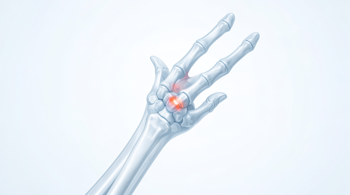
Early-stage inflammation often manifests through visible and tactile changes in the affected area. Joints may feel warm to the touch, appear visibly swollen, or show signs of redness due to the increased blood flow and chemical activity occurring within the synovial tissue 3, 15. Individuals might notice a reduced range of motion or a decline in grip strength, which can make routine daily activities-such as opening jars or typing-increasingly difficult 8, 16. Unlike temporary muscle soreness, these joint-based symptoms tend to be chronic and progressive, requiring professional assessment to determine the underlying cause 9.
Clinical Diagnostic Considerations
Diagnosing RA in its nascent stages involves a combination of clinical assessment and laboratory data. Clinicians typically evaluate the presence of the symmetrical patterns and morning stiffness described above alongside specialized blood tests 2, 5. Common markers include rheumatoid factor (RF) and anti-cyclic citrullinated peptide (anti-CCP) antibodies, which help confirm the autoimmune nature of the inflammation 2, 5. Diagnostic imaging, such as X-rays, is also utilized to observe the joints for early structural changes, ensuring that treatment with disease-modifying antirheumatic drugs (DMARDs) can be initiated to slow or prevent permanent damage 2, 4.
Epidemiological Context and Risk Factors
Rheumatoid arthritis affects approximately 0.5% of the population worldwide, demonstrating a consistent presence regardless of race or geographic origin 2, 4. Research indicates that women are 2 to 3 times more likely to develop the condition than men, and while onset can occur at any age, it is most frequently diagnosed between the ages of 35 and 50 2, 4. Additional risk factors include a family history of the disease and long-term cigarette smoking, which is linked to both increased risk and disease severity 1. Recognizing these epidemiological factors can help individuals who have a higher statistical likelihood of developing RA to remain vigilant regarding potential symptoms 1, 10.
Sources
- https://medlineplus.gov/rheumatoidarthritis.html
- https://www.merckmanuals.com/home/bone-joint-and-muscle-disorders/joint-disorders/rheumatoid-arthritis-ra
- https://www.health.harvard.edu/bones-and-joints/rheumatoid-arthritis-a-to-z
- https://www.merckmanuals.com/professional/musculoskeletal-and-connective-tissue-disorders/joint-disorders/rheumatoid-arthritis-ra
- https://www.msdmanuals.com/home/bone-joint-and-muscle-disorders/joint-disorders/rheumatoid-arthritis-ra
- https://www.dartmouth-health.org/articles/what-are-early-signs-arthritis
- https://www.prevention.com/health/health-conditions/a71297620/doctors-explain-rheumatoid-arthritis-symptoms/
- https://acibademinternational.com/health-library/rheumatoid-arthritis-symptoms-possible-causes-and-when-to-seek-care/
- https://www.therheumdoc.com/blog/early-rheumatoid-arthritis-symptoms
- https://www.cigna.com/knowledge-center/rheumatoid-arthritis
- https://www.mayoclinic.org/diseases-conditions/rheumatoid-arthritis/symptoms-causes/syc-20353648
- https://www.arthritis.org/diseases/rheumatoid-arthritis
- https://my.clevelandclinic.org/health/diseases/4923-rheumatoid-arthritis
- https://www.healthline.com/health/rheumatoid-arthritis-early-symptoms
- https://www.hopkinsmedicine.org/health/conditions-and-diseases/rheumatoid-arthritis
- https://www.verywellhealth.com/early-signs-of-rheumatoid-arthritis-5085348
Authored by 24Trendz team