Warning signs of skin cancer: A clinical overview of diagnostic indicators and monitoring practices
Recognizing the warning signs of skin cancer requires a systematic approach to monitoring dermal changes, as early detection remains a significant factor in successful clinical outcomes 1. Skin cancer, which initiates as an uncontrolled growth of skin cells, often manifests through subtle variations in existing moles or the emergence of entirely new lesions 2. Because these conditions can appear in various forms and across all parts of the body, professional medical evaluation is the standard for any persistent or evolving skin anomaly 3.
The ABCDE Assessment Framework for Melanoma
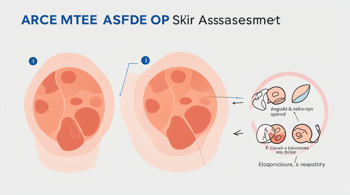
The ABCDE mnemonic is a widely recognized tool for identifying potential melanoma, the most dangerous form of skin cancer 4. This framework serves as a primary guide for both patients and clinicians when evaluating pigmented lesions. Asymmetry indicates that one half of a mole or spot does not mirror the other half 1. The Border of a concerning spot is often jagged, notched, or poorly defined rather than smooth 1. Color serves as another indicator, where an uneven distribution of shades, including various browns, tans, blacks, or even blue, suggests further examination is required 1.
The Diameter of a lesion is considered a warning sign if the spot is larger than the size of a common pea, which is approximately six millimeters 1. Finally, Evolving refers to any change in a mole's size, shape, color, or texture over the course of several weeks or months 1. Additionally, the 'ugly duckling' sign, where one specific mole looks notably different from all other spots on the body, is a critical diagnostic marker that warrants a professional dermatology consultation 7.
Clinical Indicators of Non-Melanoma Skin Cancers
Non-melanoma skin cancers, primarily basal cell and squamous cell carcinomas, are the most common forms and often present differently than melanoma 2. Basal cell carcinoma frequently manifests as a pearly or waxy bump that may be flesh-colored or pink, sometimes appearing with small, visible blood vessels 3. In contrast, squamous cell carcinoma often appears as a firm, red nodule or a flat, scaly lesion that may bleed or crust over 1. These lesions often develop on areas with high cumulative ultraviolet radiation exposure, such as the face, neck, and hands 2.
A persistent, non-healing sore is a hallmark symptom for many non-melanoma skin cancers 3. If a lesion scabs, bleeds, heals, and then returns to the same location, it should not be dismissed as a minor abrasion 3. Some individuals may also experience patches of skin that are itchy, painful, or tender to the touch 3. Because these cancers typically grow slowly, they are often highly treatable when identified during the early stages of development 8.
Protocol for Regular Skin Self-Examinations
Developing a consistent self-examination routine is recommended to ensure that any abnormalities are detected as early as possible 4. Experts suggest conducting these checks once a month, ideally after bathing when the skin is clean and easily inspected 4. A full-length mirror is essential for viewing the front, back, and sides of the body, while a hand-held mirror can assist in examining difficult-to-reach areas such as the scalp, ears, and back 4.
During a self-exam, one should thoroughly inspect the entire body, including areas that do not typically receive direct sunlight, such as between the toes, the soles of the feet, under the fingernails, and the genital area 5. Utilizing a partner for help with the back and scalp is encouraged to ensure no area is overlooked 5. Keeping a photographic record of existing moles can provide a baseline for comparison, making it easier to track subtle changes over time 5.
Risk Factors and Environmental Correlations
While skin cancer can affect anyone, specific risk factors increase the probability of developing these conditions. Excessive exposure to ultraviolet (UV) radiation from natural sunlight or artificial sources, such as tanning beds, is the primary environmental driver for the development of most skin cancers 3. Individuals with a history of frequent sunburns or those with a weakened immune system may also face an elevated risk 5. A personal or family history of skin cancer necessitates more frequent monitoring and potential professional screenings 4.
| Symptom Type | Common Appearance |
|---|---|
| Basal Cell | Pearly, waxy, or flesh-colored bump |
| Squamous Cell | Firm, red nodule or scaly patch |
| Melanoma | Irregular, evolving, or asymmetrical spot |
| General Warning | Sore that refuses to heal |
When to Seek Professional Medical Guidance
Not all skin changes are cancerous, as benign growths and age spots are common in the general population. However, any new growth or change in an existing feature that remains persistent for several weeks requires an evaluation by a healthcare provider or dermatologist 3. A biopsy is the standard procedure for definitively diagnosing skin cancer, as visual inspection alone cannot confirm the presence of malignant cells 6. Early intervention is vital, as advanced cases may require more extensive surgical techniques or specialized treatments 3.
Clinical guidelines emphasize that avoiding delayed diagnosis is crucial for improving health outcomes 3. Patients are encouraged to maintain an open dialogue with their primary care physicians regarding their risk levels. For those who are at higher risk due to genetic history or significant environmental exposure, annual professional skin exams are often suggested as a proactive measure in long-term health management 4.
Diagnostic Limitations and Monitoring Reality
It is important to understand that skin cancer images and guidebooks are helpful references, but they cannot replace a physical, clinical examination. Amelanotic melanoma, for example, may lack the typical pigment associated with other melanomas and can appear as a simple pink or skin-colored lesion, making it easy to overlook 7. Because skin cancers exhibit significant variance in size, shape, and color depending on an individual's skin tone and body location, reliance on self-diagnosis is inherently limited 7.
Ongoing maintenance of skin health involves consistent UV protection practices alongside regular observation. While no universal recommendation exists from all regulatory bodies for mass screening, the practice of vigilance remains the cornerstone of early intervention 4. If a lesion changes in sensation, such as becoming newly itchy or painful, it should be documented and presented to a medical professional for assessment, regardless of its appearance in photographic or text-based resources 7.
Sources
- Centers for Disease Control and Prevention: Symptoms of Skin Cancer
- Mayo Clinic: Skin cancer - Symptoms and causes
- Penn Medicine: Skin Cancer Types, Symptoms, and Causes
- UCLA Health: Mind your moles: How to check for skin cancer
- Banner Health: How to Spot Skin Cancer: Warning Signs
- MSD Manuals: Melanoma - Cancer
- City of Hope: Melanoma Symptoms: ABCDE Signs and Is It Painful?
- Cleveland Clinic: Nonmelanoma Skin Cancer: Symptoms, Types & Treatment
Authored by 24Trendz team