Hands-On Cooking Classes for Home Cooks: A Practical Guide to Formats, Costs, and Skill Levels
Hands-on cooking classes for home cooks provide structured practice in professional kitchens, culinary studios, restaurants, community facilities, and public venues. Current examples include global menus at Abigail’s Kitchen NYC, a prawn and saffron risotto masterclass in Melbourne, and beginner-oriented pasta sessions in Seattle, illustrating how these classes combine instruction, preparation, tasting, and social participation.
What the Format Typically Includes
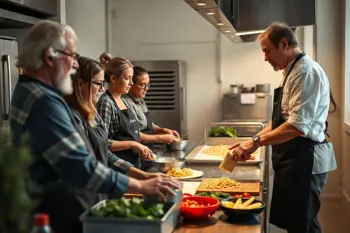
Most hands-on sessions divide the experience between chef demonstrations and participant preparation. At New York Kitchen, the kitchen is designed for two people per station, while instructors cover knife skills, recipes, and practical kitchen tips before participants prepare the menu. The format can require partners to make the same dish, so solo attendees may be paired with another guest. Closed-toe, non-slip shoes are required for safety at that facility.
Class structure varies according to the subject. Henry and the Fox’s risotto masterclass is scheduled as a three-hour session, beginning with prawn stock and continuing through rice selection, heat control, liquid management, and stirring technique. A Seattle pasta class similarly includes mixing and kneading dough, rolling, cutting shapes, preparing sauces, and eating the completed meal, with ingredients and professional tools supplied.
Class Length and Learning Progression
Single-session classes generally focus on one cuisine, dish, or technique. Examples in the research include a two-hour Mexican taco class in Chicago, a two-hour chef’s table event at New York Kitchen, and a three-hour Italian class in Naperville covering crostini, handmade tagliatelle, pesto cream sauce, and tiramisù. These formats can provide concentrated practice, but they may not establish a complete foundation for independent cooking.
Multi-week programs are designed for progressive skill development rather than one themed meal. Mad Cooks lists a three-week beginner course with three-hour sessions on July 13, 20, and 27, 2026, priced at $180 per week or $540 for the full course. Its stated focus is building cooking confidence through a step-by-step method, making the format more suitable for learners seeking repeated practice in core techniques.
Menus and Specialization
Menus are a major distinction between classes. Abigail’s Kitchen describes fully hands-on programming with international themes including tapas, Thai, Mediterranean, Moroccan, Indian, and Italian cooking. Its listed sessions include steakhouse food, lobster rolls, seasonal cocktails, summer sauces, Provençal cuisine, paella, raw seafood, mocktails, and Moroccan chicken tagine. This breadth indicates that recreational instruction often uses a specific menu as the organizing framework for technique.
Specialized workshops can concentrate on a single technically demanding preparation. The Melbourne risotto class emphasizes Carnaroli rice, prawn shells, aromatics, saffron, heat, and liquid balance. The Seattle gnocchi workshop focuses on mixing potato, flour, and egg into dough, then rolling, shaping, cutting, and pairing the result with sage herb butter. These narrow subjects may be useful when a home cook wants depth in one preparation rather than broad culinary coverage.
Typical Cost and What It Covers
Research information places a standard recreational hands-on cooking class in the United States commonly between $85 and $150 per person, depending on menu and instruction level. The examples show variation around that range: New York Kitchen’s Parisian bistro class is listed at $85, the Naperville Italian class at $95 per person, and the Chicago taco class at $75 per person. Published figures should be treated as class-specific reference points rather than a real-time market table.
Some tickets are structured for pairs rather than individuals. Butter + Whisk lists a Calabrian pasta workshop at $169 per couple, including ingredients, tools, and materials. New York Kitchen’s Chef’s Table class is listed at $190 per ticket, with one ticket covering two people, a full meal, and beverages. Abigail’s Kitchen states that unlimited beer and wine are included, while spirits are purchased separately, demonstrating why beverage terms should be checked independently from the headline class cost.
Skill Levels, Dietary Needs, and Eligibility
Beginner suitability is common but not universal. The Seattle pasta and gnocchi classes are described as beginner-friendly and open to cooks at all skill levels, while the risotto masterclass is presented as suitable for both new and experienced participants. By contrast, New York Kitchen describes its fast-paced Chef’s Table class as open to everyone but notes that familiarity with basic techniques and confidence cooking independently can improve the experience.
Dietary accommodation depends on advance communication and the class provider’s menu design. Classpop states that most dietary restrictions can be accommodated when disclosed before the event, because recipe adjustments cannot be made during class. Butter + Whisk requires guests to be at least 15 years old for its workshops. New York Kitchen also warns that recipes may include common ingredients such as flour, nuts, spices, fruits, and vegetables, making ingredient disclosure and allergy questions important eligibility considerations.
Practical Risks and Booking Conditions
Cooking classes carry ordinary kitchen risks, particularly from knives, heat, cookware, and food handling. New York Kitchen asks participants to give full attention during knife-skills demonstrations and kitchen-safety instruction, and requires appropriate footwear. Participants should also consider station arrangements, pace, physical workspace, and whether the class involves independent preparation or primarily observation. A class described as hands-on does not necessarily mean every person prepares every component individually.
Cancellation and transfer policies can create financial and scheduling friction. Abigail’s Kitchen states that tickets may be fully refunded up to one week before class, while later changes may involve a $25 per-ticket fee and changes within 48 hours may not be permitted, although tickets can be transferred. Butter + Whisk describes registrations as non-refundable and non-transferable, with policies based on notice periods. Cozymeal’s Chicago taco listing describes cancellation or rescheduling without charge up to 48 hours before the event. These rules differ materially and should be reviewed before committing.
How to Compare Classes Objectively
A useful comparison should separate instructional value from entertainment features. Important variables include session length, student-to-station arrangement, instructor guidance, menu complexity, ingredient inclusion, equipment access, meal service, beverage policy, dietary flexibility, age requirements, and cancellation rules. A two-hour themed class may suit a social outing, while a three-week course may better address foundational gaps. Neither format is inherently superior because the appropriate choice depends on the learner’s goal and prior kitchen experience.
Location also affects the type of experience. Classes may take place in a working restaurant kitchen, a culinary education facility, a chef’s home or venue, a retail setting, or a local public space. Cozymeal lists both a chef’s place and a chef-travels-to-you option for its Naperville Italian class, while Classpop describes Seattle events at public venues that can vary by date. These differences affect travel, equipment, privacy, station setup, and the level of control over the cooking environment.
Sources
- Abigail’s Kitchen NYC, Cooking Classes: https://www.abigailskitchennyc.com/cooking-classes/
- Henry and the Fox, Prawn & Saffron Risotto Masterclass: https://henryandthefox.com.au/prawn-saffron-risotto-masterclass-melbourne/
- New York Kitchen, Springtime in Paris Bistro Lunch Class: https://nykitchen.com/event/springtime-in-paris-bistro-lunch-class-5-24-26/
- Butter + Whisk, Calabrian Kitchen: https://butterandwhiskco.com/products/calabrian-kitchen
- Classpop, Pasta Making at a Ballard Cidery: https://www.classpop.com/cooking-classes/49907/pasta-making-at-a-ballard-cidery-with-chef-tissany
- New York Kitchen, Chef’s Table Class: https://nykitchen.com/event/chefs-table-class-7-18-26-2/
- Mad Cooks, Essentials Three-Week Beginners Course: https://madcooks.au/classes/3-wk-essentials-course-13-20-27-july/
- Cozymeal, Handmade Pasta and Italian Classics: https://www.cozymeal.com/cooking-class/69889/craft-handmade-pasta-and-italian-classics
- Classpop, Cozy Fall Gnocchi Workshop: https://www.classpop.com/cooking-classes/54062/cozy-fall-gnocchi-workshop-with-chef-tissany
- Cozymeal, Mexican Tacos From Scratch: https://www.cozymeal.com/cooking-class/70908/mexican-tacos-from-scratch
Authored by 24Trendz team