Best hospitals for Nuclear Medicine: An evidence-based international guide
Readers researching the best hospitals for Nuclear Medicine will find that the strongest options differ according to clinical need, research focus, available radiopharmaceuticals, and experience with targeted therapy. The evidence summarized here combines an international institutional ranking, hospital-published clinical information, and reported specialty capabilities rather than presenting a live directory or universal league table.
How hospitals are assessed
SCImago Institutions Rankings evaluates academic and research-related institutions in Radiology, Nuclear Medicine and Imaging through measures covering research, innovation, and societal contribution. The methodology includes 20 metrics, including research publications, authority score, patents, and excellence in leadership, so its results primarily describe institutional research strength rather than individual patient outcomes. 1
In a November 2024 report based on the SCImago ranking, Massachusetts General Hospital was listed first nationally for radiology, nuclear medicine, and imaging, followed by Mayo Clinic. The ranking should therefore be interpreted as a research-oriented comparison, not as a guarantee that one hospital is the most suitable choice for every scan, diagnosis, or radionuclide treatment. 2
Leading United States institutions
Several major United States centers are associated with advanced nuclear medicine research and clinical services. The supplied research identifies Mayo Clinic, Johns Hopkins Hospital, Cleveland Clinic, Memorial Sloan Kettering Cancer Center, Massachusetts General Hospital, UCLA Health, Stanford Health Care, MD Anderson Cancer Center, NewYork-Presbyterian Hospital, and Duke University Hospital as prominent examples across oncology, cardiology, neurology, molecular imaging, and theranostics. 1
These institutions represent different types of expertise. Mayo Clinic is described as highly ranked for cancer care; Johns Hopkins emphasizes molecular imaging and radionuclide therapy; Cleveland Clinic uses PET/CT and SPECT for personalized disease management; and Memorial Sloan Kettering is associated with targeted radioligand therapy, including Lutetium-177 PSMA for prostate cancer. 3
| Institution | Reported area of emphasis |
|---|---|
| Massachusetts General Hospital | Academic nuclear medicine and radiopharmaceutical-related procedures |
| UCLA Health | Imaging, theranostics, PSMA PET/CT, and clinical research |
| Stanford Health Care | Novel radiotracers and advanced imaging, including PET/MRI |
| MD Anderson Cancer Center | Multidisciplinary nuclear medicine in oncology |
Imaging and theranostics capabilities
Nuclear medicine differs from conventional anatomical imaging because radiopharmaceuticals help show organ function, cellular activity, or molecular targets. PET-CT and SPECT-CT are central technologies, while targeted therapies can direct radiation toward selected cancer cells. UCLA reports expertise in PSMA PET/CT for prostate cancer staging and coordinated therapy for neuroendocrine tumors and prostate cancer. 4
LA General Medical Center describes services including PET-CT for lymphoma, breast, colon, lung, and other cancers; cardiac nuclear stress testing; thyroid, kidney, brain, and hepatobiliary studies; lymph-node mapping; and targeted therapies involving PSMA, radioactive iodine, somatostatin receptors, and Y-90 radioembolization. Such breadth can matter when diagnosis and therapy must be coordinated across specialties. 5
International hospitals and regional options
Outside the United States, the supplied material identifies hospitals in Germany, Turkey, Spain, India, and the United Arab Emirates with nuclear medicine or molecular-imaging programs. Helios Hospital Berlin-Buch describes diagnostic scintigraphy involving the lungs, heart, brain, kidneys, lymph nodes, and bones, along with radioactive treatment services. Medipol Mega University Hospital and Medicana International Istanbul describe radioisotope diagnostics, PET-CT, SPECT-CT, and radionuclide treatment. 6
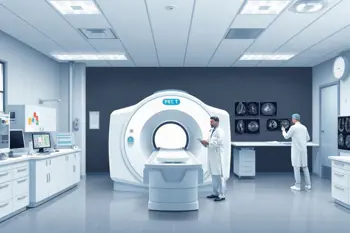
Hospital-specific technology claims require careful interpretation because equipment, tracer supply, accreditation, and therapy protocols can change. Ruby Hall Clinic in Pune states that its nuclear medicine department was established in 1996 and uses dual-head gamma cameras, digital PET-CT, SPECT-CT, and therapeutic radioisotopes. Burjeel Specialty Hospital in Sharjah describes a comprehensive PET-CT center using GE Discovery IQ technology within a cancer institute. 7
Specialized cancer and molecular imaging programs
For cancer care, the relevant comparison is often not the hospital's overall reputation but its experience with a specific tracer or radionuclide. Examples in the research include Lutetium-177 PSMA for prostate cancer, Lutathera for neuroendocrine tumors, radioactive iodine for thyroid disease, and Y-90 microspheres for selected liver tumors. Eligibility depends on disease type, molecular target expression, prior treatment, organ function, and local clinical protocols. 8
Memorial Şişli Hospital reported recognition within the European Association of Nuclear Medicine and European Association of Nuclear Medicine Research Ltd. EARL theranostics framework in January 2026. The reported qualification indicates alignment with a European quality framework for standardized theranostic practice, but accreditation does not establish that every patient or tumor type is suitable for treatment there. 9
Safety, regulation, and practical limitations
Nuclear medicine uses radioactive substances, so care involves regulated radiopharmaceutical handling, radiation-safety procedures, medical physics, radiopharmacy, and trained clinical personnel. Ascires Hospital in Valencia describes a multidisciplinary team involving nuclear medicine physicians, radiopharmacy specialists, bioengineers, medical physicists, and specialized nurses. It also reports digital PET-CT, SPECT-CT, artificial-intelligence integration, portable probes, and an in-house radiopharmacy unit described as being in a phased opening process. 10
Patients and referring clinicians should verify the exact examination or therapy, tracer identity, clinical indication, preparation requirements, radiation precautions, pregnancy or breastfeeding restrictions, kidney considerations, and follow-up arrangements directly with the treating department. Practical friction points can include cross-border travel, language, referral documentation, regulatory differences, tracer logistics, and the need for multidisciplinary review. A prestigious research ranking cannot replace individualized clinical assessment.
What to compare before choosing
A useful comparison begins with the medical question rather than the hospital name. Diagnostic nuclear medicine may involve PET-CT, SPECT-CT, cardiac stress imaging, thyroid studies, bone scans, neurological imaging, or renal and hepatobiliary assessment. Therapeutic nuclear medicine requires additional questions about isotope authorization, inpatient or outpatient procedures, dosimetry, radiation-safety instructions, and monitoring after administration.
The following criteria help distinguish research prominence from practical suitability: relevant disease expertise, experience with the named tracer or therapy, quality accreditation, radiopharmacy capacity, access to medical physics, multidisciplinary oncology or cardiology coordination, pediatric or adult specialization, interpretation expertise, and documented arrangements for complications or follow-up. These factors are more clinically specific than a single overall ranking and should be reviewed with a qualified physician.
Sources
- SCImago Institutions Rankings, Radiology, Nuclear Medicine and Imaging
- Becker's Hospital Review, The top 20 hospitals for radiology
- Johns Hopkins Medicine, Nuclear Medicine
- UCLA Health, Nuclear Medicine
- LA General Medical Center, Nuclear Medicine
- BookingHealth, Nuclear Medicine Hospitals
- Ruby Hall Clinic and Burjeel Specialty Hospital, Nuclear Medicine services
- Memorial Sloan Kettering Cancer Center, Nuclear Medicine
- GlobeNewswire, Memorial Şişli Hospital EARL Theranostics Center of Excellence
- Hospital Ascires, Nuclear Medicine
Authored by 24Trendz team