Early warning signs of celiac disease: Clinical clues that may appear before diagnosis
Early warning signs of celiac disease are not limited to diarrhea or abdominal pain. The condition can produce digestive symptoms, subtle nutritional abnormalities, fatigue, skin findings, growth concerns, and neurological or reproductive problems, while some people have few noticeable symptoms. 1
Digestive symptoms that may appear early
Possible digestive warning signs include chronic diarrhea, abdominal pain, bloating, gas, nausea, constipation, and unintended weight loss. Stools may become oily or unusually foul-smelling when impaired absorption leaves more fat unabsorbed. Symptoms can vary widely, come and go, or remain mild, which means the absence of severe gastrointestinal distress does not exclude celiac disease. Digestive manifestations are reported more commonly in children than adults. 1
Adults may instead experience persistent gastrointestinal discomfort without a classic pattern. A large retrospective cohort study of more than 430,000 people found that chronic gastrointestinal symptoms could precede a formal diagnosis in young adults by several years. The study examined records for up to seven years before diagnosis, emphasizing that recurrent but nonspecific symptoms may deserve assessment when they persist or occur with laboratory abnormalities. 2
Fatigue, anemia, and nutrient-related clues
Persistent fatigue can reflect malabsorption, inflammation, anemia, or inadequate absorption of essential nutrients. Iron-deficiency anemia that remains unexplained or responds poorly to supplementation is an important clinical clue because damage to the small intestine can interfere with iron absorption. Celiac disease may also be discovered through nutritional problems rather than prominent digestive complaints, particularly in adults with subtle or atypical disease. 5
Research in young adults identified lower hemoglobin and lower mean corpuscular volume as findings associated with later celiac disease diagnosis. These abnormalities, along with lower body mass index even within the normal range and certain mildly elevated liver enzymes, were observable as early as seven years before formal diagnosis in the study population. Such findings are not specific to celiac disease, but their persistence can support a clinician’s decision to investigate further. 2
Signs outside the digestive system
Celiac disease can affect areas beyond the intestine. Reported non-digestive symptoms include joint or bone pain, headaches, balance problems, seizures, peripheral neuropathy, anxiety, depression, recurrent mouth ulcers, dry mouth, and a red, smooth, shiny tongue. An intensely itchy blistering rash known as dermatitis herpetiformis is strongly associated with gluten-sensitive enteropathy and may occur even when digestive symptoms are limited. 1 6
Neurological or psychological symptoms may be especially easy to attribute to unrelated causes. Headaches, irritability, “brain fog,” numbness, tingling, and balance problems have been described among possible manifestations. Joint pain and bone pain may also occur, partly reflecting nutritional consequences of impaired absorption. These signs do not establish a diagnosis independently, but their combination with anemia, gastrointestinal symptoms, or weight change can create a stronger reason for medical evaluation. 7
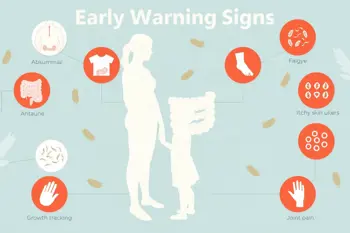
Early warning signs in children
In children, inadequate nutrient absorption can interfere with normal development. Possible warning signs include failure to gain weight as expected, weight loss, slowed growth, short stature, delayed puberty, irritability or other mood changes, and damage to the enamel of permanent teeth. Chronic diarrhea, belly pain, bloating, nausea, vomiting, and constipation can occur, but some children have mainly growth, dental, skin, or behavioral concerns. 1 4
Dental enamel defects may appear as pitting or discoloration, while delayed puberty and reduced height can become apparent gradually rather than during a single illness. Pediatric symptoms should be interpreted in the context of growth records, nutritional status, and other possible explanations. Celiac disease can also be silent or minimally symptomatic, so a child’s lack of digestive complaints does not by itself rule it out when other clinical concerns are present. 4 8
Who has a higher likelihood of celiac disease?
A first-degree relative with celiac disease increases a person’s likelihood of having the condition, including when symptoms are mild or absent. Celiac disease is also associated with autoimmune conditions such as type 1 diabetes and autoimmune thyroid disease. These associations do not mean that every person in an affected group has celiac disease, but they provide context when new gastrointestinal, nutritional, skin, or neurological symptoms develop. 8 9
Screening or diagnostic discussion may therefore be appropriate for people with persistent unexplained symptoms, a relevant family history, or associated autoimmune disease. The condition is an immune reaction to gluten that damages the small-intestinal lining and can reduce absorption of protein, carbohydrates, fats, vitamins, and minerals. Because presentations differ substantially, evaluation should be based on the overall pattern rather than a single symptom. 3 10
Testing considerations and practical cautions
Testing generally should occur while a person is still eating gluten. Beginning a gluten-free diet before blood testing or intestinal biopsy can affect results and make the diagnostic process less accurate. A clinician can determine which blood tests and, when appropriate, further examinations fit the person’s symptoms, family history, and medical context. Self-diagnosis based only on symptom improvement is not sufficient because many digestive conditions overlap. 11
Symptoms often improve after treatment with a gluten-free diet, and they may return after small amounts of gluten are consumed by people with celiac disease. However, some consequences, including short stature or tooth defects, may not fully improve when diagnosis occurs later. Persistent diarrhea, unexplained anemia, weight loss, impaired growth, dermatitis herpetiformis, or neurological symptoms warrant discussion with a qualified healthcare professional rather than unsupervised dietary restriction. 1
Sources
- National Institute of Diabetes and Digestive and Kidney Diseases, Symptoms & Causes of Celiac Disease
- Journal of General Internal Medicine, Subtle Laboratory and Clinical Precursors of Celiac Disease in Young Adults
- Mayo Clinic, Celiac Disease: Symptoms and Causes
- Children’s Hospital of Philadelphia, Celiac Disease
- American College of Gastroenterology, Diagnosis and Management of Celiac Disease
- National Organization for Rare Disorders, Dermatitis Herpetiformis
- Beyond Celiac, Celiac Disease Symptoms
- Celiac Disease Foundation, What Is Celiac Disease?
- Mayo Clinic Health System, Celiac Disease
- MedlinePlus, Celiac Disease
- University of Chicago Medicine Celiac Disease Center, Diagnostic Testing Guidance
Authored by 24Trendz team