Train tours along the California Coast: A Neutral Route and Planning Report
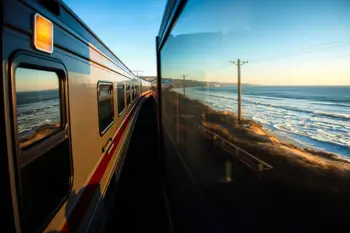
California train tours along the coast provide an alternative to driving Highway 1, allowing passengers to view beaches, bluffs, and Pacific scenery without concentrating on traffic. The two principal routes are the Pacific Surfliner for Southern California travel and the Coast Starlight for longer journeys through California and the Pacific Northwest. 1
Two rail corridors shape coastal travel
The Pacific Surfliner covers a 351-mile corridor between San Diego and San Luis Obispo, serving 29 stations in six counties. Its most ocean-oriented sections include the approaches to Solana Beach, Oceanside, and San Clemente, followed by coastal views through Ventura County and Santa Barbara. The train does not remain beside the ocean for the entire trip, so scenery varies between beaches, urban areas, inland stretches, and coastal bluffs. 1
The Coast Starlight operates on a much longer route, extending 1,377 miles between Los Angeles and Seattle. For California-focused travel, the relevant section links Los Angeles with the Bay Area and includes scenery near Santa Barbara, San Luis Obispo, and other central-coast locations. Its route is designed as long-distance rail transportation rather than a continuous beach-hopping service, making station selection and trip length important planning considerations. 7
Pacific Surfliner: Southern California access
The Pacific Surfliner is structured for shorter coastal journeys, with numerous daily round trips between San Diego and Los Angeles and some services continuing to Santa Barbara or San Luis Obispo. Stations provide access to distinct destinations, including the beach communities of San Clemente and Carpinteria, the historic mission district in San Juan Capistrano, and the broader cultural attractions of Santa Barbara and San Luis Obispo. 1
Travelers seeking ocean views should treat seat position as a directional issue rather than a guarantee. Source material generally identifies the right side as favorable when traveling south and the left side when traveling north, although visibility can depend on the exact segment, train direction, vegetation, structures, and operating conditions. The route's coastal appeal is strongest where the tracks approach beaches, bluffs, and open shoreline. 2
Coast Starlight: Longer-distance coastal scenery
The Coast Starlight is commonly associated with a relaxed, scenic journey because passengers can observe landscapes from a train rather than from behind a steering wheel. The Sightseer Lounge is identified as a notable feature for viewing scenery, while coach seating and private rooms represent different approaches to a long-distance itinerary. Northbound passengers from Los Angeles generally need to consider seat selection carefully for the most useful coastal sightlines. 3
Central Coast sections are particularly relevant for travelers interested in Santa Barbara and San Luis Obispo. A published Santa Barbara day itinerary combines a train segment with visits to the Old Mission and Santa Barbara County Courthouse, while another account notes that the Oxnard to Santa Barbara train portion lasts about 60 minutes. These examples show that a tour described as coastal may include both rail travel and organized sightseeing by road or on foot. 4
Tour formats and representative itineraries
Organized tours use rail travel in several ways. A two-day Los Angeles to San Francisco itinerary combines a Coast Starlight segment with Highway 1, Santa Barbara, Solvang, Hearst Castle, Carmel-by-the-Sea, and other stops. A four-day small-group itinerary described in the research combines San Francisco, Highway 1, the Coast Starlight, Santa Barbara, Solvang, and Hearst Castle, with a group size of approximately 10 to 14 people. 5
| Format | Typical emphasis | Primary limitation |
|---|---|---|
| Regional rail outing | San Diego, Orange County, Ventura, Santa Barbara, and San Luis Obispo | Ocean views are concentrated in selected segments |
| One-day Santa Barbara tour | Train travel plus historic landmarks and local sightseeing | The rail portion may be shorter than expected |
| Multi-day coast itinerary | Rail, Highway 1, historic sites, and overnight stays | A packed schedule can reduce time at individual locations |
Stations, onboard experience, and practical planning
Rail-based coastal travel can reduce the need to drive between destinations, but it does not eliminate logistical planning. Travelers must account for station locations, connecting transportation, scheduled departure times, and the possibility that a tour combines train travel with private vehicles. The Coast Starlight also offers different accommodation categories, including coach, roomettes, and bedrooms, according to the route-planning material. 3
Longer packaged journeys may include hotels, meals, sightseeing buses, or guided transfers, but inclusions vary by operator and itinerary. One rail-and-cruise program lists Coast Starlight travel from Los Angeles to Emeryville in coach class and a separate overnight Coast Starlight journey to Seattle in a roomette. Such arrangements demonstrate that rail travel may form only one component of a larger vacation structure. 6
Operational limits and coastal infrastructure
Coastal rail travel is exposed to conditions that do not affect every inland route equally. Research notes infrastructure work intended to address coastal erosion and bluff instability, including planning associated with track relocation near Del Mar. These conditions can influence alignment, service reliability, or the amount of shoreline visible from the train. Current schedules, station stops, and operating notices therefore require verification through official transportation sources rather than assumptions based on older itineraries. 9
The Pacific Surfliner's coastal corridor is supported by regional rail agencies and official route information, while Amtrak publishes route maps and service details for the Coast Starlight. Weather, construction, train availability, and traffic can also affect combined train-and-road tours. A neutral assessment is that rail offers a distinctive way to observe California's coast, but travelers should distinguish between a genuinely extended rail journey and a tour where only one short segment occurs beside the ocean. 7
Sources
- Edhat, “Two Amtrak Train Rides With Some of California’s Most Stunning Coastal Views”
- Travel + Leisure, “The Essential Guide to Amtrak’s Pacific Surfliner Route”
- Nomadivio, “A beginner guide to traveling the California coast on the Amtrak Coast Starlight”
- TouristTube, “Santa Barbara 1-Day via Amtrak Starlight Coastal&car tour from LA”
- HappyToVisit, “San Francisco: 4-Day VIP Tour with Coast Starlight Train”
- American Affair, “Pacific Coast by Rail & Alaska Cruise”
- Amtrak, “Coast Starlight Train”
- Pacific Surfliner, official route and service information
- San Diego Association of Governments, regional rail and coastal infrastructure information
Authored by 24Trendz team