Recognizing the Warning Signs of Endometriosis: A Clinical Guide to Symptoms and Evaluation
Severe or worsening menstrual cramps that interfere with school, work, sleep, or daily activities are warning signs that merit medical evaluation. Endometriosis may also involve chronic pelvic pain, painful sex, bowel or bladder symptoms, heavy bleeding, fatigue, or difficulty becoming pregnant. Because symptoms can resemble other conditions, recognizing patterns across the menstrual cycle can help clinicians assess the possibility more accurately. 1
When menstrual pain is a warning sign
Period pain becomes more concerning when it repeatedly prevents ordinary activities, causes vomiting or fainting, wakes someone from sleep, or requires increasing amounts of pain medicine. Pain that steadily worsens over time also warrants assessment rather than being dismissed as a routine feature of menstruation. Clinical guidance identifies painful periods as a common presentation, but symptom intensity alone does not determine how much endometriosis is present. 1
Endometriosis occurs when tissue similar to the uterine lining grows outside the uterus, where it can contribute to inflammation, scarring, and pain. The condition affects about 1 in 10 women worldwide, although symptoms vary substantially. Some people have extensive disease with limited pain, while others experience severe symptoms that are difficult to detect on routine imaging. 3
Pelvic, back, and sexual pain
Persistent pelvic pain between periods is another important pattern. It may feel like aching, pressure, burning, or sharp pain in the lower abdomen or pelvis, and it can extend into the lower back. Pain that continues after menstruation ends, returns predictably during the cycle, or gradually affects daily functioning should be recorded and discussed with a qualified clinician. 2
Pain during or after sexual intercourse, particularly deep pelvic pain, is associated with endometriosis and may reflect irritation or lesions near pelvic organs. This symptom can be overlooked because people may feel uncomfortable reporting it. A symptom history should include when the pain begins, how long it lasts, whether it is position-related, and whether it changes at different points in the menstrual cycle. 4
Bowel and bladder symptoms
Painful bowel movements, especially during menstruation, may occur when endometriosis affects tissue near the bowel. Constipation, diarrhea, bloating, nausea, or other gastrointestinal symptoms that become more intense around a period can also appear. These symptoms are not specific to endometriosis, since digestive disorders can cause similar complaints, but a clear cyclical pattern is clinically relevant. 5
Pain or burning with urination, urinary discomfort that follows the menstrual cycle, and, in some cases, blood in the urine can indicate involvement near the bladder or urinary tract. Medical guidance also identifies painful urination as a possible symptom. A normal symptom-free interval does not exclude endometriosis, because symptoms may vary from one cycle to another. 2
Bleeding, fatigue, and related symptoms
Heavy menstrual bleeding or bleeding between periods should be discussed with a clinician, particularly when it occurs alongside pelvic pain. Excessive bleeding can have several causes, so it does not establish an endometriosis diagnosis by itself. The relevant warning sign is often the combination of bleeding changes with recurring pain, bowel or bladder symptoms, or a noticeable decline in daily functioning. 6
Fatigue is also reported by people with endometriosis and may accompany chronic pain, inflammation, disrupted sleep, or heavy bleeding. Shoulder-tip pain, cyclical cough, chest pain, or coughing blood are less typical symptoms described in specialist guidance and may indicate disease outside the pelvis. Such unusual cycle-linked symptoms require careful medical assessment rather than self-diagnosis. 2
Fertility and less obvious presentations
Difficulty becoming pregnant can be associated with endometriosis, although many people with the condition do not have fertility problems. Fertility concerns may become part of the evaluation when conception has been difficult or when pelvic pain and other warning signs occur together. Infertility alone does not prove endometriosis, and other reproductive, hormonal, or partner-related factors may also require assessment. 7
Some people have few symptoms or no obvious pain, meaning the absence of severe cramps does not completely rule out the condition. Endometriosis may be found during evaluation for infertility or another pelvic concern. Conversely, severe pain does not reliably predict the number, size, or location of lesions, which is why symptom severity and disease extent can differ substantially. 10
How clinicians investigate suspected endometriosis
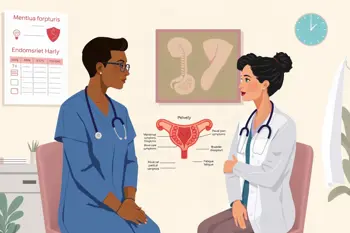
Evaluation usually begins with a detailed history covering pain timing, menstrual bleeding, bowel and bladder symptoms, sexual pain, fertility, and the effect on work, school, sleep, or exercise. Keeping a symptom diary can help identify cycle-related patterns and provide a more precise account during appointments. A pelvic examination may be used to look for tenderness, endometriomas, or deep nodules, but a normal examination does not exclude disease. 1
Ultrasound or magnetic resonance imaging may contribute to evaluation, yet normal imaging does not rule out all forms of endometriosis. Current guidance reflects a shift toward beginning assessment and, when appropriate, treatment from the clinical picture instead of always waiting for surgery. Diagnostic laparoscopy remains a surgical procedure that may be considered in selected circumstances, but the appropriate pathway depends on symptoms, examination findings, imaging, fertility goals, and clinician judgment. 1
Why timely evaluation can be difficult
Endometriosis is often missed because its symptoms overlap with conditions such as gastrointestinal or urinary disorders, and because some lesions are not visible on routine scans. Reports cited by the American College of Obstetricians and Gynecologists indicate that people may wait a decade or longer after symptoms begin before receiving a diagnosis. This delay can prolong pain and complicate decisions about fertility, work, education, and daily activities. 3
Emerging blood, imaging, and molecular tests are being studied, including research using menstrual blood and proteomic methods, but these approaches should not be treated as established replacements for clinical evaluation. Specialized scans and laboratory tools remain subjects of ongoing research or limited availability in some settings. The central warning sign is a persistent or cyclical symptom pattern that affects quality of life and deserves informed medical review. 8
Sources
- American College of Obstetricians and Gynecologists, Diagnosis of Endometriosis and Endometriosis symptom guidance
- European Society of Human Reproduction and Embryology guideline summary
- ABC News, Endometriosis can elude diagnosis for years
- World Health Organization, Endometriosis fact sheet
- Mayo Clinic, Endometriosis symptoms and causes
- Cleveland Clinic, Endometriosis overview
- Johns Hopkins Medicine, Endometriosis symptoms
- National Geographic, Research into menstrual blood and endometriosis
- Technology Networks, Proteomics in endometriosis
- NCBI Bookshelf, Endometriosis clinical review
Authored by 24Trendz team