Natural approaches to managing eye inflammation: Evidence, limitations, and safety considerations
Natural approaches to managing eye inflammation include nutrition, warm compresses, eyelid hygiene, environmental control, lubricating drops, and carefully studied plant-derived compounds. Current research connects ocular inflammation with oxidative stress, tear-film instability, environmental irritation, dry eye disease, conjunctivitis, blepharitis, meibomian gland dysfunction, uveitis, and degenerative eye disorders, but the strength of evidence varies substantially between approaches. 1
Why eye inflammation develops
Ocular inflammation is not a single condition. Reviews describe oxidative stress, chronic inflammation, mitochondrial dysfunction, tear-film instability, hyperosmolarity, epithelial damage, and immune dysregulation as interconnected processes in different eye diseases. Dry eye disease can become a self-reinforcing cycle in which unstable tears and surface irritation intensify inflammation, while uveitis involves dysregulated immune responses that may require specialist management. 2
Meibomian gland dysfunction is a frequent contributor to non-aqueous deficient dry eye. The glands produce meibum, a lipid-rich secretion that slows tear evaporation, and obstruction or altered secretion can cause tear-film instability and ocular-surface inflammation. Because the underlying mechanism differs among patients, a clinical examination should precede treatment, particularly when symptoms persist or recur. 3
Dietary approaches and nutritional compounds
Omega-3 fatty acids from fish oil and flaxseed are widely researched for systemic inflammation and tear-film support. Reviews also discuss polyunsaturated fatty acids, carotenoids such as lutein and zeaxanthin, polyphenols, flavonoids, and botanical extracts in relation to oxidative stress and inflammatory pathways. These nutrients may be relevant as complementary measures, but research reviews identify limited bioavailability and a lack of long-term clinical trials as important translational gaps. 4
Food-based dietary patterns emphasizing antioxidant-rich ingredients are biologically plausible because oxidative stress is associated with ocular-surface and retinal disorders. However, nutritional evidence should not be interpreted as proof that a supplement can treat uveitis, glaucoma, diabetic retinopathy, or other sight-threatening disease. Supplement choice, dose, interactions, and suitability can differ according to medical history, while standardized formulations remain an unresolved research issue. 5
Warm compresses and eyelid hygiene
Warm compresses are a standard supportive measure for blepharitis and meibomian gland dysfunction. Local warmth can be incorporated into eyelid care routines intended to address gland obstruction and surface irritation, although the appropriate duration, temperature, and frequency depend on the person and the diagnosis. The pharmacological and natural-therapy literature emphasizes that treatment should be guided by the specific pathophysiology rather than by a single universal routine. 3
Eyelid hygiene is also discussed in relation to Demodex-associated blepharitis. Specialized cleansers and carefully diluted tea tree oil preparations have been studied for this context, but concentrated essential oil should not be placed directly into the eye. Irritation, allergy, incorrect dilution, and contact with the cornea are practical risks, making professionally guided use more appropriate than improvised home application. 6
Artificial tears and environmental control
Preservative-free artificial tears are used to lubricate the ocular surface and may dilute or wash away inflammatory mediators associated with dry eye. They address surface discomfort rather than the underlying cause, so repeated symptoms may still require evaluation for blepharitis, meibomian gland dysfunction, allergy, medication effects, or another inflammatory condition. The evidence supplied describes artificial tears as supportive care, not as a replacement for disease-specific treatment. 7
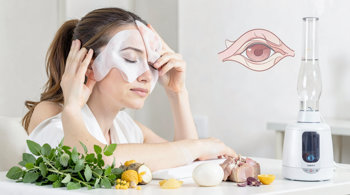
Hydration and indoor humidity are practical environmental considerations because dehydration and dry air can worsen ocular-surface irritation. Reducing exposure to environmental irritants and managing prolonged screen use may also reduce symptoms associated with digital eye strain. The 20-20-20 rule is commonly described as a screen-management approach, while humidification is identified as a way to support tear-film stability and reduce chronic irritation. 8
Plant-derived compounds and eye drops
Curcumin, the principal polyphenol associated with turmeric, has antioxidant, anti-inflammatory, anti-angiogenic, neuroprotective, and antibacterial properties in ophthalmic research. A 2025 review considered its potential across dry eye disease, uveitis, diabetic retinopathy, glaucoma, cataracts, age-related macular degeneration, and pterygium. The same review noted unresolved concerns involving dosage, formulation, bioavailability, and long-term safety, particularly when moving from preclinical findings to clinical practice. 9
Green tea and its compound epigallocatechin gallate have been investigated for antioxidant and protective effects on corneal cells. Manuka honey eye drops were evaluated in a prospective controlled study involving 53 eyes after cataract surgery, with 25 eyes receiving the Manuka preparation and 28 receiving sodium hyaluronate. Outcomes included symptoms, conjunctival redness, and non-invasive tear break-up time over one month, but this limited study does not establish suitability for every form of eye inflammation. 10
Evidence limits and safety boundaries
Natural products are not automatically risk-free or clinically interchangeable with prescription therapy. Reviews describe potential topical options including castor oil, Manuka honey, tea tree oil, coenzyme Q10, and green tea extract, but also stress the importance of formulation, safety profiles, treatment duration, and examination before management. Products intended for skin or oral use may be unsuitable for ocular use because sterility, concentration, preservatives, and delivery through ocular barriers affect safety. 3
Evidence is also uneven across traditional systems and botanical formulas. A 2026 review of traditional Chinese medicine examined metabolites, extracts, and formulas through mechanisms such as inflammatory signaling, but a mechanistic framework does not by itself demonstrate clinical effectiveness. An exploratory Ayurvedic study enrolled 30 patients with meibomian gland dysfunction and combined nasal oil, Moringa-based eye drops, and warm ocular fomentation in a single-arm, open-label design. Without a comparison group, its findings require cautious interpretation. 11
How to interpret natural management options
A practical evidence hierarchy separates low-risk supportive measures from experimental or disease-specific interventions. Warm compresses, eyelid hygiene, environmental humidity, screen breaks, hydration, and lubricating drops generally belong to supportive ocular-surface care. Dietary compounds and supplements require more individualized consideration, while turmeric-derived compounds, essential oils, honey preparations, traditional formulas, and compounded eye drops require particular attention to sterility, formulation, interactions, and clinical supervision. 1
Persistent, recurrent, or severe inflammation should not be managed solely through home remedies because different causes can affect the eyelids, cornea, uvea, or retina. The research consistently presents natural products as promising adjuncts or areas for further investigation rather than universally proven replacements for ophthalmic care. A diagnosis, treatment plan, and monitoring strategy are especially important when inflammation follows surgery or occurs alongside a condition capable of causing lasting visual impairment. 2
Sources
- MDPI, Plant-Based Care and Therapy in Ophthalmology
- MDPI, Natural Products Targeting Immune Mechanisms in Ocular Inflammation: Uveitis and Dry Eye
- Springer Nature, Pharmacological, Natural and Emerging Therapies for Meibomian Gland Dysfunction
- MDPI, Beneficial Effects of Natural Bioactive Compounds on Eye Health
- Springer Nature, Natural Products as Alternative Therapies for Eye Disorders
- National Institutes of Health, Tea Tree Oil and Demodex Blepharitis Research
- Cleveland Clinic, Dry Eye Disease Information
- Mayo Clinic and Optometry Times, Dry Eye and Digital Eye Strain Guidance
- Springer Nature, Therapeutic Potential of Curcumin in Ophthalmic Diseases
- Frontiers in Ophthalmology, Manuka Honey Eye Drops After Cataract Surgery
- Frontiers in Medicine, Ayurvedic Eye Care and Meibomian Gland Dysfunction
Authored by 24Trendz team