Warning signs of Asherman's syndrome: Clinical guidance on symptoms and evaluation
Warning signs of Asherman's syndrome include a sudden reduction or complete loss of menstrual bleeding, cyclical pelvic pain without a normal period, difficulty conceiving, or repeated miscarriage. These changes are more suggestive when they begin after dilation and curettage, another uterine procedure, or a serious pelvic infection, although some people have no symptoms. 1
What Asherman's syndrome means
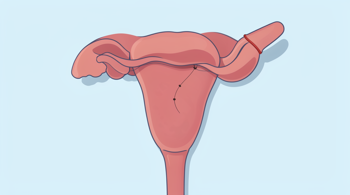
Asherman's syndrome is the formation of bands of scar tissue, also called intrauterine adhesions or uterine synechiae, inside the uterine cavity. The adhesions may be thin and limited or dense enough to make sections of the uterine walls stick together, narrowing or blocking the cavity. Scarring can disrupt the endometrium, the lining that normally thickens and sheds during the menstrual cycle and supports implantation. 2
The condition most often develops after injury to the uterine lining during surgery. Several D&C procedures are a recognized association, including procedures performed after miscarriage, retained pregnancy tissue, retained placenta, or termination of pregnancy. Severe pelvic infection can also contribute, while tuberculosis and schistosomiasis are uncommon infectious causes in the United States. 1 3
Changes in menstrual bleeding
A marked reduction in menstrual flow, known medically as hypomenorrhea, is one of the principal warning signs. Periods may become shorter, noticeably lighter, or stop completely after previously regular cycles. Amenorrhea means the absence of menstrual periods, and it may occur when adhesions replace functional lining or obstruct the passage through the cervix. 4
The timing of the change matters. A new pattern that appears suddenly after D&C or other uterine surgery raises more concern than a lifelong tendency toward light periods, because similar menstrual changes can result from several other conditions. A pelvic examination is often normal, so a normal office examination does not reliably exclude adhesions. 1
Cyclical pelvic pain without bleeding
Some people experience pelvic pain or cramping at roughly the time a period would normally occur, even though little or no blood is discharged. This pattern may occur when adhesions interfere with the outflow of menstrual blood, creating a mismatch between cyclic uterine activity and visible bleeding. Cyclical pain is therefore more informative when it accompanies a sudden reduction or loss of periods after a uterine procedure. 5
Pain is not specific to Asherman's syndrome and may have many gynecologic causes. Pain during intercourse has also been reported, particularly when scarring affects the cervix or nearby structures, but it is not among the defining symptoms in every clinical description. Persistent, recurrent, or unexplained pain warrants assessment rather than self-diagnosis based on symptoms alone. 6
Fertility problems and pregnancy loss
Difficulty becoming pregnant can be a major presenting feature because adhesions may reduce the available uterine cavity, disrupt the endometrial lining, or interfere with implantation. Infertility is especially relevant when it follows a uterine procedure and occurs together with lighter or absent periods. Some people are diagnosed only during an infertility evaluation because menstrual symptoms can be subtle or absent. 7
Repeated miscarriage is another important warning sign. Scar tissue can alter the shape and function of the uterine cavity, potentially affecting implantation or pregnancy development. Asherman's syndrome is not the only explanation for recurrent pregnancy loss, so clinicians generally consider a broader evaluation while giving particular attention to the uterine cavity in anyone with a history of intrauterine surgery. 8
Why symptoms can be missed
Symptoms vary according to the location, density, and extent of the adhesions. Some women have clinically significant scarring but no obvious warning signs, while others develop dramatic menstrual changes or pain. This variability means that the absence of symptoms does not prove that the uterine cavity is normal, particularly when infertility or recurrent pregnancy loss follows a known uterine injury. 4
Several non-structural conditions can also change menstrual flow, fertility, or pelvic comfort. For that reason, the strongest clinical clue is often the combination of a relevant history and a new symptom pattern, rather than any single complaint. A health professional may review prior procedures, pregnancy outcomes, infections, cycle records, and fertility history before selecting tests. 1 10
How clinicians investigate suspected adhesions
Possible investigations include hysterosalpingography, saline-based uterine imaging called hysterosonography, transvaginal ultrasound, and hysteroscopy. Imaging can suggest that the cavity is narrowed or irregular, but hysteroscopy allows direct viewing of the inside of the uterus and is commonly considered the definitive diagnostic method. It can also show the location and severity of adhesions more precisely than screening imaging. 1 4
Testing is selected according to the clinical history and the question being assessed. Laboratory studies may be considered when tuberculosis or schistosomiasis is suspected, although these infections and their uterine complications are rare in the United States. The main diagnostic difficulty is that routine pelvic examination may reveal no abnormality and some affected patients remain asymptomatic. 1
Treatment, recurrence, and follow-up realities
Treatment generally involves hysteroscopic surgery to divide or remove adhesions and re-establish the uterine cavity. After removal, the cavity may need to be kept open while healing, sometimes with a small balloon placed inside the uterus for several days. Estrogen may be prescribed to support endometrial healing, and antibiotics may be used when infection is present. 1 6
Recurrence is an important management concern because healing tissue can form new adhesions. Follow-up may include repeat assessment or office hysteroscopy, while fertility and pregnancy care may require individualized monitoring. The Therapeutic Goods Administration states that it regulates medical devices but not clinical diagnosis or treatment guidance, which falls within the role of professional medical organizations and treating clinicians. 3 4
When the pattern merits medical evaluation
A gynecologic evaluation is reasonable when periods become substantially lighter or stop after a uterine procedure, when cyclical pelvic pain occurs without expected bleeding, or when infertility or repeated miscarriage develops in that context. These findings do not establish Asherman's syndrome, but they provide a clinically relevant pattern for discussing uterine-cavity assessment and possible hysteroscopy. 1 8
Evaluation is also important when symptoms are severe, persistent, or worsening, because other causes may require different care. The practical limitation is that no symptom checklist can determine the presence or severity of adhesions. Diagnosis depends on clinical history and appropriate imaging or direct visualization, while treatment decisions depend on the extent of scarring and reproductive goals. 2 10
Sources
- Penn Medicine, “Asherman syndrome”
- Acibadem International, “Asherman Syndrome: Symptoms, Diagnosis & Treatment”
- Therapeutic Goods Administration, “Asherman Syndrome and risks associated with medical devices”
- RRM Academy, “Intrauterine Adhesions (Asherman’s Syndrome)”
- Johns Hopkins Medicine, “Asherman’s Syndrome”
- Acibadem Hospitals Group, “Understanding Asherman’s Disease: A Complete Patient Guide”
- INCIID, “Asherman’s Syndrome”
- Cleveland Clinic, “Asherman Syndrome”
- UCSF Health, “Asherman’s Syndrome”
- Radiopaedia, “Asherman syndrome”
Authored by 24Trendz team