Warning signs of pancreatic cancer: Symptoms, patterns, and when medical evaluation matters
Warning signs of pancreatic cancer can be subtle, vague, or absent in the early stages. As the disease progresses, symptoms may include jaundice, abdominal or mid-back pain, vomiting, unexplained weight loss, digestive changes, and changes in blood sugar regulation. These signs also occur with many noncancerous conditions, so their presence does not establish a diagnosis, but persistent or worsening changes warrant discussion with a qualified healthcare professional. 1
Why early pancreatic cancer can be difficult to recognize
The pancreas lies deep in the abdomen behind the stomach and helps with two major functions: producing digestive enzymes and making hormones that regulate blood sugar, including insulin. Because it cannot usually be seen or felt during a routine physical examination, a tumor may grow without producing an obvious lump or localized symptom. Most pancreatic cancers begin in cells involved in producing digestive fluids, particularly ductal adenocarcinoma. 2
Early pancreatic cancer frequently causes no noticeable symptoms. When symptoms do develop, they may be mild, intermittent, or easily mistaken for indigestion, gallstones, gastritis, irritable bowel symptoms, or a back problem. The location of the tumor also influences the pattern: tumors in the head of the pancreas are more likely to obstruct the bile duct, while tumors in the body or tail may cause pain or weight loss after growing for longer. 3
Jaundice and related bile-flow changes
Jaundice is yellowing of the skin or the whites of the eyes and is one of the most recognizable potential warning signs. It can occur when a tumor in or near the head of the pancreas blocks the bile duct. Related changes may include dark urine, pale-colored stools, greasy or shiny stools, and itchy skin. These findings reflect disrupted bile flow, although gallstones, liver disease, and other conditions can cause similar changes. 4
Jaundice may appear with or without pain, depending on the tumor’s location and effect on nearby structures. A healthcare assessment can distinguish jaundice associated with pancreatic disease from other causes by considering the person’s symptoms, medical history, blood tests, and imaging findings. Yellow skin or eyes combined with dark urine, unusually pale stools, or persistent itching is a clinically important pattern rather than an isolated cosmetic change. 5
Abdominal, stomach, and back pain
Pancreatic cancer may cause pain in the upper abdomen, stomach area, or mid-back when a tumor presses on nearby nerves or organs. People may describe the discomfort as dull, deep, gnawing, or sharp, and it may initially come and go. Pain can spread from the upper abdomen toward the sides or back, become worse after eating, or intensify while lying down. Some people with pancreatic cancer have no pain. 6
Persistent abdominal or back pain is not specific to pancreatic cancer and is more commonly linked to other causes, including musculoskeletal problems and digestive disorders. Its significance increases when it occurs alongside jaundice, appetite loss, unexplained weight loss, digestive changes, or new blood sugar problems. A pattern that is unexplained, recurrent, or progressively worsening should be described accurately to a clinician, including its location, timing, triggers, and relationship to meals. 2
Weight loss, appetite, and digestive symptoms
Unintentional weight loss and reduced appetite are recognized possible symptoms. Weight may decline without a deliberate change in diet or activity because cancer can affect appetite, digestion, and the body’s use of calories and protein. Loss of interest in food can occur with nausea, abdominal discomfort, or early fullness. These symptoms are particularly important when they continue without an identifiable explanation or occur together rather than as a single brief episode. 7
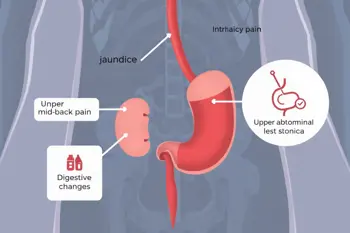
Digestive symptoms may include nausea, vomiting, indigestion, bloating, diarrhea, constipation, or pain after eating. A tumor can interfere with digestion or partly obstruct the passage between the stomach and small intestine. Changes in bowel movements can also include stools that are light-colored, greasy, sticky, or difficult to flush, reflecting reduced digestion of fats. Many common illnesses cause the same complaints, so the duration and combination of symptoms matter. 8
Diabetes and other less specific clues
New-onset diabetes or a sudden difficulty controlling previously stable diabetes can sometimes be associated with pancreatic cancer because the pancreas contains insulin-producing cells. Possible diabetes-related symptoms include increased thirst, increased hunger, frequent urination, and changing blood sugar levels. Diabetes is common and has many causes, so a new diagnosis does not mean cancer is present. Its relevance depends on the broader clinical picture and other findings. 3
Fatigue and weakness may accompany pancreatic cancer, but they are nonspecific and can result from anemia, infection, sleep problems, medication effects, nutritional issues, or many other conditions. Blood clots are another reported possible sign, with symptoms such as pain, swelling, redness, or warmth in an affected leg. Neither fatigue nor a clot identifies pancreatic cancer by itself, but unusual combinations should be medically evaluated. 9
How symptoms are evaluated
Evaluation generally begins with a medical history and physical examination, followed by testing selected according to the symptom pattern. Doctors may use blood tests, imaging studies, and, when necessary, a biopsy to determine whether an abnormality is cancerous and to identify the type of pancreatic tumor. There is no widely accepted routine screening procedure for the general population, while people with strong family histories or inherited risk may be considered for specialized surveillance. 10
Medical evaluation is especially relevant when symptoms are persistent, unexplained, or progressively worsening, or when several warning signs appear together. Jaundice, ongoing abdominal or back pain, unexplained weight loss, appetite loss, vomiting, altered stools, or new blood sugar problems should not be interpreted in isolation from other health conditions. A diagnosis requires clinical assessment rather than symptom matching, because the same signs can arise from noncancerous disorders. 1
Risk context and practical interpretation
Risk context can affect how clinicians interpret symptoms. Reported risk factors include smoking, older age, chronic pancreatitis, obesity, diabetes, and some inherited genetic conditions. A family history of pancreatic cancer or an abnormal inherited gene may lead to discussion of MRI or specialized endoscopic ultrasound surveillance, although surveillance decisions depend on individual risk assessment and medical guidance. 11
The central limitation of symptom awareness is that pancreatic cancer often produces no early warning signs, and later symptoms overlap with many ordinary illnesses. Awareness can help identify meaningful changes, but it cannot replace diagnostic testing or establish cancer independently. Persistent or worsening symptoms should be discussed with a healthcare professional, particularly when jaundice, significant weight loss, severe vomiting, or signs of a blood clot are present. 12
Sources
- Cleveland Clinic, “Signs of Pancreatic Cancer You Should Know,” https://health.clevelandclinic.org/signs-of-pancreatic-cancer
- Harvard Health, “Pancreatic Cancer,” https://www.health.harvard.edu/cancer/pancreatic-cancer-a-to-z
- Cancer Research UK, “Symptoms of pancreatic cancer,” https://www.cancerresearchuk.org/about-cancer/pancreatic-cancer/symptoms
- American Cancer Society, “Signs and Symptoms of Pancreatic Cancer,” https://www.cancer.org/cancer/types/pancreatic-cancer/detection-diagnosis-staging/signs-and-symptoms.html
- HealthyWomen, “Early Signs of Pancreatic Cancer,” https://www.healthywomen.org/condition/early-signs-of-pancreatic-cancer
- Pancreatic Cancer Action Network, “7 Pancreatic Cancer Symptoms and Signs You Should Know,” https://pancan.org/news/7-pancreatic-cancer-symptoms-and-signs-you-should-know/
- Mayo Clinic, “Pancreatic cancer: Symptoms and causes,” https://www.mayoclinic.org/diseases-conditions/pancreatic-cancer/symptoms-causes/syc-20355421
- MedicalXpress, “Pancreatic cancer: Warning signs to heed,” https://medicalxpress.com/news/2026-02-pancreatic-cancer-heed.html
- Centers for Disease Control and Prevention, “Pancreatic Cancer Symptoms,” https://www.cdc.gov/cancer/pancreatic/basic_info/symptoms.htm
- National Cancer Institute, “Pancreatic Cancer Treatment,” https://www.cancer.gov/types/pancreatic/patient/pancreatic-treatment-pdq
- Acibadem Hospitals Group, “Signs of Pancreatic Cancer: Symptoms and Risk Factors,” https://acibademinternational.com/health-library/signs-of-pancreatic-cancer-symptoms-and-risk-factors/
- American Medical Association, “What doctors want patients to know about pancreatic cancer,” https://www.ama-assn.org/public-health/chronic-diseases/what-doctors-want-patients-know-about-pancreatic-cancer
Authored by 24Trendz team