Effective ways to manage knee discomfort naturally: Evidence, limitations, and practical guidance
Effective ways to manage knee discomfort naturally generally focus on movement, strengthening, weight management, temperature therapy, and daily habits rather than miracle cures. These approaches are most relevant to mild or moderate discomfort, particularly symptoms associated with osteoarthritis, but knee pain can also result from injuries, tendon problems, bursitis, meniscus damage, or infection. The cause determines which measures are appropriate. 1
Understand the likely source of discomfort
Knee pain may begin suddenly after an injury or develop gradually through repeated strain and age-related joint changes. Osteoarthritis commonly produces pain, stiffness, swelling, and reduced flexibility, while ligament injuries, meniscus tears, bursitis, and tendinitis can create different patterns of symptoms. Pain felt at the knee may occasionally be referred from the hip or lower back, so persistent or unexplained discomfort should not be treated as a single condition. 1
Natural management is more suitable when symptoms are stable and mild enough to permit ordinary movement. A markedly swollen, hot, red, deformed, or suddenly painful knee may indicate a problem requiring medical assessment rather than home care. Inability to bear weight, fever, or a major injury are also warning signs. 7
Use regular, low-impact movement
Exercise is among the most consistently supported non-drug strategies for knee osteoarthritis. Walking, cycling, swimming, water exercise, and tai chi can improve mobility while placing less impact on the joint than running or jumping. A Cochrane review found that exercise produces modest average improvements in pain and physical function, although individual responses vary and benefits depend on regular participation. 8
During a painful period, activity modification is more useful than complete inactivity. Short, manageable bouts of movement can reduce stiffness, while sharp pain, pronounced swelling, or worsening symptoms indicate that intensity should be reduced. Structured exercise should progress gradually, with attention to walking tolerance, recovery after activity, and whether the knee is becoming more functional over time. 2
Strengthen muscles that support the knee
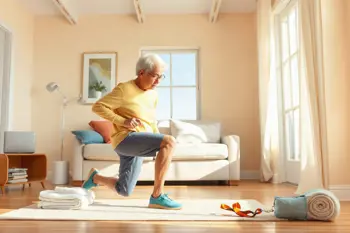
Strengthening the quadriceps, hamstrings, hips, and surrounding muscles can improve the support and control available to the knee. Therapeutic exercise guidelines recommend combining local muscle strengthening with general aerobic fitness. Physical therapists can adapt exercises to a person’s diagnosis, balance, gait, flexibility, and tolerance, which is especially important after an injury or when weakness affects walking mechanics. 4
Common programs may include controlled sit-to-stand movements, straight-leg exercises, step work, resistance training, and flexibility exercises, but the correct selection depends on the cause of pain. Exercises should not be judged only by whether they create temporary muscle effort. Persistent joint swelling, locking, giving way, or escalating pain warrants reassessment rather than repeated progression. 1
Consider body weight and eating patterns
For adults with overweight or obesity and knee osteoarthritis, weight reduction can decrease mechanical loading on the joint and improve pain and mobility. The CDC identifies weight management as an approach that can reduce arthritis-related pain and improve quality of life. The relevant goal is gradual, sustainable change combined with physical activity, not an extreme short-term restriction that may be difficult to maintain. 3
An anti-inflammatory eating pattern emphasizes vegetables, fruit, whole grains, legumes, nuts, seeds, and fish such as salmon, sardines, or mackerel, while limiting heavily processed foods and excess added sugar. Omega-3 fats from fish, walnuts, and ground flaxseed are commonly discussed for their role in inflammatory processes, but diet should support an overall health pattern rather than be presented as a direct cartilage repair treatment. 1
Apply heat, cold, and complementary approaches carefully
Heat may ease stiffness and muscle tightness, particularly before gentle movement. Cold packs can temporarily reduce pain and swelling after activity or during a flare. A cloth barrier should protect the skin, and either method should be used for limited periods rather than continuously. The NHS distinguishes heat for stiffness from ice for swelling, making the symptom pattern more useful than a rigid rule. 7
Tai chi, mindfulness, and other mind-body practices may provide modest relief for some people while also supporting balance, confidence, and regular activity. Acupuncture may help selected individuals, but complementary approaches should supplement, not replace, strengthening and medical evaluation. Turmeric or curcumin supplements remain less certain: the evidence is limited and inconsistent, and potential drug interactions or adverse effects make professional advice important. 5 6
Build a safe, sustainable routine
A practical routine can combine brief mobility work, low-impact aerobic activity, strengthening on scheduled days, and heat or cold according to stiffness or swelling. Tracking pain, walking ability, exercise tolerance, and recovery can help identify whether a strategy is improving function. The American College of Rheumatology and Arthritis Foundation conditionally recommend exercise, weight loss when appropriate, tai chi, and self-management programs for knee osteoarthritis. 5
Natural care has limits. Persistent pain, recurrent swelling, reduced mobility, night symptoms, or failure to improve should prompt evaluation by a qualified clinician or physical therapist. Professional assessment can distinguish osteoarthritis from injuries, inflammatory disease, infection, or referred pain and can identify whether imaging, assistive devices, bracing, medication, or another treatment is appropriate. Self-management is safest when it is adjusted to the diagnosis and reviewed when symptoms change. 1
Sources
- National Institute of Arthritis and Musculoskeletal and Skin Diseases, Osteoarthritis
- Centers for Disease Control and Prevention, Physical Activity and Arthritis
- Centers for Disease Control and Prevention, Weight Management and Arthritis
- National Institute for Health and Care Excellence, Osteoarthritis Recommendations
- American College of Rheumatology and Arthritis Foundation, Osteoarthritis Guideline
- National Center for Complementary and Integrative Health, Turmeric
- National Health Service, Knee Pain
- Cochrane, Exercise for Osteoarthritis of the Knee
Authored by 24Trendz team