Weight loss nutrition for women: An Evidence-Based Guide to Metabolic and Hormonal Optimization
Establishing a healthy approach to weight loss nutrition for women requires an understanding of distinct biological, hormonal, and metabolic parameters that differ significantly from generalized fitness guidelines. Rather than relying on severe restriction or fad diets, a sustainable strategy focuses on nutrient density, metabolic health, and preserving lean muscle tissue. Understanding how to structure daily calorie targets and nutrient splits allows individuals to avoid the restrict-overeat-restart cycle and achieve long-term physiological wellness.
The Physiology of Female Metabolism and Caloric Baselines
Female metabolic calculations must account for a lower baseline muscle mass and lower total daily energy expenditure compared to unisex averages 1. To establish an accurate starting point, dietitians frequently utilize the Mifflin-St Jeor equation to estimate the Basal Metabolic Rate, which measures the calories required to sustain basic physiological functions at rest 2. For instance, a moderately active woman weighing 150 pounds may have a total daily energy expenditure of approximately 2103 calories 2.
Subtracting a modest 350 to 500 calories from this total creates a safe, sustainable caloric deficit that supports a steady fat loss of 0.5 to 0.75 pounds per week without triggering metabolic adaptation 2 3. Extreme caloric restriction often yields diminished returns, as the female body is highly sensitive to severe energy deficits, which can quickly disrupt endocrine function and suppress thyroid activity 3. Maintaining a moderate deficit preserves energy levels, supports performance, and prevents the compensatory binging patterns associated with crash diets 3.
Establishing Macronutrient Baselines for Sustainable Fat Loss
To optimize body composition, macronutrient distribution must be tailored to protect existing muscle mass and regulate hunger signals. A baseline recommendation for active women is to target 0.8 to 1.0 grams of protein per pound of body weight daily 1. Consuming adequate protein during a caloric deficit provides the essential amino acids required to maintain lean tissue, which in turn helps sustain a higher resting metabolic rate 1 3. Equally vital is the consumption of dietary fats, which should remain above a non-negotiable minimum of 0.35 to 0.4 grams per pound of body weight 1 2. Lowering fat intake below this threshold can compromise the production of regulatory hormones like estrogen and progesterone, directly impacting sleep, mood, and overall recovery 4. The remaining daily energy budget is allocated to healthy carbohydrates to fuel physical activity and support recovery 2.
| Weight | Target Calories | Daily Protein | Daily Carbohydrates | Daily Fat |
|---|---|---|---|---|
| 120 lb | 1542 | 120g | 158g | 48g |
| 130 lb | 1612 | 130g | 156g | 52g |
| 150 lb | 1753 | 150g | 153g | 60g |
| 170 lb | 1894 | 170g | 150g | 68g |
Midlife Transitions, Perimenopause, and Body Recomposition
For women navigating perimenopause and menopause, traditional dieting approaches often fail to address shifting hormonal realities. As estrogen levels decline, women face an accelerated loss of muscle mass, known as sarcopenia, alongside reduced insulin sensitivity and a natural slowdown in basal metabolic rate 4. This often causes fat to store more easily around the abdomen, making traditional calorie-counting diets less effective 5.
To counteract these metabolic shifts, women over 40 and 50 are advised to prioritize body recomposition, the process of reducing body fat while actively preserving or building muscle 6. Achieving this requires adjusting macronutrient ratios to emphasize a higher protein intake, often ranging between 1.1 to 1.2 grams per pound of body weight 4. Concurrently, lowering refined carbohydrate intake and maintaining healthy dietary fats helps manage insulin sensitivity and support optimal cortisol levels 4 5.
Micronutrient Priorities and Hormonal Variations
A successful female nutritional strategy must look beyond macronutrients to address essential micronutrient requirements. Premenopausal women are highly susceptible to iron-deficiency anemia due to monthly menstrual blood loss, making adequate dietary iron intake critical to maintaining cellular energy and preventing fatigue during weight loss 1 7. Furthermore, ensuring a daily intake of 1,000 milligrams of calcium, paired with adequate vitamin D, helps mitigate the risk of bone density loss that can occur during prolonged periods of energy restriction 1.
Hormonal fluctuations throughout the menstrual cycle also directly influence metabolic rates and nutritional requirements. For example, during the luteal phase, a woman's resting metabolic rate can increase by 100 to 300 calories per day, which naturally heightens appetite and cravings 1. Recognizing these normal biological shifts allows for flexible caloric adjustments rather than strict, unyielding restriction. Additionally, avoiding crash diets is vital for individuals with conditions like Polycystic Ovary Syndrome (PCOS), as severe calorie deprivation can worsen insulin resistance and disrupt ovulation 8.
Practical Meal Structure and the Ideal Plate Method
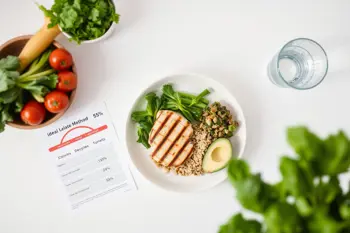
Implementing these nutritional principles into daily life can be simplified by focusing on a structured, nutrient-dense plate composition. The Ideal Plate Method offers a visual guide for main meals, distributing foods to maximize both satiety and nutritional value 3.
- Vegetables (50% of the plate): Prioritizing non-starchy leafy greens, cruciferous vegetables, and colorful, fiber-rich options to promote gut health and satiety 3 7.
- Lean Protein (25% of the plate): Incorporating quality sources such as skinless chicken breast, wild-caught fish, eggs, tofu, Greek yogurt, or legumes 3 7.
- Whole Grains or Complex Carbs (25% of the plate): Opting for slow-digesting carbohydrates such as oats, brown rice, quinoa, and sweet potatoes to sustain energy levels 3.
- Healthy Fats (small serving): Adding limited portions of avocados, nuts, seeds, or extra virgin olive oil to support fat-soluble vitamin absorption 3.
Chrononutrition, Personalization, and Potential Diet Pitfalls
Emerging research highlights the value of personalized nutrition plans that align dietary recommendations with individual genetics, gut microbiome health, and blood biomarkers 9. This tailored approach helps design meals that specifically match metabolic capacity and digestive efficiency, enhancing overall adherence 9. Additionally, modern clinical studies are evaluating chrononutrition, the practice of aligning food intake with circadian rhythms, as an effective tool for supporting healthy weight management, particularly during postpartum recovery 10.
Conversely, ignoring biological differences by following generic fitness trends can lead to unwanted physical adaptations. For example, clinical findings indicate that fasted workouts can raise cortisol levels significantly in women, triggering a starvation response that actually promotes abdominal fat storage 11. By focusing on consistent, timed, and well-balanced meals, women can support metabolic health, optimize hormonal profiles, and achieve sustainable long-term weight management 3 9.
Sources
- Macro Counting Guide
- Macronutrients.com
- PhysicalFitt
- Macronutrients.com (Over 40)
- Alibaba Wellness
- Eve Biology
- Centers for Disease Control and Prevention
- News9live
- Harmony.care
- Medical Xpress
- Boxlife Magazine
Authored by 24Trendz team