Train journeys through the Blue Ridge Mountains: An analytical overview of regional rail excursions
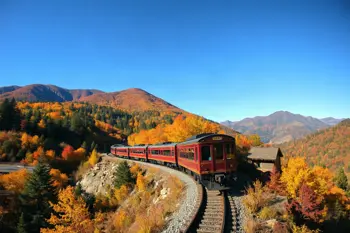
Train journeys through the Blue Ridge Mountains provide a distinctive vantage point for observing the Appalachian landscape, blending historical rail heritage with modern tourism operations. Across the region, various heritage lines and national carriers facilitate travel through diverse forest ecosystems, including George Washington and Jefferson National Forests 2. These excursions typically prioritize scenic engagement over high-speed transit, utilizing restored vintage rail cars to navigate terrain characterized by river valleys, steep grades, and significant mountain passes 4, 6.
Regional Rail Excursion Landscapes
The Blue Ridge region features several localized tourist railroads that operate independently of major national transit networks. In North Georgia, the Blue Ridge Scenic Railway provides a 26-mile round-trip excursion originating from a 1905 historic depot in downtown Blue Ridge 4, 6. This route follows the Toccoa River toward the border towns of McCaysville, Georgia, and Copperhill, Tennessee, winding through the Chattahoochee National Forest 4. Operational schedules for these excursions vary by season, often incorporating special holiday events or evening rides that align with regional celebrations 4.
Similarly, the Virginia Scenic Railway offers excursions departing from the historic Wharf Area in Staunton, Virginia 5. These trips traverse the Shenandoah Valley and surrounding mountain topography, with routes such as the Blue Ridge Flyer and the Alleghany Special providing three-hour round-trip experiences 2. These journeys utilize specialized equipment, including glass-dome cars, to maximize visibility of the changing Appalachian foliage and mixed-pine hardwood landscapes 1, 2, 5. Passengers on these lines may observe historical infrastructure, such as the Blue Ridge Tunnel and various rock cut-outs, which signify the engineering challenges faced during the region's initial railway development 5.
Operational Dynamics and Passenger Experience
Tourist rail operations in the Blue Ridge Mountains differ significantly from traditional intercity rail. These lines, such as the Potomac Eagle Scenic Railroad in West Virginia and the Western Maryland Scenic Railroad, focus on providing a controlled, slow-paced environment that allows for extended observation of river corridors and mountainous wilderness areas 7, 8. The operational pace, often maintained at approximately ten miles per hour on flat sections, is designed to reduce the friction of conventional travel and emphasize the natural surroundings 9, 10.
Technical equipment on these lines ranges from open-air cars that provide direct exposure to the mountain air to climate-controlled, restored vintage coaches 6, 10. Dome cars remain a distinct feature for passengers seeking vertical clearance and panoramic views of the forward and aft tracks 1. Maintenance of these vintage assets requires specialized technical oversight to ensure safe operation, while infrastructure, such as siding tracks used for meeting freight traffic, serves as a reminder of the corridor's ongoing industrial utility alongside its tourist function 1.
Geographic Distribution of Mountain Rail
The rail network in the Blue Ridge and broader Appalachian region is extensive, with several distinct hubs serving different sub-ranges. Moving north, the Cass Scenic Railroad State Park in West Virginia utilizes the historic Cass rail yard to provide steam-train excursions into the higher elevations of the mountains, including travel toward Bald Knob 6. These routes are heavily forested and often provide a more rugged experience compared to the valley-based lines found in Georgia or the Shenandoah region 2, 6.
While tourist railways cater to leisure-focused movement, Amtrak’s Cardinal route serves as the primary long-distance passenger link through the region 1. This service connects major metropolitan areas including Washington, D.C. and Chicago, crossing through Virginia and West Virginia mountain passes 3. Unlike tourist excursions, the Cardinal functions as an integrated part of the national rail network, providing a view of the mountains from a different operational context than the localized, round-trip tourist trains 1. The juxtaposition of these two types of rail travel offers a comprehensive view of how transportation infrastructure intersects with the Blue Ridge landscape.
Regulatory and Logistical Considerations
Participation in mountain rail excursions involves specific planning related to schedules and boarding logistics. Because many of these lines rely on single-track configurations or historical rights-of-way, adherence to strict departure times is necessary to maintain safe signaling intervals 1. Passengers should be aware that while these trips are marketed for relaxation, they remain subject to federal and state rail regulations, which dictate seating arrangements, car safety, and operational protocols 2, 6.
Infrastructure limitations also impact the accessibility and availability of these journeys. For instance, dome seating is often limited in capacity, and specialized meal services are managed according to the train's specific service class 5, 8. Furthermore, external factors such as seasonal maintenance, weather-related track inspections, and the integration of freight traffic on shared lines can lead to periodic schedule shifts 1, 4. Prospective travelers are generally expected to monitor the status of their specific excursion line directly through official operating channels, as these railways operate independently of one another and utilize different booking and ticketing systems 4, 9.
Historical Context and Preservation
The preservation of rail heritage in the Blue Ridge Mountains is rooted in the late 19th and early 20th-century development of the region's resource extraction and transport industries. Many of the current tourist routes were formerly segments of significant regional lines, such as the old Louisville and Nashville Railroad or the Chesapeake and Ohio (C&O) grade 1, 6. The physical remnants of these systems, including tunnels, stone embankments, and historic station depots, form the literal foundation upon which modern scenic tourism is built 1, 5.
Maintenance of these assets is a recurring operational challenge for the organizations involved. Preservation efforts must balance the need to modernize mechanical safety features with the requirement to retain the historical character of the rolling stock 6. This dual focus ensures that the experience remains authentic for enthusiasts while complying with modern passenger safety standards. The survival of these lines serves to preserve a specific era of mountain engineering that would otherwise be largely invisible to the public traveling exclusively on modern highways like the Blue Ridge Parkway 5, 6.
Environmental and Seasonal Variables
Train travel in the Blue Ridge Mountains is inherently tied to the seasonal cycles of the Appalachian ecosystem. The timing of excursions is often planned to align with the peak of spring blooming or the autumn leaf-peeping season, as visibility of the forest canopy is a primary attraction for passengers 3, 5. During these peak windows, the demand for tickets increases, and the visibility of the terrain from the train windows provides a perspective on the density and health of the surrounding forests, including poplars, oaks, and maples 2.
However, travelers should note that the environment can be hazy or subject to rapid weather shifts in mountain elevations, which can impact visibility during the journey 8. Furthermore, the proximity of the rail lines to rivers, such as the Toccoa or the Potomac, means that water levels and seasonal vegetation growth can occasionally affect the aesthetic experience of the trip 4, 7. Understanding these variables assists in managing expectations for what remains a dynamic, outdoor-integrated travel experience 8, 9.
Sources
- https://briansolomon.com/trackingthelight/blue-ridge-flyer-views-from-the-dome/
- https://www.yahoo.com/lifestyle/articles/virginias-blue-ridge-mountains-boasts-200000302.html
- https://www.amtrak.com/routes/cardinal-train.html
- https://gamountainsguide.com/blue-ridge-scenic-railway
- https://eu.indeonline.com/story/lifestyle/travel/2025/12/29/virginia-train-excursion-through-shenandoah-valley-blue-ridge-flyer-staunton-amtrak-station/87791466007/
- https://bigkahunariverlodge.com/exploring-the-blue-ridge-scenic-railway-a-complete-visitor-guide/
- https://potomaceagle.com/
- https://wmsr.com/
- https://www.gsmr.com/
- https://familyvacationsus.com/take-a-look-at-this-45-mile-virginia-train-ride-through-the-mountains-you-ll-talk-about-for-weeks-5a6fbef8/
Authored by 24Trendz team