Best pelvic floor therapy for postpartum recovery: A professional guide to clinical rehabilitation standards
The period following childbirth, often referred to as the fourth trimester, involves significant physiological shifts that affect the pelvic floor, core musculature, and connective tissues 1. While common symptoms such as urinary leakage, pelvic pressure, and discomfort are frequently observed, clinical consensus suggests these issues are treatable rather than permanent conditions that must be endured 2. Pelvic floor physical therapy has emerged as a specialized rehabilitation approach, recommended by organizations such as the American College of Obstetricians and Gynecologists (ACOG) as a standard, non-surgical intervention for managing postpartum pelvic floor dysfunction 3. This report outlines the clinical framework and rehabilitative expectations for individuals seeking professional support after delivery.
The Clinical Scope of Pelvic Floor Rehabilitation
Pelvic floor physical therapy is a specialized discipline focused on the muscles, ligaments, and connective tissues that support the bladder, uterus, and rectum 4. During pregnancy and childbirth, these structures are subjected to immense pressure, often leading to muscle weakness, overactivity, or poor coordination regardless of the delivery method 5. Clinical evaluations often identify conditions such as urinary incontinence, pelvic organ prolapse, and dyspareunia (painful intercourse) as primary markers for intervention 6. Beyond these specific symptoms, therapy addresses functional concerns such as lower back pain, abdominal separation (diastasis recti), and difficulty performing daily activities like lifting a newborn 7.
Evidence-Based Assessment Protocols
Comprehensive postpartum evaluations extend far beyond standard medical checkups. A licensed pelvic health clinician typically assesses functional movement patterns, resting muscle tension, and coordination between the diaphragm and pelvic floor 8. Standard assessment tools often include the PERFECT scale to measure muscle strength and endurance, alongside clinical screening for diastasis recti 9. By evaluating how the abdominal wall coordinates with the pelvic floor, therapists can develop individualized treatment plans that address whether muscles are functionally weak, excessively tight, or both 10.
Common Therapeutic Modalities
Rehabilitation programs utilize a variety of evidence-based techniques to restore function. Manual therapy, including internal and external myofascial release, is frequently employed to address trigger points and areas of muscle restriction resulting from pregnancy or birth trauma 11. For patients struggling to identify or isolate their pelvic muscles, clinicians may utilize biofeedback or electrical stimulation to improve neuromuscular recruitment and proprioception 12. These modalities serve as a foundation for transitioning patients toward therapeutic exercises that target the transverse abdominis and pelvic floor musculature in a safe, controlled manner 13.
Integrating Breathwork and Functional Movement
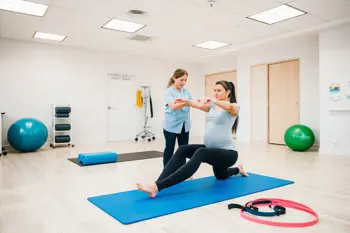
Modern clinical approaches emphasize the integration of rhythmic breathwork with pelvic floor engagement to facilitate natural healing 14. Postpartum recovery is not solely about isolating specific muscles; it is about retraining the body to function as a cohesive unit during physical demands. Therapists provide guidance on managing intra-abdominal pressure during daily tasks, which helps reduce symptoms of prolapse and prevents chronic pain 15. This functional training is essential for patients aiming to return to higher-impact activities or exercise, as it ensures that the pelvic floor is prepared for the specific mechanical stresses of their chosen movements 16.
Timeline and Maintenance Expectations
A typical course of postpartum pelvic floor therapy generally spans six to twelve weeks, though this varies significantly based on individual symptoms and the severity of the initial dysfunction 17. Ongoing maintenance is a critical component of the rehabilitation process, as tissues continue to heal and adapt over several months. Regular follow-up appointments allow clinicians to modify exercise prescriptions as the patient gains strength and progresses in their recovery timeline 18. Proactive assessment during the early postpartum period is often encouraged, as it allows for the identification of dysfunction before symptoms become chronic or exacerbated by daily activity 19.
Navigating Professional Care
Identifying qualified practitioners involves looking for specialized credentials, such as the Pelvic Rehabilitation Practitioner Certification (PRPC), which indicates advanced expertise in women's health and pelvic floor mechanics 20. Professional organizations like the American Physical Therapy Association (APTA) and the Herman and Wallace Pelvic Rehabilitation Institute provide therapist locator tools to assist in finding board-certified clinicians 21. Because postpartum symptoms often intersect with physical, emotional, and logistical demands, virtual pelvic floor physical therapy has also become an available avenue for those requiring flexible, one-on-one care in their home environments 22.
Sources
- Hinge Health: Postpartum Physical Therapy Guide
- Acibadem Hospitals Group: Pelvic Floor Therapy After Childbirth
- American College of Obstetricians and Gynecologists (ACOG)
- Ohio Sports & Spine: Pelvic Floor Therapy Overview
- Health Spectra: Benefits of Postpartum Physical Therapy
- Cleveland Clinic: Pelvic Floor Dysfunction and Incontinence Care
- Lake City Physical Therapy: Postpartum Recovery Guide
- Mayo Clinic: Advancing Care for Childbirth-Related Disorders
- National Institutes of Health (NIH): Diastasis Recti Assessment Protocols
- Capria Care Collective: Understanding Postpartum Pelvic Changes
- Journal of Women's Health Physical Therapy: Manual Therapy Standards
- Johns Hopkins Medicine: Biofeedback for Pelvic Health
- WebMD: Physical Therapy for Postpartum Rehabilitation
- Mayo Clinic: Breathwork and Pelvic Floor Integration
- PelvRX: Postpartum Functional Recovery
- Women's Health Magazine: Clinical Perspectives on Pelvic Rehabilitation
- Shely Health: Postpartum Rehab and Kegel Education
- Harvard Health Publishing: Modifying Exercise During Recovery
- American Physical Therapy Association (APTA): Directory of Specialists
- Herman & Wallace Pelvic Rehabilitation Institute
- Academy of Pelvic Health Physical Therapy
- Journal of Postpartum Health: Virtual PT Efficacy
Authored by 24Trendz team