Natural remedies for hives: Clinical perspectives on managing urticaria symptoms
Understanding Urticaria: The Biological Mechanism of Hives
Hives, medically referred to as urticaria, manifest as raised, itchy welts that can appear suddenly on any part of the body 5. These lesions occur when mast cells within the skin are triggered, causing them to release histamine and other inflammatory chemicals into the surrounding tissues 7. This process results in increased fluid leakage from small blood vessels, which creates the classic appearance of a pale, itchy wheal surrounded by red, inflamed skin 8. A defining clinical characteristic of these hives is their transient nature; individual wheals typically resolve within 24 hours, though new crops may continue to appear during a flare-up 7, 8.
While many episodes are idiopathic-meaning the specific cause cannot be determined-others are linked to internal or external stimuli 1. Triggers frequently include food allergies, such as peanuts, tree nuts, fish, and shellfish, or reactions to medications like aspirin and certain nonsteroidal anti-inflammatory drugs 7, 9. Furthermore, physical factors such as extreme heat or cold, pressure on the skin, intense exercise, and even viral or bacterial infections can initiate the immune system to release histamine 1, 9. Understanding these underlying drivers is a primary component of managing both acute and chronic cases of the condition 2.
Essential Self-Care Measures for Itch Relief
When dealing with the discomfort of hives, the focus of supportive care is to soothe irritated skin while avoiding further agitation. A cold compress or ice pack, applied to the affected area for 10 to 20 minutes, is often cited as an effective method for reducing localized swelling and intense itching 2, 9. It is essential that the temperature is not extreme, as sudden changes in temperature, including very hot or cold items, can sometimes provoke further reactions 4. Maintaining a stable, comfortable environment helps prevent the mast cells from further activation 4.
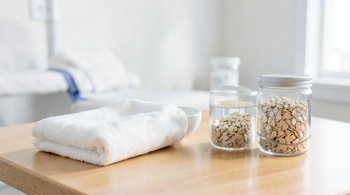
Personal hygiene adjustments also play a significant role in managing daily comfort during a flare-up. Taking a lukewarm bath-never hot, which can exacerbate the itching sensation-with colloidal oatmeal can provide significant relief for inflamed skin 2, 9. Furthermore, clinical guidance emphasizes the use of loose-fitting cotton clothing to prevent mechanical irritation of the skin, alongside the use of fragrance-free, hypoallergenic skin-care products to avoid contact dermatitis or additional chemical triggers 4, 9.
Distinguishing Acute from Chronic Urticaria
The duration of symptoms is a critical factor in how healthcare professionals approach the diagnosis and management of hives. Acute hives are typically defined as those that resolve within six weeks and are often linked to direct, identifiable triggers such as infections, medications, or food allergies 9. Because these outbreaks are often self-limiting, the primary management strategy involves identifying and subsequently avoiding the offending trigger to prevent recurrence 3, 5.
In contrast, chronic urticaria refers to hives that persist for more than six weeks, often without an obvious external trigger 9. These cases frequently involve complex underlying factors, including autoimmune responses or long-term systemic inflammation 9. Management for chronic cases requires a more rigorous diagnostic process, as lifestyle modifications must be sustained over longer periods, sometimes taking a year or more to achieve full resolution 4. Clinical evaluation is necessary to distinguish chronic urticaria from other dermatological conditions that may mimic its appearance 3.
Dietary and Lifestyle Considerations for Management
While food allergy hives are specific, many individuals seek to calm systemic inflammation through dietary adjustments that minimize the body's overall histamine load. Reducing the consumption of histamine-rich foods-such as aged cheese, red wine, fermented cabbage, cured meats, and certain citrus fruits-may help lower the cumulative level of histamine in a system that is already sensitized 7. Maintaining adequate hydration is also highlighted as a way to support renal function and the body's natural detoxification pathways 5.
Stress management is another vital, though often overlooked, aspect of managing recurrent hives. Because the nervous system and the immune system are interconnected, states of high stress or anxiety can serve as a catalyst for mast cell degranulation 5. Incorporating consistent, gentle lifestyle routines and identifying stressors can assist in reducing the frequency of flare-ups, particularly in patients diagnosed with chronic spontaneous urticaria 4, 5.
When to Seek Urgent Medical Attention
Although most hives are benign and resolve without complications, there are critical red flags that necessitate immediate emergency intervention. If the appearance of hives is accompanied by swelling of the face, lips, tongue, or throat, or if the individual experiences difficulty breathing, swallowing, dizziness, or a sudden drop in blood pressure, these may be symptoms of anaphylaxis 3, 9. Such systemic reactions are life-threatening and require professional medical care without delay 9.
Individuals who do not exhibit signs of severe systemic distress but continue to experience frequent, recurring hives should consult a healthcare provider for a thorough examination. Medical professionals may suggest the use of non-sedating, second-generation antihistamines as a first-line pharmacologic treatment to manage the histamine response more directly than home-based remedies allow 3, 9. Consultation is particularly important for pregnant individuals, children, or those currently taking other prescription medications to ensure there are no contraindications 9.
Evaluating the Role of Natural Supplements
There is frequent interest in the use of natural supplements, such as quercetin, stinging nettle, or high-dose vitamin C with bioflavonoids, for the management of hives due to their theoretical ability to stabilize mast cells 6. However, it is imperative to approach these substances with clinical caution. Natural products and herbal supplements are not standardized or universally established treatments for urticaria, and they carry the risk of unexpected allergic reactions or adverse interactions with conventional medications 9.
Evidence remains limited regarding the long-term efficacy and safety of many herbal interventions for skin conditions. Because the immune system is already in a state of hypersensitivity during a hive outbreak, introducing external substances can occasionally aggravate the immune response rather than quell it 9. Reliance on these methods should always be discussed with a medical professional to ensure they align with the patient’s overall health status and do not delay the adoption of proven clinical treatments when necessary 6.
Sources
- Prevention: Dermatologists Share How to Get Rid of Hives
- Liv Hospital: How to Get Rid of Hives Naturally: 12 Remedies
- Acibadem Hospitals Group: How To Get Rid Of Hives: Causes And Next Steps
- Cleveland Clinic: Lifestyle Tips for Managing Your Chronic Hives
- Ask a Naturopath: Understanding Urticaria (Hives)
- Ubie Health: Science-Backed Natural Remedies for Food Allergy Hives
- ScienceInsights: How to Get Rid of Hives: Home Remedies and Treatments
- Health and Beyond: Urticaria Treatment Guide
- NCBI Bookshelf: Clinical Overview of Urticaria
Authored by 24Trendz team