Natural remedies for managing tension throughout the day: Evidence, routines, and safety considerations
When the day feels too loud, too fast, or too full, natural remedies for managing tension throughout the day can provide practical ways to pause and regulate. The aim is not to erase every difficult feeling, but to create repeatable signals of calm through breath, movement, sensory rituals, and healthier daily patterns. Herbs may complement these practices, although they do not replace professional care when stress is persistent, severe, or disruptive. 1
Understanding daytime tension
Stress is a normal physical and emotional response to challenging or unfamiliar situations. Short-term stress can support problem-solving, but long-term stress may contribute to sleep problems, difficulty concentrating, changes in appetite or energy, headaches, stomach problems, and worsening mental or physical health conditions. Recognizing these signs can help distinguish an occasional tense period from a pattern that requires broader support. 6
Tension often has both mental and physical features, including racing thoughts, shallow breathing, tight shoulders, a clenched jaw, restlessness, or irritability. Stressors are subjective, meaning the same event may affect people differently. A useful approach therefore matches the technique to the moment, such as breathing during acute activation, movement after prolonged sitting, or sleep-focused changes when evening restlessness is recurring. 14
Breathing and progressive relaxation
Slow, controlled breathing is a low-complexity technique that can help a person shift attention away from urgency and toward a steadier physical rhythm. The National Center for Complementary and Integrative Health describes deep breathing and progressive muscle relaxation as practices that may evoke the relaxation response. The NHS also identifies controlled breathing as a simple method for feeling calmer and managing stress. 918
Progressive muscle relaxation addresses physical tension directly. It involves briefly tightening and then releasing muscle groups, allowing the contrast to make stored tension easier to notice. The method can be adapted for a desk break, with attention given to the hands, shoulders, jaw, abdomen, and legs. People with pain, injury, or conditions affected by muscle tightening should seek individualized guidance before practicing it. 11
Mindfulness, yoga, and movement breaks
Mindfulness meditation may help reduce stress, anxiety, and related symptoms when practiced regularly, although research quality varies across studies. Its practical role during the day is to observe thoughts, sensations, and emotions without immediately reacting to them. Short periods can be placed before a demanding task, after a difficult conversation, or during a transition between work and home responsibilities. 10
Yoga combines physical poses, breathing, and meditation, making it a multifaceted approach to stress management and relaxation. Regular physical activity is also associated with improved sleep, reduced feelings of anxiety, and better overall mental health. For people who sit for long periods, brief movement breaks can interrupt sedentary time and support physical and mental well-being without requiring a formal workout session. 171213
Herbs and sensory rituals
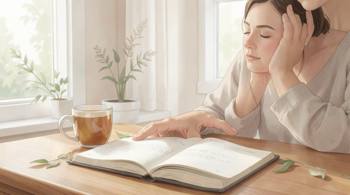
Herbs traditionally used for calmer routines include chamomile and other plants described in herbal traditions as nervines. A warm herbal drink, familiar aroma, or deliberate pause can provide a sensory cue that marks a transition out of urgency. The ritual may be as important as the ingredient because repetition creates a predictable moment for slower breathing and attention. Evidence for many herbal supplements remains limited, so traditional use should not be presented as proof of treatment effectiveness. 12
Natural does not mean risk-free. Supplements are not regulated as closely as prescription medicines for safety, effectiveness, or quality, and some herbs can cause side effects or interact with medicines. Kava, 5-HTP, chamomile, magnesium, and other products differ substantially in evidence and safety considerations. Pregnancy, nursing, chronic illness, allergies, and prescription medication use are reasons to consult a qualified healthcare professional before using an herbal supplement. 27
Sleep, caffeine, and the daily environment
Adequate, consistent sleep supports emotional regulation, while sleep deprivation can worsen stress and mood. Daytime tension may therefore be influenced by nighttime habits, including irregular sleep schedules, stimulating media, or late caffeine intake. A practical routine can include a consistent sleep window, reduced evening stimulation, and a transition ritual that separates work or digital activity from rest. 143
Caffeine affects people differently, but excessive intake can cause nervousness, jitters, increased heart rate, and sleep problems. Tracking when tension appears can help identify whether coffee, tea, energy drinks, or other caffeine sources coincide with symptoms. Time outdoors may also support mental well-being, as exposure to natural environments has been associated with reduced stress. These changes address environmental inputs rather than relying only on supplements. 1615
Building a practical safety-conscious routine
A manageable routine can link one technique to each part of the day. Morning light and gentle movement may establish a calmer starting point; controlled breathing can be used before a stressful task; a brief walk can interrupt prolonged sitting; and mindfulness or progressive relaxation can help with late-day tension. The CDC emphasizes that small daily steps and identifying personal stress triggers can have a meaningful effect on coping. 6
- During sudden tension, use slow breathing and relax the jaw and shoulders.
- After extended sitting, stand, stretch, or walk briefly.
- When thoughts feel scattered, practice a short period of mindful observation.
- When tension recurs at night, review sleep consistency and caffeine timing.
- Before using supplements, check interactions, health conditions, and product quality with a healthcare professional.
Relaxation practices are generally considered low-risk, but they are not universal treatments. Persistent anxiety, panic attacks, depression, trauma symptoms, ongoing insomnia, or symptoms that interfere with work and home life warrant professional assessment. Stress management can include coping skills, problem-solving, emotional awareness, relaxation, meaningful activities, and stronger social connections. Natural approaches are most responsibly viewed as supportive tools within that wider framework. 438
Sources
- Air Tea Company, “Herbs for Stress and Anxiety That Support a Calmer Day”
- GoodRx, “14 Over-the-Counter Natural Remedies for Anxiety”
- PsyForU Research International, “From Herbs to Habits: Natural Ways to Reduce Stress”
- WebMD, “Stress Management: Techniques That Work”
- OlyLife International, “Natural Remedies for Anxiety: Complete Guide to Calm”
- Centers for Disease Control and Prevention, “Managing Stress”
- Ambuja Yoga, “Daily Herbal Ritual for Calm and Clarity”
- Air Tea Company, “Natural Anxiety Relief Through Herbs, Breath, and Ritual”
- National Center for Complementary and Integrative Health, “Relaxation Techniques for Health”
- National Center for Complementary and Integrative Health, “Meditation and Mindfulness: Effectiveness and Safety”
- Mayo Clinic, “Progressive Muscle Relaxation”
- Centers for Disease Control and Prevention, “Health Benefits of Physical Activity”
- American Heart Association, “How to Reduce Sitting Time”
- Sleep Foundation, “Stress and Sleep”
- Harvard Health Publishing, “Sour Mood? Get Outside”
- U.S. Food and Drug Administration, “Spilling the Beans: How Much Caffeine Is Too Much?”
- Johns Hopkins Medicine, “Yoga Benefits”
- National Health Service, “Relaxation”
Authored by 24Trendz team