Advanced Therapies for Knee Pain Without Surgery: Exploring Non-Surgical Relief
Facts:
- Knee pain affects millions globally, limiting daily activities.
- A significant trend shows increasing demand for non-surgical knee pain relief for athletes and active individuals.
Exploring Innovative Non-Surgical Approaches to Knee Pain
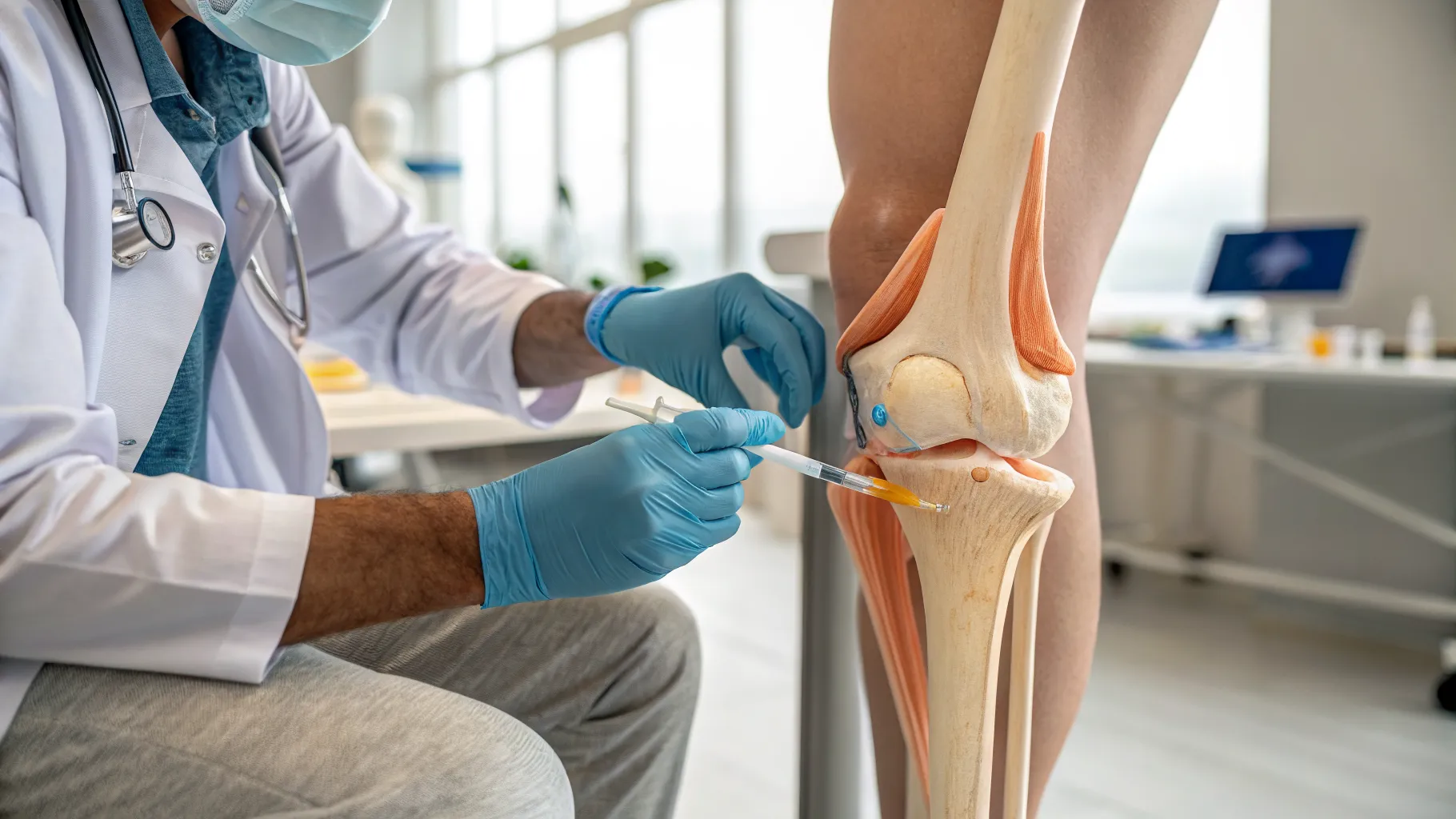
For individuals grappling with persistent knee pain, the prospect of surgery can be daunting. Fortunately, advancements in medical science have opened up a realm of sophisticated and effective alternatives, offering significant non-surgical knee pain relief. These innovative therapies are transforming how chronic knee conditions are managed, allowing many to regain mobility and improve their quality of life without the need for invasive procedures. From cutting-edge biological treatments to advanced injection techniques, the focus is now on healing, regeneration, and long-term symptom management, making regenerative medicine for knees a pivotal area of interest for both patients and clinicians.
Understanding Advanced Non-Surgical Knee Pain Relief Options
The landscape of knee pain management has evolved dramatically, moving beyond simple pain medication and physical therapy to embrace more targeted and restorative treatments. These advanced options aim to address the root cause of the pain, often involving the stimulation of the body's natural healing processes or the introduction of therapeutic substances directly into the affected joint. Patients are increasingly seeking these less invasive paths, driven by the desire for reduced recovery times, lower risks associated with surgery, and the potential for genuine tissue repair. Understanding each option is crucial for making an informed decision about your personalized treatment plan for lasting non-surgical knee pain relief.
Platelet-Rich Plasma (PRP) Therapy: Harnessing Your Body's Healing Power
Platelet-rich plasma therapy is a revolutionary treatment that utilizes the patient's own blood to promote healing in damaged tissues. The process involves drawing a small amount of blood, processing it to concentrate the platelets, and then injecting this PRP solution directly into the affected knee joint. Platelets are rich in growth factors, which are essential proteins that stimulate cell regeneration, reduce inflammation, and accelerate tissue repair. This therapy is particularly effective for conditions like osteoarthritis, tendonitis, and ligament sprains, offering a biological approach to pain reduction and functional improvement by enhancing the natural healing environment within the knee.
Stem Cell Therapy for Knee Regeneration: A New Frontier
Another powerful option within regenerative medicine for knees is stem cell therapy. This treatment involves harvesting stem cells, typically from the patient's own bone marrow or adipose (fat) tissue, and injecting them into the injured knee. Stem cells possess the unique ability to differentiate into various cell types and to facilitate the repair and regeneration of damaged cartilage, bone, and soft tissues. This makes stem cell therapy for knee pain a promising avenue for treating more severe forms of osteoarthritis and significant cartilage defects, aiming not just for symptomatic relief but for actual structural improvement and long-term joint health.
Viscosupplementation: Lubricating and Cushioning the Joint
For individuals suffering from osteoarthritis, viscosupplementation offers a targeted approach to improve joint function and reduce pain. This therapy involves injecting hyaluronic acid, a natural substance found in healthy joint fluid, directly into the knee joint. In osteoarthritic knees, the natural hyaluronic acid breaks down, leading to reduced lubrication and shock absorption. By supplementing this essential fluid, viscosupplementation helps to restore the lubricating and cushioning properties of the synovial fluid, thereby reducing friction, pain, and improving mobility. It provides a protective layer that allows the joint to move more smoothly and with less discomfort.
Prolotherapy and Other Injection Therapies for Stability
Beyond biological and lubricating injections, other advanced injection therapies provide crucial non-surgical knee pain relief by strengthening connective tissues. Prolotherapy, for instance, involves injecting a dextrose solution into ligaments and tendons around the knee. This solution acts as an irritant, triggering a localized inflammatory response that stimulates the body's natural healing cascade, leading to the growth of new, stronger collagen fibers. This effectively tightens and strengthens weakened ligaments and tendons, providing greater stability to the knee joint and reducing chronic pain often associated with laxity or overuse injuries, thereby offering durable relief.
The Benefits of Regenerative Medicine for Knees
The advantages of embracing regenerative medicine for knees are manifold, extending far beyond simply avoiding surgery. These therapies aim to stimulate the body's innate capacity for self-repair, leading to more natural and sustained healing. Patients often experience reduced pain, improved function, and enhanced mobility, allowing them to return to activities they enjoy with fewer limitations. Furthermore, the risk profiles associated with these procedures are generally lower than surgical interventions, involving minimal downtime and a decreased likelihood of complications. This holistic approach supports the long-term health and structural integrity of the knee, making it an attractive option for comprehensive care.
Who is a Candidate for Advanced Therapies?
Determining suitability for advanced non-surgical knee pain relief therapies requires a thorough evaluation by a specialized physician. Generally, candidates include individuals with mild to moderate osteoarthritis, chronic tendonitis (e.g., patellar tendonitis, quadriceps tendonitis), ligament sprains, and certain meniscal injuries. Patients who have not responded well to conventional treatments like physical therapy or oral medications but wish to avoid surgery are often ideal candidates. A detailed medical history, physical examination, and imaging studies (like MRI) are crucial to assess the extent of damage and ensure that the chosen therapy aligns with the patient's specific condition and overall health goals.
Preparing for Your Non-Surgical Knee Treatment
Preparation for advanced non-surgical knee pain relief treatments typically involves a detailed consultation with your healthcare provider. This ensures a clear understanding of the procedure, expected outcomes, and any necessary pre-treatment instructions, such as temporarily discontinuing certain medications (e.g., NSAIDs) that might interfere with the body's healing response. Post-treatment care usually involves a period of rest, followed by a gradual return to activity, often guided by a physical therapy regimen to optimize results and reinforce the healing process. Adherence to these guidelines is paramount for achieving the best possible results and maximizing the benefits of therapies like platelet-rich plasma therapy or stem cell therapy for knee pain.
Making an Informed Decision for Your Knee Health
Navigating the various options for knee pain can be complex, but with the emergence of advanced non-surgical knee pain relief therapies, patients have more choices than ever before. It is essential to engage in open dialogue with your healthcare provider, asking questions about the different treatments, their efficacy for your specific condition, potential risks, and expected recovery. Exploring options such as regenerative medicine for knees, including PRP, stem cell therapy, and viscosupplementation, empowers you to make an informed decision that aligns with your lifestyle, health objectives, and desire to achieve lasting comfort and mobility without resorting to surgery.
Frequently Asked Questions
Is regenerative medicine for knees suitable for all types of knee pain?
While highly effective for many conditions, the suitability of regenerative medicine for knees depends on the specific cause and severity of your knee pain. It's most commonly used for osteoarthritis, tendon injuries, and ligament damage. A thorough medical evaluation is necessary to determine if you are a good candidate.
What is the recovery time after platelet-rich plasma therapy?
Recovery after platelet-rich plasma therapy is generally minimal, with most patients able to resume light activities within a few days. Strenuous activities are typically avoided for a few weeks to allow the healing process to take full effect. Your doctor will provide specific post-procedure instructions.
Can viscosupplementation completely eliminate knee pain?
Viscosupplementation can significantly reduce knee pain and improve joint function, but it may not completely eliminate pain for every individual. Its primary role is to supplement the joint's natural lubricating fluid, offering relief for several months. Results vary among patients, and it can be repeated if effective.
References
- Journal of Orthopaedic Research
- American Academy of Orthopaedic Surgeons
- International Cartilage Regeneration & Joint Preservation Society
- National Institutes of Health Clinical Trials Database
Authored by 24Trendz team