Home Gym Financing Options
Home gym financing options have expanded considerably in recent years, mirroring a documented shift in consumer behavior. A 2026 survey found that Americans who exercise are far less invested in gym memberships than in previous years, dropping from 28% to 25% year-over-year, while roughly one-third of survey respondents reported plans to purchase fitness equipment for a home gym. 1 Understanding the full landscape of financing structures, their costs, and their risks is essential before committing to any payment plan.
The True Cost of Home Gym Equipment: Setting Expectations
Before evaluating any financing product, consumers need a realistic understanding of equipment price ranges. Treadmills with incline features and heart-rate monitoring typically run from $1,500 to $3,000, while commercial-grade treadmills used in professional facilities can reach $3,000 to $12,000 per unit. 2 Full cable machine stations are priced at approximately $2,000 to $8,000 per unit, and outfitting even a mid-sized commercial facility can require $150,000 to $500,000 in total investment. 3 For home consumers in markets like India, a well-rounded setup covering strength, cardio, endurance, and flexibility equipment has been estimated at approximately 1,05,235 rupees as a one-time cost. 4
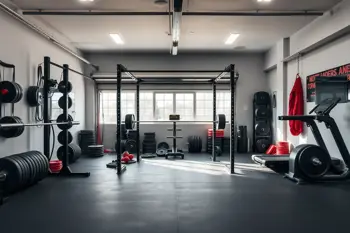
For most household budgets, even a modest home gym covering a power rack, barbell, weight plates, adjustable dumbbells, a bench, and rubber flooring represents several thousand dollars. Premium functional trainers and dual-stack setups from brands like Mikolo range from $1,099.99 to $2,999.99, while NordicTrack treadmills and bikes start at $1,499, ellipticals at $1,299, and rowers at $899. 5 A $2,000 treadmill financed at a 5% interest rate over 24 months translates to roughly $88 per month in repayments, illustrating how installment structures alter the cash-flow equation. 6
Retailer-Branded Financing and Buy-Now-Pay-Later Services
Many major fitness equipment retailers have embedded third-party financing directly into their checkout processes. NordicTrack and ProForm both offer 0% APR promotional financing for suggested payoff periods of 12 or 24 months for qualified customers, administered by Fortiva Retail Credit issued by The Bank of Missouri. 7 Both brands also integrate Affirm, which provides payment plans up to 36 months with rates ranging from 0% to variable APR depending on creditworthiness, and Klarna, which allows interest-free installments with payment plans up to 24 months when payments are made on time. 8
Buy-now-pay-later (BNPL) platforms have become a dominant channel for fitness equipment purchases. Affirm offers terms from 3 to 36 months with rates spanning 0% to 30% APR based on individual credit profiles and no late fees or prepayment penalties, according to PreOwnedGym.com's published terms. 9 Klarna's standard pay-in-4 model splits a purchase into four equal, interest-free fortnightly installments with the first payment due at checkout and no impact on credit score reported for the initial check. Afterpay operates similarly, splitting purchases into four equal fortnightly payments within an 8-week window, with late fees applied for missed payments. 10 Consumers should note that promotional 0% APR periods on all BNPL and retailer financing products are subject to credit approval and carry conditions including required on-time payments.
Personal Loans for Home Gym Purchases
Personal loans from banks and online lenders represent a widely used alternative to retailer-branded financing. These products offer fixed monthly payments and fixed interest rates for the loan's duration, making budgeting predictable. 11 Lenders such as LightStream provide personal loans specifically applicable to home improvement and large equipment purchases, with competitive rates available to creditworthy borrowers. 12 Home gym equipment financing through personal loans typically spans 12 to 60 months, with interest rates varying from 0% promotional offers on the low end to 29.99% for borrowers with weaker credit profiles. 13
The critical risk factor with personal loans is the total cost of borrowing. An 11% annual interest rate applied to a 12-month loan of approximately 1,05,235 rupees results in total repayment of roughly 1,11,610 rupees, with 6,375 rupees paid purely as interest. 4 Borrowers with lower credit scores may face significantly higher rates, and unlike secured loans, personal loans carry no collateral, which lenders typically offset with stricter approval criteria or higher APRs. Prepayment penalties vary by lender and should be confirmed in loan documentation before signing.
Home Equity Loans and HELOCs
Homeowners undertaking more comprehensive gym buildouts, including structural modifications or dedicated studio spaces, sometimes evaluate home equity loans or home equity lines of credit (HELOCs) as lower-rate alternatives to unsecured financing. Both products allow borrowing against accumulated home equity. A home equity loan provides a lump sum at a fixed interest rate, while a HELOC functions as a revolving line of credit with a variable rate, both structures described by major lenders including U.S. Bank. 14 Because these products use the home as collateral, they typically carry substantially lower interest rates than personal loans or retailer financing.
However, the collateral requirement is also the primary risk: failure to meet repayment obligations can place the home itself at risk of foreclosure. Additionally, HELOC variable rates can increase over time, raising monthly payments beyond initial projections. Approval for these products requires adequate home equity, sufficient income documentation, and a satisfactory credit history. For smaller equipment purchases under $5,000, the administrative cost and timeline of a home equity product rarely justifies the process versus simpler BNPL or personal loan alternatives.
Business and Commercial Equipment Financing
For gym owners, personal trainers, and fitness entrepreneurs, the financing landscape differs substantially from consumer options. Outfitting a boutique studio, CrossFit box, or multi-station gym can cost $50,000 to over $500,000 depending on concept, size, and equipment mix. 15 Specialty lenders like Crestmont Capital offer equipment financing and small business loans ranging from $10,000 to $1,000,000 with same-day approvals and funding speeds as fast as 24 hours, specifically designed to address the timing mismatch between large upfront equipment costs and the slower build of membership-based recurring revenue. 3
Equipment leasing is another distinct structure available to commercial operators. Rather than purchasing equipment outright, leasing provides the use of machines through monthly payments while preserving working capital for payroll, marketing, and operations. Fitness equipment leasing companies including Equinox Funding and Noreast Capital emphasize Section 179 tax deductions as a financial advantage, which can allow businesses to deduct the full purchase price of financed equipment in the year it is placed in service, potentially generating significant year-one tax savings. 16 UK-based commercial operators can access financing through providers like Humm, which offers regulated lending up to 30,000 euros with Central Bank of Ireland oversight, and DivideBuy, which provides interest-free credit up to 6,000 pounds for UK customers. 17
Key Risks, Eligibility Factors, and Comparison Criteria
Every home gym financing product carries distinct eligibility requirements and risk factors that warrant careful evaluation. BNPL services like Affirm and Klarna may check eligibility without affecting credit scores at the prequalification stage, but missed payments on active plans can be reported to credit bureaus and carry late fees. 8 Retailer-branded promotional financing accounts administered by institutions like The Bank of Missouri are subject to standard credit approval processes, and deferred interest clauses, if present, can result in retroactive interest charges on the full original balance if the promotional period expires before full payoff. Consumers should confirm whether a promotional offer is a true 0% APR or a deferred interest arrangement before committing.
The following table summarizes the primary financing structures and their general characteristics to assist in objective comparison:
| Financing Type | Typical Term | Rate Range | Primary Risk |
|---|---|---|---|
| BNPL (Affirm, Klarna) | 3 to 36 months | 0% to 30% APR | High APR if not qualified for 0% |
| Retailer Promotional Credit | 12 to 24 months | 0% promotional APR | Deferred interest clauses; credit approval required |
| Personal Loan | 12 to 60 months | Varies by credit | Higher rates for lower credit scores |
| Home Equity / HELOC | 5 to 20 years | Generally lower than unsecured | Home used as collateral; variable rate risk on HELOCs |
| Commercial Equipment Lease | 24 to 60 months | Structured by lender | Equipment may not be owned at term end without buyout |
Used and refurbished equipment purchases can reduce total financing amounts by 30% to 60% compared to new equipment costs, according to market analysis from Wattspeeds. 18 However, used equipment may carry higher depreciation risk and reduced warranty coverage, which can affect both resale value and lender willingness to extend favorable terms on secured financing. Regardless of financing path selected, total monthly payment obligations should be calculated against realistic household or business income to avoid over-leverage, particularly given the seasonal and discretionary nature of fitness spending.
Sources
- UCFS - Selling the Complete Home Gym: How Consumer Financing Helps Teams Close Larger Equipment Packages (ucfs.net)
- World Trends - Top Fitness Equipment You Can Finance with Low-Interest Loans (worldtrends.pw)
- Crestmont Capital - Gym Equipment Financing: Loans for Gyms, Fitness Centers and CrossFit Boxes (crestmontcapital.com)
- AngelOne - How Can a Personal Loan with 9K EMI Help You Build a Home Gym (angelone.in)
- Gym Mikolo - Home Gym Financing: Flexible Payment Plans (gym-mikolo.com)
- World Trends - Top Fitness Equipment You Can Finance with Low-Interest Loans, Example Calculation (worldtrends.pw)
- NordicTrack - NordicTrack Financing Options (nordictrack.com)
- ProForm - ProForm Financing Options (proform.com)
- PreOwnedGym - Financing Options (preownedgym.com)
- VERVE Fitness - Gym Equipment Finance Australia: Afterpay, ZIP and Humm (vervefitness.com.au)
- Marcus by Goldman Sachs - Personal Loans (marcus.com)
- LightStream - Personal Loans (lightstream.com)
- Gerald - Buy Now, Pay Later Exercise Equipment (joingerald.com)
- U.S. Bank - Home Equity Loans and HELOCs (usbank.com)
- Equinox Funding - Best Fitness Equipment Finance Companies Nationwide Guide (equinox-funding.com)
- Equinox Funding - Fitness Equipment Leasing (equinox-funding.com)
- RPM Power - Flexible Finance Options (rpmpower.com)
- Wattspeeds - The Gym Owner's Guide to Gym Equipment Financing Costs (wattspeeds.com)
Authored by 24Trendz team