Top rated retractable patio awnings in 2026: A comparative consumer analysis
Top rated retractable patio awnings in 2026 increasingly center on wind-sensor picks, durable acrylic fabrics, and motorized controls. The leading distinction is not simply remote operation: genuine automation depends on sensors that can retract a canopy during strong gusts, while fabric grade, cassette protection, mounting conditions, and installation requirements determine whether an awning remains practical over time. 1
How the 2026 awning field is being evaluated
Current comparisons cover several distinct formats rather than one uniform product category. Motorized systems offer remote-controlled extension and retraction, while manual crank models remove electrical requirements and can be simpler to install. Sizes range from compact awnings around 8 by 7 feet to broad patio coverage near 20 by 10 feet. Frames commonly use aluminum, with some products using steel components, and canopy materials include polyester and solution-dyed or dope-dyed acrylic. 2
The most relevant evaluation criteria are coverage, weather resistance, operating method, fabric performance, mounting complexity, and protection of the rolled canopy. Semi-cassette and full-cassette housings shield more of the fabric from debris when retracted, whereas open-frame systems expose the roll. Wind management is also central because consumer guidance identifies wind sensors as an important safeguard against structural and fabric damage. 4
Notable top rated models and their stated strengths
Several 2026 comparisons identify the CO-Z 14 by 10-foot electric awning as an overall motorized pick because its listed package includes an integrated wind-and-sun sensor. The same review reports an $799.99 price at the time checked and an 8.3 shade score. ALEKO’s 16 by 10-foot semi-cassette model is described as a lower-cost value option at $399, while the 15 by 10-foot Diensweek model is associated with dope-dyed acrylic and a listed price of $1,399.99. 1
Other testing identifies the ADVANING Classic Series 12 by 10-foot electric model with a 4.5 rating, 100% acrylic fabric, remote control, pre-assembled construction, and a three-year warranty. Paramondo’s 9.8 by 8.2-foot motorized awning is listed with solution-dyed acrylic and full assembly, while the manual Outsunny 13 by 8-foot model emphasizes an aluminum frame, adjustable pitch, and UV protection. These ratings describe the cited guide’s testing or assessment, not a universal industry score. 2
Motorized controls, sensors, and smart-home limits
Motorization is increasingly associated with remote controls, wall controls, and automatic wind or sun response. However, the available 2026 comparison data states that the highlighted awnings are not native Alexa, Google, or Wi-Fi devices. In that group, the sensor itself supplies the meaningful automation by detecting wind or sunlight and triggering retraction independently of an owner’s reaction time. 1
Higher-end installations may use Somfy motor systems, with the supplied research describing wind sensors that retract at 20 or more miles per hour and rain detection that closes the canopy before a downpour. Lutron HomeWorks QS integration is also described as a whole-home control option, but the reported system cost is $3,200 to $4,100 before any broader project considerations. These features add control complexity and should not be confused with standard wireless compatibility. 7
Fabric, frame, and cassette construction
Acrylic is the dominant premium fabric choice in the supplied 2026 research because it is described as breathable, mildew resistant, and less prone to fading than coated polyester. Advaning’s Luxury Series uses 100% premium solution-dyed acrylic sourced in Spain, with stated 80-plus UV protection and mildew- and fade-resistant properties. Its listed sizes extend from 8 feet wide to 16 feet wide, and its Easy Pitch system is designed to simplify pitch adjustment. 6
Construction details influence both appearance and expected maintenance. Powder-coated aluminum frames resist corrosion, while cassette designs reduce exposure of the rolled textile to environmental debris. The ALEKO 16 by 10-foot model is specifically described as a semi-cassette design with LED lights. Awntech is identified in the research for broad customization involving fabric patterns, cassette styles, and powder-coating colors, although customization can increase specification and installation complexity. 3
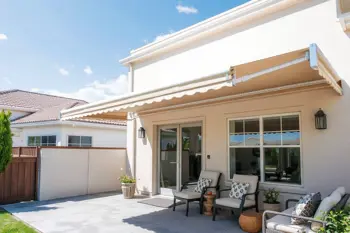
Installation costs, mounting risks, and warranties
Installation is not a minor detail because retractable awnings place loads on a wall, header, or other supporting structure. The supplied market guidance places professional installation of a high-quality 12 by 10-foot retractable awning at approximately $1,500 to $4,000, depending on motorization and fabric grade. Another estimate places motorized installation labor at $1,400 to $2,200, compared with $300 to $500 for fixed canvas installation. 7
Common friction points include misalignment-prone assembly sections, demanding mounting surfaces, inadequate header strength, and electrical requirements for powered systems. Local building or property rules may affect attachment methods, though the supplied sources do not establish a single nationwide code standard. Warranty terms also vary: premium products are described as often carrying five to ten years for frames and about five years for fabric against rot and mildew, while the ADVANING Classic listing specifies three years. 4
Maintenance realities and consumer risks
Retractable awnings reduce exposure when closed, but they are not designed to eliminate weather-related risk. Wind sensors can retract a canopy during a gust, yet sensor thresholds, power interruptions, mounting quality, and local weather conditions remain relevant. Rain resistance also differs from waterproof construction, and the supplied guidance emphasizes that durable frames, water-resistant fabrics, secure arms, and correct hardware are necessary for continued performance. 4
Long-term ownership includes cleaning fabric, checking arms and fasteners, monitoring motor and sensor operation, and retracting the canopy during unsuitable weather. Consumer feedback also illustrates market risk: Sunesta’s ConsumerAffairs page shows a 3.1 rating from 15 reviews, with complaints involving performance and customer-service communication alongside positive comments about installation, operation, and warranty coverage. Such reviews are useful warning signals but are not equivalent to controlled product testing. 5
How the choices separate by use case
For automation and weather response, the CO-Z 14 by 10-foot model is distinguished by its included wind-and-sun sensor. For protected storage of the canopy, ALEKO’s 16 by 10-foot semi-cassette format addresses a specific durability concern. For premium textile performance, Diensweek’s dope-dyed acrylic and Advaning’s solution-dyed acrylic represent the fabric-focused tier. For users avoiding motors, Outsunny and other manual crank models provide adjustable shade without relying on electrical controls. 1
| Priority | Relevant characteristics | Primary limitation |
|---|---|---|
| Automatic weather response | Wind and sun sensor | Sensor and power reliability matter |
| Fabric protection | Semi-cassette or full-cassette housing | Housing may add cost and installation demands |
| Color retention | Solution-dyed or dope-dyed acrylic | Premium materials carry higher listed prices |
| Simple operation | Manual crank and adjustable pitch | Retraction requires physical effort |
The practical conclusion is that a top rating depends on the intended use rather than a single universal winner. A homeowner should compare the actual wall structure, required projection, fabric specification, sensor behavior, warranty exclusions, and local weather exposure before treating any published rating as decisive. Retractable awnings provide adjustable shade, but their performance depends as much on correct installation and maintenance as on the canopy or motor selected. 8
Sources
- Smart Home Explorer, Best Motorized Retractable Awnings 2026
- Talk of the House, 8 Best Retractable Awnings
- Floating on Water, 15 Best Motorized Retractable Awnings for 2026
- ShadeDocs, The Best Patio Awnings of 2026
- ConsumerAffairs, Sunesta Retractable Awnings Reviews
- Advaning, Luxury Series Retractable Awning
- ArtFasad, Motorized Porch Awnings 2026
- Value Blinds Direct, Outdoor Patio Shades Motorized: 2026 Guide
Authored by 24Trendz team