Florida retirement housing: affordable real estate options: An Analysis of Market Trends and Financial Realities
Florida remains a primary destination for retirees, attracted by a warm climate and a tax structure that does not impose state income or estate taxes 1. While coastal regions often present significant price barriers, inland markets and established community models provide viable pathways for retirees on fixed incomes 2. Understanding the balance between upfront purchase costs, ongoing maintenance fees, and regulatory requirements is essential for those navigating the Florida real estate market 3.
Inland Markets and Geographic Value
Data indicates that affordability is frequently found in inland Florida towns, which often carry a lower cost of living compared to metropolitan coastal areas 4. For example, Sebring and Highlands County are noted for median home prices typically ranging between $210,000 and $242,000, significantly below statewide averages in more tourist-heavy zones 5. Similarly, cities such as Okeechobee offer rural, low-cost alternatives while maintaining access to state parks and recreational facilities 6. These inland locations often feature lower insurance premiums because they are less exposed to immediate coastal storm surge risks 7.
The Role of Manufactured Home Communities
Manufactured home communities provide a substantial portion of the state's affordable senior housing stock, with many individual units priced under $100,000 8. Developments like those found in Palmetto or Zephyrhills allow retirees to own or rent housing while benefiting from community amenities such as pools, clubhouses, and social programming 9. Prospective residents should evaluate the structure of site rent, as these fees cover the land usage and often include access to communal facilities, separate from the cost of the home itself 10.
Financial Frameworks and Tax Advantages
Florida's tax climate is a critical factor for seniors managing pension or Social Security income. The state provides a standard $50,000 homestead exemption for primary residences, with additional exemptions available for income-qualified homeowners 65 and older 11. Furthermore, the property tax rate in the state averages approximately 0.75% of assessed value, which remains lower than the national average 12. These mechanisms, paired with the absence of state-level income tax on retirement withdrawals, significantly enhance the purchasing power of fixed-income households 13.
Established 55-Plus Communities
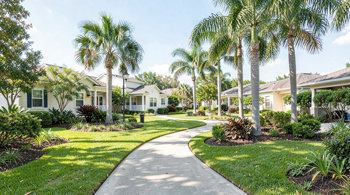
Large-scale active adult communities offer a distinct housing model that prioritizes social infrastructure. For instance, Sun City Center near Tampa and various developments in Winter Haven provide a range of single-family homes and condominiums with price points often falling between $150,000 and $400,000 14. While these communities offer extensive amenities, they operate under homeowners associations that charge monthly fees typically ranging from $100 to $500 or more 15. Buyers must review association bylaws, as these fees are mandatory and subject to periodic adjustments based on maintenance requirements 16.
Regulatory Considerations for Tiny Homes and Specialized Housing
In response to rising costs, some retirees are exploring tiny house communities. Florida maintains specific regulations under the Florida Building Code, which generally requires tiny houses to be at least 170 square feet with a maximum height of 13.5 feet 17. Because local zoning ordinances vary by municipality, individuals interested in these options must verify that the land is appropriately zoned for such structures 18. Legal consultation or coordination with experienced developers is often required to ensure compliance with municipal parking and utility hook-up mandates 19.
Market Accessibility and Financing
For those seeking entry-level housing, the Florida Housing Finance Corporation offers various programs, including down payment assistance for qualifying first-time homebuyers 20. Furthermore, for existing homeowners, the FHA-insured Home Equity Conversion Mortgage (HECM) market provides a way to access home equity without requiring monthly principal and interest payments 21. As development projects continue, such as the upcoming community in Gainesville and the recent completion of projects near Miami, the supply of subsidized or deed-restricted units aimed at lower-income seniors remains a component of the state's broader housing strategy 22.
Sources
- Florida Department of State (myflorida.com)
- Pure Equity Realty Research (pureequity.us/blog)
- Zillow Housing Market Trends (zillow.com)
- Travelmag Research Data (travelmag.com)
- Pure Equity Realty Market Reports (pureequity.us)
- Private Communities Registry Analysis (privatecommunities.com)
- Florida Senate Committee on Finance and Tax (flsenate.gov)
- AARP Florida Housing Reports (aarp.org/florida)
- Fast Food Club Economic Analysis (fastfoodclub.com)
- Family Destinations Guide (familydestinationsguide.com)
- Florida Department of Revenue (fldor.gov)
- Florida Senate Committee on Finance and Tax (flsenate.gov)
- Florida Department of State (myflorida.com)
- Sun City Center Official Data (suncitycenter.com)
- Zillow 55+ Community Data (zillow.com)
- Realtor.com Market Analysis (realtor.com)
- Solutions For All: Tiny Home Regulations (solutionsforall.net)
- Solutions For All: Zoning and Compliance (solutionsforall.net)
- Florida Building Code Administration (floridabuilding.org)
- Florida Housing Finance Corporation (floridahousing.org)
- HUD - FHA Home Equity Conversion Mortgages (hud.gov)
- Seniors Housing Business/Retirement Community Living (retirementcommunityliving.com)
Authored by 24Trendz team