Budget-friendly places to buy a home in Florida: a 2026 research roundup of inland value, North Florida options, and financing frictions
In budget-focused Florida housing coverage, the statewide narrative often centers on the coastal affordability gap, while inland areas are treated as a different pricing environment. Several 2026 summaries emphasize that stepping inland typically reduces purchase prices and can change the monthly payment profile once insurance differences are considered 1. The goal here is to consolidate those inland versus coast observations into a structured set of places, price realities, and buyer risks that appear in the underlying reporting 2.
1) Where “affordable” concentrates: inland and North Florida first
Multiple 2026 writeups converge on the same spatial pattern: lower-cost homes are concentrated inland and in North Central and North Florida regions, while coastal areas face higher premiums. A 2026 mortgage-broker summary characterizes affordability as predominantly an inland phenomenon, listing North Florida and inland county markets where typical home prices are described as roughly half of coastal metros in practice 1. A separate 2026 affordability guide similarly states that the cheapest housing sits inland away from the coasts that drive Florida’s most visible price tags 2.
Cost-of-living and carrying-cost narratives in the same research streams often go beyond the home price itself. One 2026 analysis emphasizes homeowners insurance as a key driver and notes that inland properties can be materially cheaper to insure than coastal equivalents, with insurance gaps described as 3 to 5 times lower and occasionally exceeding $4,000 per year 3. A Florida statewide housing snapshot adds additional market-structure context, reporting statewide Q1 2026 medians and inventory signals that influence how much pricing leverage shows up for buyers 4.
Statewide market context used for interpretation
| Metric (Statewide) | Q1 2026 level | Year-over-year trend |
|---|---|---|
| Median single-family price | $420,000 | Up 1.8% (cooling appreciation) |
| Median time on market | 52 days | Up 18 days |
| Active inventory | 165,000 listings | Up 18% |
| Months of supply | 4.8 | Up 1.1 (balanced range) |
| Median condo price | $310,000 | -0.4% (flat to down) |
| Share of cash closings | 31% | Not specified |
These statewide indicators do not identify specific towns, but they help interpret why some inland listings may be easier to evaluate with longer market exposure, and why buyer friction points remain tied to insurance, eligibility, and underwriting rather than listing price alone 4. In practice, the research also points to a structural risk: affordability narratives can overlook that buyers may pay more than anticipated if insurance, property taxes, and financing down payment requirements shift the true monthly cost 3.
2) 2026 shortlist: towns and inland counties highlighted for affordability
A 2026 mortgage-broker summary names specific inland and North Florida markets as the cheapest places to buy a house in Florida in 2026, including Palatka, Live Oak, Marianna, Lake City, Okeechobee, and inland towns in Marion, Citrus, and Highlands counties 1. The same source frames this as a set of markets where typical home prices sell for roughly half the price of coastal metros, with overlap to USDA eligibility discussed as part of financing feasibility 1.
A separate 2026 “most affordable places” guide identifies the practical appeal of inland settings and gives a statewide framing of typical values “from roughly $100,000 to $220,000” in low-price inland and rural areas, naming North-Central counties and Putnam County (Palatka) as an example near $112,000 2. That same coverage also notes that the lowest-cost environments tend to trade proximity to shopping, dining, and healthcare access for lower housing prices, which matters when defining “affordability” as an all-in lifestyle budget rather than a purchase-price number 2.
Places repeatedly mentioned across the 2026 research
Palatka and Putnam County, repeatedly described as an affordability reference point with homes under $200,000 in additional coverage 6.
Ocala and Marion County, repeatedly framed as a value option with a median price point described in multiple summaries (example: Ocala at $279,900 in one 2026 analysis) 7.
Lake City, included in the inland cheapest-towns list 1 and also referenced as an affordable option in broader compilations of the most affordable places to live 5.
Okeechobee, listed among the cheapest places to buy homes in 2026 1.
Live Oak, Marianna, and other North Florida towns, also listed among the cheapest 2026 markets 1.
Across these sources, “where it is cheap” is largely explained by location, inland distance from coastal premiums, and financing eligibility patterns rather than by one-off listing anomalies 1. However, a key risk remains: affordability lists can conflate “median values” with what an individual household will face after insurance, loan terms, and property condition disclosures are evaluated 3.
3) Financing realities: USDA framing and the down payment problem
One 2026 mortgage-broker summary explicitly ties inland affordability to financing structures, stating that many of the listed towns are also USDA-eligible and noting a “$0 down” framing for qualified buyers 1. The same source warns that the single biggest mistake observed is shopping the house before understanding financing, especially in USDA-eligible towns where out-of-pocket ownership can be lower than first-and-last-month rent patterns 1. While that statement is not a guarantee, it highlights how eligibility can be a controlling variable in whether a “cheap area” truly supports a low-cash purchase 1.
Another 2026 affordability guide provides a broader down payment math snapshot. It notes that, typically, a 20% down payment is used when buying and states the average 20% down payment in Florida is $78,660, compared with a national average of $72,209 8. It also reports that even with 5% down, every city on its affordability list has an average mortgage payment under $1,000 per month 8. The implied risk is that households assuming a 20% down path may view inland areas as less accessible than households using lower-down options or down payment assistance structures 8.
Eligibility and underwriting friction to account for
USDA eligibility and underwriting requirements create friction that median-price charts cannot show. Even when a town is described as USDA-eligible in one summary, that does not remove obligations around borrower qualification, property eligibility, and loan-document requirements 1. The statewide insurance theme in another 2026 analysis adds an additional layer: inland locations may be cheaper to insure, but buyers still face zip-code level premium variation that can shift monthly costs after underwriting 3.
There is also a market-structure risk in how “affordable” headlines are interpreted. A statewide snapshot reports that 31% of closings are cash, which can affect competition and negotiation dynamics even in balanced inventory conditions 4. The financing angle is therefore not only about loan availability, but also about how buyer demand splits between cash and financed offers during a given quarter 4.
4) Price checkpoints under common budget thresholds: examples and limits
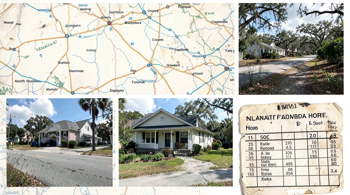
Some 2026 coverage focuses on specific numeric thresholds, such as identifying cities where homes can be found at or below $150,000. One 2026 article claims there are nine Florida cities where home values are listed such that buyers can find property for $150,000 or less, and it provides average home values and down-payment figures for several named towns, including Gretna (average home value $84,137) 8. That same article states Florida’s average home value is $393,302, and the average 20% down payment is $78,660, establishing why $150,000 remains a relative outlier target in the state context 8.
Other research narrows the lens to more incremental affordability bands, such as under $300,000 in a specific county context. A July 2026 Flagler County guide states that there are typically 300 or more active listings under $300,000 across all property types, but it also clarifies that most are condos, townhomes, and villas rather than detached single-family homes 9. This illustrates a key limitation when interpreting “under budget” claims: the housing type mix changes what a buyer actually receives for the same price cap 9.
How to read threshold-based reporting without overgeneralizing
Threshold reports may reflect property-type mixes, meaning attached homes and smaller formats can dominate under-$300,000 inventories in certain coastal-access counties 9.
Under-$150,000 city claims can be true for average home values but still differ substantially by condition, neighborhood micro-location, and financing feasibility 8.
Threshold framing can obscure transaction costs and monthly carrying costs, especially insurance and zip-code premium variation 3.
Because affordability narratives can hinge on averages, additional due diligence risks remain practical and non-negotiable. Property condition, HOA presence or absence, and local infrastructure considerations can turn a “threshold-possible” purchase into a higher monthly burden than expected 3. The research also includes guidance-style messaging that emphasizes evaluating financing first rather than treating list-price thresholds as the only decision variable 1.
5) Insurance, climate exposure, and maintenance tradeoffs in affordable markets
Insurance is repeatedly treated as a primary factor in whether a market remains affordable after the purchase. One 2026 affordability guide argues that inland properties cost 3 to 5 times less to insure than coastal equivalents and that an insurance gap can exceed $4,000 per year, changing which Florida cities are genuinely affordable once full monthly bills arrive 3. This view is consistent with inland-focused lists that treat coast-driven price premiums as only part of the cost equation 2.
Maintenance and geographic risk profiles also show up as “hidden costs” when evaluating specific towns. A Lehigh Acres 2026 market note describes local infrastructure as predominantly septic and predominantly well water, with mostly no HOA, and also characterizes the geography as inland and spared from a specific storm surge pattern tied to coastal storm exposure 10. While this is one market example, it illustrates that affordability can be intertwined with infrastructure systems, which influence inspection scope and ongoing maintenance decisions 10.
Regulatory and compliance considerations
Loan eligibility frameworks create compliance constraints that can affect whether a buyer qualifies for advertised financing concepts, particularly USDA-related eligibility referenced in inland town coverage 1. Separately, tax and valuation protections can matter for owner-occupants; one 2026 cost-of-living affordability writeup notes that homestead exemption and Save Our Homes caps protect owner-occupants from tax spikes tied to rising values 2. The risk is that these benefits vary by owner-occupancy status and timing, so buyers should evaluate them in the context of their own household structure and intended use 2.
Finally, affordability can be location-specific and dynamic. A statewide snapshot indicates that the market is cooling with lengthening time on market and rising inventory, placing the market in a balanced range for Q1 2026 4. Even when balanced conditions offer leverage, they do not eliminate differences in insurance, infrastructure, and financing eligibility across zip codes, so the underlying affordability map remains multi-variable 4.
6) Examples of “attainable purchase” narratives: what is actually being described
Beyond named-city affordability lists, some 2026 sources describe affordability through specific home price experiences. A 2026 guide frames Palatka as an overlooked town where home prices are kept grounded and states that homes in that area keep prices “comfortably under $200,000” in modern Florida conditions 6. Another 2026 affordability framing for Ocala gives a median price point of $279,900 and characterizes it as a value leader where new builds can stay under a $300,000 threshold 7. These narratives align with inland themes, but they still rely on market snapshots rather than guaranteeing what any future listing will cost 6 7.
Affordable-market coverage also extends to specific buyer-ready product types in certain regions. For example, a Central Florida new construction note describes an Inverness home listed at $247,000, described as three-bedroom, two-bath, block construction with a three-year builder warranty and no homeowners association fees or restrictions 11. Another example from the same dataset discusses a Lehigh Acres market with a $309,998 median single-family sales price in May 2026 and a 98.5% list-to-sale ratio, indicating strong sell-through and pricing discipline in that market segment 10.
Risk and friction points common to these “attainable” narratives
Inland insurance advantages can exist at a macro level but still vary by zip code, meaning buyer expectations based on general claims can diverge from actual quotes 3.
Market sell-through metrics, such as list-to-sale ratios and days on market, influence negotiation dynamics and may change faster than regional affordability headlines 10.
Affordability can be constrained by property-type mix, with some under-threshold inventories skewing toward condos or townhomes rather than detached homes 9.
Taken together, the research supports a structured conclusion: budget-friendly places to buy a home in Florida are not only “where the sticker is lower,” but where financing feasibility and carrying-cost components like insurance also allow a stable monthly profile under common underwriting rules 1 3. The most persistent risk is treating any single number, such as median price or “under $X” thresholds, as sufficient for predicting total cost 3 9.
Sources
- https://www.blackrockmortgage.com/cheapest-places-to-buy-a-house-in-florida/
- https://pureequity.us/blog/cheapest-places-to-live-in-florida
- https://ibuyer.com/blog/most-affordable-places-to-live-in-florida/
- https://www.thefloridapress.com/guides/florida-home-prices
- https://www.houzeo.com/blog/cheapest-places-to-live-in-florida/
- https://uncoveringflorida.com/this-overlooked-florida-town-with-homes-under-200k-might-be-its-most-charming-yet/
- https://golivefl.com/most-affordable-places-to-live-in-florida/
- https://www.moneylion.com/trending/money/florida-cities-where-you-can-buy-a-home-for-150k-or-less
- https://www.landmarkgroupfla.com/blog/can-you-really-find-homes-under-300k-in-flagler-county-fl
- https://www.teamhawley.com/blog/2026/6/5/lehigh-acres-in-2026-swfls-most-affordable-entry-point-and-what-affordable-actually-means
- https://www.einpresswire.com/article/910649794/new-construction-under-250-000-comes-to-inverness-sabal-palm-series-debuts-with-open-house
Authored by 24Trendz team