Understanding the process of government impound car auctions: A procedural guide
Government impound car auctions can include abandoned sedans, seized SUVs, retired patrol vehicles, motorcycles, trucks, and vehicles recovered after enforcement actions. The process is not a single nationwide system: cities, counties, state agencies, federal agencies, tow operators, and contracted auction companies may follow different schedules, notices, registration rules, and payment terms. 1
What government impound auctions include
Impound auctions generally concern vehicles towed for violations, abandonment, unpaid charges, or other enforcement reasons and not reclaimed by the owner. Related public auctions may also include seized or forfeited assets, recovered vehicles whose owners cannot be located, retired government fleet vehicles, and surplus property. The vehicle’s origin matters because it can affect its maintenance history, condition, markings, keys, title paperwork, and eligibility for road registration. 13
Federal, state, and local governments use different channels. GSA Auctions handles surplus federal personal property, including vehicles, while the U.S. Marshals Service disposes of assets connected with federal forfeiture cases. The IRS sells property seized for unpaid federal taxes, and Customs and Border Protection conducts sales involving seized or forfeited property. Local municipalities commonly publish surplus or impound information on official websites or use contracted auction platforms. 2 3 4 5
How a vehicle becomes eligible for sale
A typical tow-lien process begins when a vehicle remains unclaimed or towing and storage charges remain unpaid. The operator generally identifies the registered owner and recorded lienholders through a title search, then sends legally required notices and waits for the applicable reclaim period to expire. Only after those procedural steps can an authorized party proceed toward a public sale. The exact forms, timelines, notice methods, and county requirements vary by jurisdiction. 6
State rules can impose additional ownership safeguards. California’s abandoned-vehicle process requires attention to statutory lien-sale procedures and documentation, while Virginia’s abandoned-vehicle rules address ownership records and paperwork that may affect a later purchaser. New York City separately publishes procedures for vehicles seized or left unclaimed after enforcement actions. These examples illustrate why a general description cannot substitute for the terms governing a particular auction. 6 7 8
Finding an auction and registering
There is no single national calendar covering every government impound sale. Relevant notices may appear on a city police or finance department website, a county sheriff or surplus-property page, a state surplus portal, or the website of an auction company under government contract. Online marketplaces used by public agencies can also host vehicle listings, but the selling agency remains responsible for the listing’s specific terms and documentation. 1 10 11
Registration requirements are auction-specific. A participant may need an account, identity verification, acceptance of terms, or a deposit before bidding. Copart, GovDeals, Public Surplus, and IAA each publish platform or listing rules, but those rules do not create a universal standard for every government sale. The notice should be reviewed for eligibility restrictions, preview dates, payment methods, buyer fees, removal deadlines, and whether the public or only qualified purchasers may participate. 9 10 11 12
Inspection and vehicle history
Most auction vehicles should be treated as “as is” property with limited or no warranty. Photographs, vehicle identification numbers, mileage, condition notes, and seller disclosures can provide useful starting information, but they may not reveal mechanical faults, water damage, missing components, disabled safety systems, or problems caused by long storage. A physical preview, when available, can help identify tire condition, fluid leaks, body damage, keys, warning lights, and whether the vehicle starts. 12 13
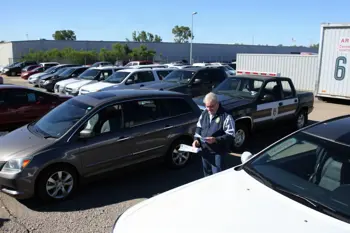
Inspection should also distinguish vehicle categories. A retired patrol vehicle may have maintenance records yet still show extensive idle hours, heavy service, removed equipment, or agency markings. An impounded vehicle can have an unknown history, missing keys, personal-property restrictions, or damage that occurred before or after towing. A seized vehicle may appear well maintained but still require clarification about title status, storage, and the legal documents transferring ownership. 13
Bidding, payment, and removal
In a live auction, the auctioneer identifies the lot and announces bidding increments, while participants signal through a bidder card or another approved method. Online sales may use timed bidding, maximum bids, or auction-specific procedures. When bidding closes or the auctioneer accepts the final bid, the winning participant normally becomes responsible under the published terms. A bid should therefore reflect the complete expected cost, not only the amount displayed during bidding. 7 10
Winning bidders commonly face short payment windows and a specified period for collecting the vehicle. The final amount may include buyer fees, taxes, towing, storage, title work, registration, transportation, and repairs. A vehicle that cannot be driven away may require a trailer or commercial recovery service. Failure to pay or remove the vehicle within the stated deadline can lead to additional storage charges or loss of the purchase under the auction’s conditions. 7 10 12
Titles, liens, and legal risks
The most important document question is whether the sale provides a transferable title, a certificate of sale, or another ownership document accepted by the relevant motor-vehicle agency. A vehicle may carry salvage, rebuilt, abandoned, or other branding that affects insurance, inspection, financing, and registration. Buyers should also determine whether liens have been addressed and whether unpaid fees, title delays, or jurisdiction-specific procedures remain after the auction. 6 8
Regulatory oversight is intended to protect owners and lienholders before a vehicle is sold, but compliance is not identical across states or municipalities. Notice failures, incorrect title records, unresolved liens, and incomplete sale documents can create disputes or prevent registration. The practical risk is especially significant when a vehicle crosses state lines, because the selling jurisdiction’s paperwork may not automatically satisfy the receiving state’s requirements. Current agency instructions and auction terms should control the decision. 6 8
Evaluating the total ownership burden
The auction price is only one component of the transaction. A responsible evaluation accounts for mechanical repairs, tires, keys, towing, storage, taxes, title fees, registration, inspections, insurance, and possible delays in obtaining ownership documents. Fleet vehicles may require maintenance after hard official use, while impounded vehicles may need extensive diagnostic work because their prior service history is incomplete. The “as is” structure transfers much of this uncertainty to the winning bidder. 13
A useful review process is to compare the listing category, title documentation, inspection findings, known liens, payment deadline, removal requirements, and projected repair exposure before bidding. No vehicle should be treated as road-ready merely because it starts or appears intact in photographs. Government status also does not guarantee reliability, clear registration, or a complete maintenance record. The central distinction is between a public liquidation process and a conventional dealership transaction with standard consumer protections. 1 12 13
Sources
- USA.gov, Auctions and Sales
- U.S. General Services Administration, GSA Auctions
- U.S. Marshals Service, Asset Forfeiture
- Internal Revenue Service, Auctions
- U.S. Customs and Border Protection, Auctions
- California Department of Motor Vehicles, Abandoned Vehicles
- New York City Department of Finance, Vehicle Auctions
- Virginia Department of Motor Vehicles, Abandoned Vehicles
- Copart, Government Auctions
- GovDeals
- Public Surplus
- IAA, Government Auctions
- Government Auctions Blog, Police Auctions: How to Buy Without Guesswork
Authored by 24Trendz team