Top rated whole-house water filtration systems in 2026: An evidence-based comparison
Top rated whole-house water filtration systems in 2026 are designed to treat water at the point where it enters a home, supplying filtered water to faucets, showers, appliances, ice makers, laundry fixtures, and outdoor taps. The leading systems differ substantially in contaminant targets, flow capacity, certifications, filter life, installation requirements, and suitability for municipal or well water. 1
How the leading systems were evaluated
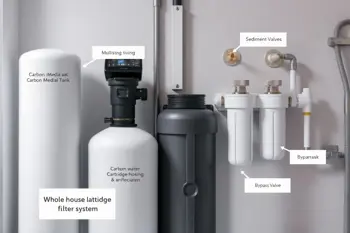
Whole-house filtration, also called point-of-entry filtration, treats the home’s entire incoming water supply rather than a single drinking-water outlet. Activated carbon is commonly used for chlorine, some chloramines, volatile organic compounds, pesticides, herbicides, and odors, while sediment stages protect later media from rust, sand, and suspended particles. Catalytic carbon is more appropriate than standard carbon when chloramine is a major concern. 6
The most useful comparison criteria are contaminant-reduction evidence, flow rate, rated capacity, replacement requirements, installation complexity, and whether a system addresses the actual water problem. NSF/ANSI 42 generally relates to aesthetic effects such as taste and odor, while NSF/ANSI 53 addresses selected health-related contaminants. Certification applies to specific claims, not necessarily every contaminant a marketing description may mention. 5
Seven systems frequently rated highly in 2026
| System | Commonly cited role | Reported specifications |
|---|---|---|
| SpringWell CF | Municipal water and overall balance | 9 to 20 GPM; 1,000,000-gallon capacity |
| Aquasana Rhino EQ-1000 | Certified contaminant coverage | 7 GPM; 1,000,000 gallons |
| Kind E-3000 | Filtration and salt-free conditioning | Combination system |
| iSpring WGB32B | Lower-cost three-stage filtration | Reported at 15 GPM |
| Express Water Heavy Metal | Iron and heavy-metal concerns | Multi-stage configuration |
| APEC Water CB3 | DIY-oriented installation and long life | Long-life cartridge design |
| Home Master HMF3SDGFEC | Well water with iron and sulfur | Targeted multi-stage treatment |
A 2026 comparison ranked SpringWell CF, Aquasana Rhino EQ-1000, Kind E-3000, iSpring WGB32B, Express Water Heavy Metal, APEC Water CB3, and Home Master HMF3SDGFEC for different household priorities rather than one identical use case. The ranking considered contaminant removal rates, flow, filter life, and long-term ownership factors. 2
SpringWell CF and CF1: municipal-water focus
SpringWell CF and CF1 reviews identify catalytic coconut-shell carbon as a central feature for chlorinated or chloraminated municipal supplies. Reported performance includes 99.6 percent chlorine reduction in one long-term account, non-detect total trihalomethanes at a kitchen tap after treatment, a 9 GPM flow rate, and a million-gallon capacity. Another review describes a typical service life of approximately six to ten years, although replacement timing depends on water quality and household consumption. 4 8
The system’s main limitations are equally important. It does not soften water, so hardness and scale require separate treatment, and the tank needs sufficient vertical clearance in a basement, garage, or utility area. Reported pricing varied from approximately $957 to $1,040 for smaller configurations and higher for larger bathroom counts, while installation may require two people or a plumber. These figures are historical observations, not current quotations. 8 9
Aquasana Rhino EQ-1000 and certified claims
The Aquasana Rhino EQ-1000 is described as a carbon and KDF point-of-entry system rated for 1,000,000 gallons, roughly ten years for an average household, with a 7 GPM flow rate. Reported NSF/ANSI 42 and 53 certifications support claims involving chlorine, lead, mercury, and selected organic compounds. The system operates without electricity, salt, or wastewater, which distinguishes it from reverse-osmosis and conventional salt-based softening equipment. 5
Certification does not mean that the Rhino removes every emerging contaminant. The cited review specifically cautions that its PFAS performance should not be treated as equivalent to reverse-osmosis treatment, and it does not reduce hardness or scale. Its premium-tier cost and large tank also create practical constraints, particularly where installation space is limited or professional plumbing is required. 5
Options for well water, metals, and sediment
Well-water households face a different selection problem because iron, manganese, sulfur odors, sediment, and hardness may occur together. The iSpring iron and manganese system is described as targeting iron, manganese, sediment, and odors, while the Home Master HMF3SDGFEC is identified for well water involving iron and sulfur. Express Water Heavy Metal and comparable multi-stage units are positioned around heavy metals, chlorine, sediment, and scale-related concerns. 1 2 7
A sediment pre-filter is a significant maintenance component because suspended particles can shorten the useful life of carbon or specialty media. Well-water treatment should not be selected from a general municipal-water ranking alone. Laboratory testing or a reliable water-quality report is needed to identify the concentration and form of iron, manganese, sulfur compounds, bacteria, and other constituents before equipment is specified. 1 7
Flow rate, hardness, and installation realities
Flow rate determines whether a system can serve simultaneous showers, toilets, washing machines, and other fixtures without a noticeable pressure reduction. Reported whole-house systems range from approximately 7 GPM for the Aquasana Rhino to 9 GPM for SpringWell CF, while some iSpring configurations are reported at 15 GPM. A larger home may need a higher-capacity model, but rated maximum flow should not be confused with contaminant-contact performance at every operating condition. 2 3 5
Most whole-house systems connect to the main supply line and require shutoff valves, a bypass arrangement, adequate tank clearance, and plumbing compatible with the installation site. Modular cartridge systems can be more accessible for do-it-yourself replacement, while tank-based systems may be better suited to professional installation. Filtration alone does not remove water hardness, and salt-free conditioners address scale formation without removing dissolved minerals. 3 6
Ownership costs, oversight, and selection risks
Published 2026 estimates place whole-house system costs from about $289 for entry-level equipment to more than $1,500 for premium configurations. Installation was estimated at approximately $200 to $400 when performed by a plumber, with annual filter expenses commonly reported around $40 to $100 depending on the design. Long-life media can reduce replacement frequency, but pre-filters, cartridges, seals, and periodic testing still create ongoing obligations. 3
The principal selection risk is purchasing a system based on a broad contaminant list without verifying certified performance for the local supply. Municipal consumers should review the utility water report, while private-well owners should obtain appropriate testing. NSF, the Water Quality Association, and certified treatment professionals provide reference points for evaluating performance claims and installation competence. Reverse osmosis is less common for whole-house use because of wastewater production and pressure-drop concerns, so it is often reserved for specific drinking-water applications. 6 10
Sources
- FilterWaterGuide, “Best Whole House Water Filter 2026”
- Unlike, “7 Best Whole-House Water Filters in 2026”
- HardWaterHQ, “Best Whole House Water Filters 2026”
- Hydrology University, “SpringWell CF Whole House Filter Review”
- CleanWaterAdviser, “Aquasana Rhino EQ-1000 Review”
- CheckMyTap, “Whole House Water Filters: Reviews, Costs & Buyer’s Guide”
- Know Your Best, “11 Best Whole House Water Filter Systems of 2026”
- Clearwater Home Lab, “SpringWell CF1 Review”
- FilterWaterGuide, “SpringWell CF1 Whole House Water Filter Review”
- NSF International and Water Quality Association guidance cited in the supplied research
Authored by 24Trendz team