Nurse practitioner salaries by state: A data-based guide to pay differences
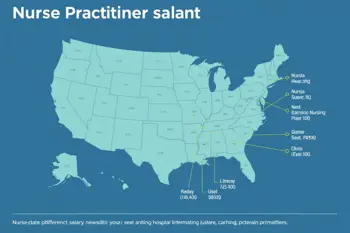
Nurse practitioner salaries by state show a wide national spread, with reported annual figures ranging from approximately $109,650 in Alabama to $173,190 in California in one recent comparison. The figures below summarize available salary estimates and explain how data year, methodology, specialty, autonomy, and regional expenses affect practical earning power. 1
National salary context
The U.S. Bureau of Labor Statistics classifies nurse practitioners under Standard Occupational Classification 29-1171. A 2024 national estimate places median NP pay at $129,210 annually, while another summary reports an average of approximately $132,000. These figures are not interchangeable because mean and median wages measure different points in the distribution. 2
National pay data also show a broad earning range. One 2024 summary reports that the lowest 10% of nurse practitioners earn under $94,000, while the highest 10% earn more than $172,000. Experience, certification, clinical specialty, call obligations, practice setting, and geographic labor demand can all move an individual salary away from the national midpoint. 3
Higher-paying states in reported comparisons
California ranks first in the NurseJournal state comparison at $166,610 annually. New Jersey follows at $149,620, with Alaska at $145,450, New York at $145,390, and Oregon at $144,600. Washington, Connecticut, Massachusetts, New Mexico, and Arizona complete that source's top ten. 2
| Rank | State | Average annual salary |
|---|---|---|
| 1 | California | $166,610 |
| 2 | New Jersey | $149,620 |
| 3 | Alaska | $145,450 |
| 4 | New York | $145,390 |
| 5 | Oregon | $144,600 |
| 6 | Washington | $140,220 |
| 7 | Connecticut | $138,960 |
| 8 | Massachusetts | $138,890 |
| 9 | New Mexico | $138,440 |
| 10 | Arizona | $133,790 |
Lower reported salaries and regional variation
Lower nominal salaries are concentrated in several Southern and rural labor markets, although rankings vary by source and year. NurseJournal identifies Alabama as the lowest state in its comparison at $106,930. Nurse.org reports a different Alabama figure of $109,650 and lists Arkansas at $116,030, Kentucky at $116,930, and Louisiana at $124,850. 1
These differences do not necessarily indicate poorer financial outcomes. Housing, taxes, insurance, transportation, and other regional expenses affect how far a salary goes. A salary comparison is therefore incomplete unless it identifies whether the number is a mean or median, states the data year, and distinguishes base wages from bonuses, benefits, productivity incentives, or shift differentials. 3
Why published salary figures differ
Government wage estimates use a standardized occupational definition and survey methodology, making BLS state data useful for broad comparisons. CareerOneStop provides a related government-sponsored lookup system for state and local wage information. Private platforms can report different results because they combine job postings, employer submissions, self-reported pay, and statistical modeling in varying proportions. 5
Indeed reports a national average base salary of $129,806 for nurse practitioners, based on 53,700 salaries taken from job postings over the previous 36 months in the cited dataset. Such figures describe a labor-market estimate rather than an official statewide wage survey, and they can shift as the platform's postings, geographic mix, and reporting period change. 4
Specialty, setting, and experience effects
Specialty is a major compensation variable. A specialty comparison places psychiatric mental health nurse practitioners at roughly $132,000 annually, ahead of acute-care and neonatal NP categories, with specialty gaps exceeding $30,000 in some comparisons. Family nurse practitioner estimates also vary by geography, urbanicity, experience, and clinical setting. 6
Experience can widen the gap between otherwise similar roles. One FNP estimate reports average pay of $113,000 for practitioners with fewer than five years of experience and $130,000 for those with more than 16 years. Urban FNP positions in that comparison average about $6,000 more than rural positions and about $2,500 more than suburban positions. 6
Practice authority and compensation decisions
State regulation affects the professional environment in which an NP earns a salary. Some states grant full practice authority, allowing qualified nurse practitioners to diagnose, treat, prescribe, and manage care without physician oversight. Other states require collaborative agreements or supervision, which can add administrative constraints and affect clinic operations, job mobility, and potential earnings. 7
Salary should therefore be assessed alongside licensure rules, credentialing requirements, call schedules, productivity formulas, benefits, retirement contributions, employer-paid insurance, and recruitment incentives. Employment growth is projected to remain substantially faster than the average for all occupations, but strong demand does not eliminate local friction such as limited clinical positions, credentialing delays, restrictive agreements, or differences in employer resources. 3
How to interpret a state salary comparison
A reliable comparison begins by matching like with like. The reader should confirm the occupation code, publication year, wage measure, sample size, and whether the figure covers full-time employees, job postings, or self-reported compensation. Comparing a BLS median with an online platform's modeled average can create an apparent difference that reflects methodology rather than an actual change in pay. 3
- Check whether the figure is a mean, median, percentile, or advertised range.
- Separate base salary from overtime, bonuses, benefits, and differentials.
- Compare state wages with local housing and tax conditions.
- Review specialty, experience, setting, and call requirements.
- Check practice-authority rules and continuing licensure obligations.
The highest nominal salary is not automatically the strongest overall option. California leads one national comparison, while Alaska, New York, Oregon, Washington, and Northeastern states also report high wages, yet living costs and regulatory conditions can materially change the practical result. State salary data are most useful as a starting point for a broader employment and financial assessment, not as a guarantee of an individual offer. 2
Sources
- Nurse.org, Nurse Practitioner Salaries by State
- NurseJournal, Nurse Practitioner Salary: A State-By-State Guide
- U.S. Bureau of Labor Statistics, Occupational Employment and Wage Statistics and Occupational Outlook Handbook
- Indeed, Nurse Practitioner Salary in the United States
- CareerOneStop, Salary and Wage Information
- NursePractitionerOnline.com and Nightingale College salary comparisons
- PracticeTestGeeks, Best States for Nurse Practitioners
Authored by 24Trendz team