Budget-friendly places to buy a home: Analytical report on current housing affordability trends
In early 2026, the United States housing market reflects a complex landscape where geographical location serves as the primary determinant for property affordability 1. Recent data indicates that the share of affordable housing listings across the nation has seen a 5% increase compared to the previous year, with 14 major cities reporting that at least 50% of their current market inventory meets affordability criteria 1. This report examines the specific regional markets and economic drivers that define the current entry-level purchasing environment.
Regional Affordability and Market Distribution
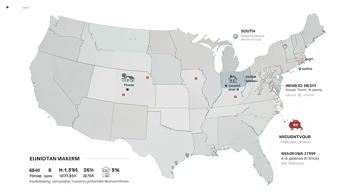
Data from February 2026 highlights a clear divergence between industrial-based Midwestern markets and coastal metropolitan centers. Buffalo, New York, currently leads the nation in housing affordability, with approximately 70.94% of its residential listings classified as affordable, accompanied by a typical home value of $271,753 1. Conversely, coastal markets such as Los Angeles and San Jose continue to exhibit extreme supply constraints, with affordable listing shares falling below 15% and typical valuations often exceeding $900,000 1. This regional disparity is largely attributed to variations in local land availability, property tax structures, and the presence of stable, institution-based economies like healthcare and manufacturing hubs 4, 5.
| City | Share of Affordable Listings | Typical Home Value |
|---|---|---|
| Buffalo, NY | 70.94% | $271,753 |
| St. Louis, MO | 67.69% | $265,644 |
| Detroit, MI | 64.80% | $258,238 |
| Pittsburgh, PA | 62.87% | $221,249 |
| Baltimore, MD | 61.84% | $394,495 |
The Characteristics of Entry-Level Markets
Properties priced under $250,000 generally remain available in specific submarkets, though their composition has shifted toward smaller square footage, townhomes, and older single-family inventory built prior to 1970 2, 8. In cities like Richmond, Virginia, buyers in this segment often find 900 to 1,500 square foot properties in transition areas, with monthly obligations-including taxes and insurance-estimated between $1,700 and $2,100 8. These markets require a nuanced understanding of trade-offs, where buyers must balance property condition and lot size against the desire for proximity to urban centers 8.
Midwestern and Southern Affordability Anchors
Midwestern and Southern states consistently appear in affordability rankings due to lower property tax burdens and cost-of-living indexes that often sit 10% to 30% below the national average 5. Cities such as Pittsburgh, Pennsylvania, and Decatur, Illinois, provide significant outliers to the national median home price, with Decatur reporting values near $89,855 5. These locations are frequently supported by steady employment bases in education, medical, and military sectors, which mitigate the economic volatility often found in more speculative, high-growth real estate markets 4.
Market Friction and Selection Realities
While affordability exists, participants in the current market face structural hurdles, including elevated interest rates and competition for limited entry-level stock 2, 3. Analysis suggests that home prices in highly affordable metros are more closely tethered to local median income levels, which theoretically allows for more predictable mortgage-to-income ratios compared to coastal boom markets 4. However, even in these favorable environments, first-time buyers must account for the reality that the inventory of lower-priced homes has shrunk significantly over the last decade, placing a premium on agility and careful neighborhood selection 8.
Alternative Property Models and Future Outlook
Discussions regarding housing accessibility have increasingly turned toward non-traditional financing and property types. Proposals for longer-term mortgage structures, such as 50-year options, are currently being evaluated for their potential to broaden market participation, though analysts caution that such instruments could alter long-term debt burdens 3. Meanwhile, markets that integrate historic architecture with revitalization efforts, such as Cleveland and St. Louis, continue to offer value-oriented opportunities that allow buyers to acquire equity in established urban fabrics while avoiding the unsustainable price-to-income gaps found in major tech-heavy metropolitan areas 7, 9.
Evaluation Metrics for Potential Buyers
For those assessing potential residential markets, the focus is shifting toward cities that combine affordability with growth potential. As identified by various research sources, municipalities such as Charleston, West Virginia, Peoria, Illinois, and Binghamton, New York, are characterized as unicorn markets-areas where moderate price points intersect with steady appreciation trends 3. Utilizing a 50/30/20 budgeting framework, experts suggest that families and individuals must rigorously compare local tax-to-income ratios, as housing costs remain highly variable across state lines and municipal boundaries, necessitating a hyper-local approach to property search efforts 5.
Sources
- Zillow: The Most Affordable Places to Buy a Home in 2026
- Deeds.com: First-Time Home Buying? How and Where to Buy a Home You’ll Enjoy for Under $250K
- FOX 10 Phoenix: Best Cities for Starter Homes, First-Time Homebuyers in 2026
- RoundTable Realty: The 10 Desirable Metros Where Buyers Can Still Snag a $300K Home
- AmeriSave: The 30 Cheapest Places to Live in the US in 2026
- Remitly: The Least and Most Affordable Cities to Buy a Home
- GOBankingRates: US Cities With the Best $100K Homes
- Mission Realty Team: Richmond VA Homes Under $250K in 2026
- Houzeo: 10 Cheapest Places to Live in Pennsylvania in 2026
Authored by 24Trendz team