Market Analysis: A Budget-friendly way to buy refrigerators
In an economic climate defined by rising appliance manufacturing costs, finding a structured, budget-friendly way to buy refrigerators is an essential priority for modern households. Global supply chain shifts, including Section 232 tariffs on steel and aluminum in late June 2025, have structurally driven up the baseline retail costs of major appliances 1. Consequently, consumers can no longer rely on spontaneous retail visits or generic inventory choices to secure value. Instead, achieving long-term appliance utility requires an analytical understanding of model lifecycles, secondary market frameworks, and configuration options.
Analyzing Refrigerator Configurations and Price Brackets
A primary factor in managing the initial procurement cost is selecting the optimal physical configuration. Top-freezer models represent the classic and most economical appliance design, historically priced between $300 and $800 depending on size and material finishes 2. These models feature a simple cooling loop with fewer moving parts, which minimizes the initial manufacturing investment 3. In contrast, French-door and side-by-side configurations, though popular for modern kitchen layouts, carry a substantial premium due to complex internal plumbing, integrated electronics, and larger overall footprints 4.
| Configuration Type | Average Capacity | Average Price Range |
|---|---|---|
| Top-Freezer | 10-20 cu ft 2 | $300-$800 2 |
| French Door | 20-29 cu ft 5 | $800-$2,000 6 |
| Compact / Mini | 1.6-4.0 cu ft 7 | $100-$300 7 |
Strategic Timing and Model Clearance Cycles
Appliance retail markets operate on highly predictable inventory schedules that directly impact consumer pricing. Manufacturers typically introduce new models during two main windows annually, specifically April through May and September through October 1. During these transition periods, retail floors actively transition older stock to clearance statuses to make room for inbound models, creating a reliable buying opportunity 1. Major sales events, particularly around federal holiday weekends such as Memorial Day and Black Friday, consistently offer historical markdowns of 30% to 50% on brand-name inventory 1.
Data indicates that waiting to purchase during the autumn months of September through November can result in structural price reductions of 10% to 20% compared to peak summer shopping seasons 8. Furthermore, savvy buyers can employ a layered financial approach by combining manufacturer promotional periods and municipal utility rebates 1, 9. This systematic timing bypasses the full manufacturer suggested retail price, shielding the buyer from recent tariff-induced inflation 1.
Navigating Open-Box and Floor Model Opportunities
Another highly viable avenue for cost-conscious procurement involves targeting open-box inventory at large retailers. Open-box appliances generally refer to items that have been unboxed but remain fully functional, such as showroom floor models, minor shipping returns, or products with damaged packaging 10. Retailers typically reduce these items by 10% to 40% to prevent storage overhead and keep inventory moving quickly 10. Crucially, many of these open-box units still retain their original manufacturer warranties, offering a low-risk mechanism for high-tier brand procurement 11.
When evaluating these models, shoppers should inspect the cabinet integrity and verify that the interior shelving is stable 12. Minor cosmetic scuffs on the side panels often yield the steepest reductions while remaining completely hidden once the refrigerator is installed flush against kitchen cabinetry 6. Relying on in-store sales representatives to explain the precise reason for the open-box label is a vital preparatory step 10.
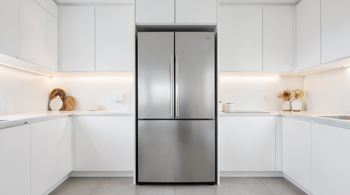
The Scratch-and-Dent Appliance Alternative
For individuals willing to accept visible superficial imperfections, the scratch-and-dent market offers substantial economic advantages. Scratch-and-dent units are appliances that suffered cosmetic damage, such as shallow door depressions, during transport or warehouse handling 6. Because the structural cooling apparatus, compressor, and condenser coils remain completely unaffected, these units operate with the exact same efficiency as factory-perfect models 6. Reductions in this category frequently range from 30% to 50% below standard retail listings 13.
Dedicated scratch-and-dent outlets serve as focused hubs for these specific models, offering a rotating inventory that permits physical inspection prior to purchase 6. Unlike online private listings, structured appliance liquidators generally provide basic diagnostic verifications to ensure the cooling loop performs to standard specifications before delivery 6. This structural verification mitigates the risks associated with unverified third-party hardware 6.
Investigating Used and Reconditioned Platforms
The pre-owned refrigerator market represents the lowest point of entry, often reducing acquisition costs by 50% to 75% compared to brand-new inventory 14. A well-vetted, high-quality used refrigerator can reliably provide five to seven years of continuous operation 14. Platforms such as local classifieds, neighborhood digital forums, and local estate sales are active grounds for discovering functional units 2. However, navigating this market requires strict adherence to a physical inspection protocol before any transaction occurs 15.
Prospective buyers should systematically verify the integrity of the magnetic door gaskets, clean the condenser coils, and check the functionality of the defrost drain 15. It is also highly recommended to prioritize simple configurations under ten years of age, as older models may carry degraded insulation that drives up utility costs 15. Purchasing locally also minimizes logistical expenses, allowing direct transport via consumer vehicles rather than expensive commercial delivery 15.
Assessing Long-Term Ownership and Energy Metrics
While minimizing the upfront sticker price is critical, the true economy of a refrigerator is determined by its ongoing operational expenses 11. Opting for models certified by the Energy Star program ensures a reduction of roughly 9% in annual power consumption compared to standard baselines 9. Over the typical ten to fifteen-year lifespan of a primary refrigerator, these cumulative utility savings can offset the original purchase difference 5, 9. Additionally, checking for municipal utility rebates can return cash directly to the owner 9.
Conversely, selecting complex models with automated door dispensers or integrated ice makers introduces notable structural liabilities 2. Industry data indicates that automated ice makers fail approximately 30% of the time in budget-tier refrigerators, resulting in expensive maintenance calls 7. Skipping these ancillary features simplifies the internal mechanics, drastically reducing the likelihood of mechanical breakdown over the appliance lifespan 16. Finally, consumers must exercise caution with deferred-interest store financing programs, as a single missed payment can retroactively apply substantial interest fees to the entire balance 11.
Sources
- DontPayFull
- CyCookery
- CookWithRome
- AppliancesFirst
- PropelRC
- Appliances For U
- Of Zen and Computing
- Consumer Reports
- Energy Star
- Washing Machine US
- DollarFlourish
- Renovator Auctions
- Lowe's
- Six Storeys
- How To Refrigerator
- Quartz
Authored by 24Trendz team