The best vitamin C serum for dark spots
Finding the best vitamin C serum for dark spots requires understanding not just marketing claims, but the underlying biochemistry, ingredient stability, and clinical evidence that separates effective formulations from those that merely appear promising on the shelf. The market spans a wide spectrum of concentrations, derivative forms, and supporting actives, each with distinct performance profiles across different skin types and hyperpigmentation severities.
How Vitamin C Targets Dark Spots: The Biochemical Mechanism
Topical vitamin C works primarily by inhibiting tyrosinase, the enzyme responsible for melanin production, which helps prevent new dark spots from forming while simultaneously fading existing discoloration. 1 This dual action, both preventive and corrective, positions it as one of the few over-the-counter ingredients with a genuine, research-supported mechanism for addressing hyperpigmentation from sun exposure, post-inflammatory responses, and general uneven tone. The antioxidant properties of vitamin C also neutralize free radical damage that can trigger excess melanin synthesis.
Beyond pigmentation control, vitamin C promotes collagen synthesis, which improves skin texture and contributes to an overall more even-looking complexion over time. 2 Clinical studies confirm that consistent daily application can reduce the appearance of dark spots and improve measurable skin brightness within 8 to 12 weeks, though results on mild discoloration may appear as early as 4 to 6 weeks in some documented cases. 3 The American Academy of Dermatology notes that pairing vitamin C serums with broad-spectrum SPF significantly amplifies efficacy, since UV exposure is a primary trigger for melanin overproduction. 4
Vitamin C Derivative Forms: Stability, Potency, and Skin Compatibility
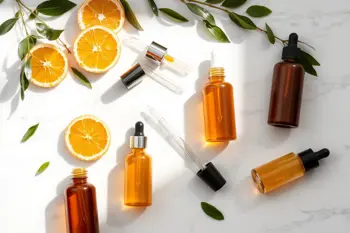
L-ascorbic acid is the most bioavailable and research-backed form of vitamin C for topical skincare, but its instability poses a formulation challenge. It oxidizes rapidly when exposed to light, air, or heat, turning serums brown and rendering them largely ineffective. 5 Effective serums containing L-ascorbic acid typically require opaque or UV-protected packaging, acidic pH environments around 3.5, and concentrations between 10% and 20% to achieve meaningful penetration and results. 6
For individuals with sensitive skin or those new to vitamin C, stabilized derivatives such as ascorbyl glucoside, magnesium ascorbyl phosphate, tetrahexyldecyl ascorbate (THD ascorbate), and 3-O-ethyl ascorbic acid provide meaningful alternatives. The INKEY List's 15% Vitamin C + EGF Serum, for instance, uses 15% Ascorbyl Glucoside, a stable form that avoids the redness, stinging, or peeling associated with unstable L-ascorbic acid, with clinical data indicating that 87% of users in studies saw visible skin brightening without irritation. 7 THD ascorbate, used in formulations such as the ROSE Ingleton MD FutureBright Dark Spot Serum at a clinically relevant 10% concentration, is noted for its ability to penetrate the skin without irritation while maintaining effectiveness for hyperpigmentation treatment. 8
Key Formulations and Their Documented Clinical Profiles
Several formulations in the research data carry notable clinical backing. The SkinCeuticals Phloretin CF with Ferulic Acid is a patented daytime vitamin C serum designed to deliver environmental protection while improving the appearance of discoloration and overall skin tone, with the formula remaining effective for up to 72 hours after absorption. 9 Clinique's Even Better Clinical Dark Spot Clearing Serum, a fourth-generation brightening product, combines two forms of vitamin C (magnesium ascorbyl phosphate and ascorbyl glucoside) alongside the proprietary brightening molecule UP302, derived from dianella ensifolia after screening over two thousand plant extracts, plus niacinamide and salicylic acid. 10
The Glow Recipe Guava Vitamin C Dark Spot Serum produced consumer study data showing 96% of 29 participants noticed visible improvement in overall skin tone and that skin appeared brighter and more radiant within a 4-week period, with 100% agreeing the serum was gentle enough for everyday use. 11 The bareMinerals SKIN RESCUE Pure Glow Serum, backed by 10 years of research and featuring a dual-patented sensitive skin base with 10% vitamin C and Rainbow Seaweed, reported that 88% of consumers agreed their skin tone looked more radiant after 7 days and 75% noticed dark spots diminished after 4 weeks. 12
Comparative Ingredient Profiles Across Market Segments
| Formulation | Vitamin C Form | Concentration | Notable Supporting Actives |
|---|---|---|---|
| SkinCeuticals Phloretin CF | L-Ascorbic Acid | Patented blend | Phloretin, Ferulic Acid |
| Clinique Even Better Clinical | MAP + Ascorbyl Glucoside | Multi-form | UP302, Niacinamide, Salicylic Acid |
| Vivier Serum 30 | L-Ascorbic Acid USP + Et-VC | 30% | Grapefruit Extract |
| ROSE MD FutureBright | THD Ascorbate | 10% | Tranexamic Acid 2.5%, Papaya Extract |
| The INKEY List 15% Vitamin C + EGF | Ascorbyl Glucoside | 15% | Plant-derived EGF Peptides |
| MDAiRE Vitamin C-FK | Quad-form blend | 15% | Ferulic Acid, Kojic Acid, Hyaluronic Acid |
| RoC Vitamin C Brightening Serum | 10% Active Blend | 10% | Nonapeptide |
The MDAiRE Vitamin C-FK Brightening Complex uses a quad-form vitamin C blend combining L-ascorbic acid, tetrahexyldecyl ascorbate, 3-glyceryl ascorbate, and magnesium ascorbyl phosphate at 15% total concentration, with ferulic acid to stabilize and amplify the antioxidant blend and kojic acid as a clinically validated melanin-blocking agent to prevent new pigmentation formation. 13 RoC's Vitamin C Brightening Serum, positioned at a more accessible market tier, reported that 94% of participants in a clinical study experienced improved luminosity and elasticity, 97% had visibly improved skin texture within one week, and 100% achieved visibly brighter skin within four weeks. 14
Realistic Timelines, Limitations, and Risk Considerations
Patience and consistency are non-negotiable factors in vitamin C serum efficacy. Visible results on dark spots typically require a minimum of 4 to 6 weeks of daily application, with more significant improvements on deeper hyperpigmentation appearing after 8 to 12 weeks of uninterrupted use. 3 Individuals with severe melasma or deep dermal pigmentation should understand that vitamin C serums are most effective for surface-level and moderate pigmentation; professional treatments such as chemical peels or laser therapy may be required for stubborn cases. 15
Skin sensitivity is a documented risk, particularly with high-concentration L-ascorbic acid formulations. Irritation, redness, and mild stinging are common introductory responses, especially in individuals with compromised skin barriers or rosacea-prone skin. Dermatologists generally advise introducing vitamin C gradually, starting with lower concentrations, and avoiding simultaneous use with retinoids or AHA/BHA exfoliants in the same routine step. Formulations labeled dermatologist-tested, fragrance-free, and non-comedogenic, such as those noted across multiple entries in this dataset, carry lower reported irritation rates across sensitive skin populations. Oxidized serums (identified by brown or yellow discoloration in the bottle) should be discarded, as they lose their melanin-inhibiting activity and may cause unnecessary irritation without delivering the intended brightening effect. 5
Storage, Packaging, and Longevity Factors
The practical shelf life and on-skin performance of a vitamin C serum are directly tied to its packaging and storage environment. L-ascorbic acid serums should be stored in cool, dark conditions and typically remain potent for 6 to 12 months; exposure to heat, light, or air accelerates oxidation and degrades active concentration. 16 Formulations housed in opaque pump bottles or sealed dropper systems with UV-protective glass significantly outperform those in clear, open-neck bottles for maintaining ingredient integrity over the product's usable lifespan.
Stabilized vitamin C derivatives such as ascorbyl glucoside and THD ascorbate offer a practical advantage in this regard: they remain effective across a broader range of pH levels and storage conditions compared to pure L-ascorbic acid, making them more reliably potent throughout the entire bottle. Ferulic acid is commonly added to L-ascorbic acid formulations specifically because it measurably extends stability while also amplifying antioxidant potency, a pairing that has become a recognized standard in clinical-grade formulations. Regardless of derivative form, storing serums away from bathroom humidity and direct sunlight remains an essential maintenance practice for any consumer investing in consistent hyperpigmentation treatment. 13
Sources
- Healthline - Vitamin C for Dark Spots (healthline.com)
- Journal of Cosmetic Dermatology - Vitamin C and Collagen Synthesis (onlinelibrary.wiley.com)
- Journal of Cosmetic Dermatology - Hyperpigmentation Clinical Studies (onlinelibrary.wiley.com)
- American Academy of Dermatology - Skin Care and SPF Guidance (aad.org)
- Healthline - Best Vitamin C Serum Storage and Stability (healthline.com)
- Journal of Cosmetic Dermatology - L-Ascorbic Acid Concentration and Penetration (onlinelibrary.wiley.com)
- The INKEY List - 15% Vitamin C + EGF Serum Product Page (theinkeylist.com)
- ROSE Ingleton MD - FutureBright Dark Spot Vitamin C Serum (rosemdskin.com)
- SkinCeuticals - Phloretin CF with Ferulic Acid Product Page (intl.skinceuticals.com)
- Ulta Beauty - Clinique Even Better Clinical Dark Spot Clearing Serum (ulta.com)
- Glow Recipe - Guava Vitamin C Dark Spot Serum (glowrecipe.com)
- bareMinerals - SKIN RESCUE Pure Glow Serum (bareminerals.com)
- MDAiRE - Vitamin C-FK Brightening Complex (mdaire.com)
- Ulta Beauty - RoC Vitamin C Brightening Serum Clinical Study Data (ulta.com)
- Byrdie - Best Vitamin C Serums for Dark Spots (byrdie.com)
- Healthline - Vitamin C Serum Shelf Life and Storage (healthline.com)
Authored by 24Trendz team