5 most affordable coastal towns to retire in Florida: A data-based comparison
For retirees researching the 5 most affordable coastal towns to retire in Florida, available comparisons identify Pensacola, Crystal River, Daytona Beach, Jacksonville, and Lakeland among Florida locations with comparatively manageable monthly costs. The figures below are reported market and cost-of-living measures, not guaranteed future expenses, and affordability can change substantially with housing, insurance, transportation, and healthcare choices. 1
How the five-town comparison was developed
The ranking follows a Florida affordability comparison that measured monthly cost of living, retiree population share, household income, and livability. Pensacola recorded the lowest monthly figure among the five at $3,226, followed by Crystal River at $3,310, Daytona Beach at $3,371, Jacksonville at $3,488, and Lakeland at $3,509. The figures provide a consistent comparison, but they should be treated as estimates rather than personal retirement budgets. 1
Coastal access also differs across the group. Pensacola, Daytona Beach, and Jacksonville have direct Gulf or Atlantic beach access, while Crystal River is centered on Gulf waterways and manatee habitat. Lakeland is inland, so it fits a broader waterfront and coastal-access definition rather than a direct oceanfront-town definition. That distinction matters to retirees who expect daily beach access rather than occasional drives to the shore. 1
| Town | Monthly cost | Retiree share | Livability |
|---|---|---|---|
| Pensacola | $3,226 | 21.3% | 83 |
| Crystal River | $3,310 | 46.6% | 66 |
| Daytona Beach | $3,371 | 22.5% | 80 |
| Jacksonville | $3,488 | 14.9% | 84 |
| Lakeland | $3,509 | 21.5% | 77 |
1. Pensacola
Pensacola ranks first in the comparison with a reported monthly cost of living of $3,226, a livability score of 83, and a retiree share of 21.3%. The city combines a larger year-round service economy with access to Gulf beaches, including the area’s well-known white-sand shoreline. Its median household income was reported at $74,212, which provides context for the local housing and service economy but does not predict the income required by an individual household. 1
Housing is a central reason Pensacola appears in multiple affordability studies. FinanceBuzz reported median monthly rent of $1,481 and described housing costs as below the national average. Rent, utilities, food, insurance, and transportation still need to be evaluated together, particularly for retirees relying on fixed income. A lower average housing figure does not eliminate exposure to rent increases, storm-related insurance changes, or vehicle costs. 3
2. Crystal River
Crystal River has a reported monthly cost of $3,310, a retiree share of 46.6%, and a livability score of 66. Its high retiree concentration indicates an established senior presence, while Kings Bay and Three Sisters Springs provide distinctive outdoor recreation centered on manatees and warm-water habitats. The town is on Florida’s Gulf Coast, approximately an hour and a half north of Tampa, according to the reported profile. 1
Another comparison placed Crystal River’s typical home price near $286,000 and estimated annual living costs at about $43,800, the lowest annual figure in that separate beach-town study. These numbers are different measures from the monthly comparison and should not be combined as though they were identical datasets. Homeowners also need to account for property taxes, wind coverage, flood exposure, maintenance, and utilities. 2
3. Daytona Beach
Daytona Beach ranks third in the reported Florida comparison, with a monthly cost of $3,371, a livability score of 80, and a retiree share of 22.5%. Its Atlantic location provides direct beach access, while its larger urban footprint offers more services and activities than smaller Gulf communities. The reported median household income was $52,058, a demographic measure that should be interpreted separately from an individual retiree’s required cash flow. 1
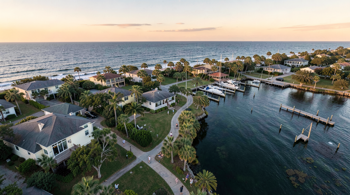
FinanceBuzz also listed Daytona Beach among Florida beach towns with monthly costs below $3,500. That result suggests relative affordability within the reviewed locations, not immunity from market changes. Prospective residents should distinguish between inland neighborhoods, beachside properties, and areas exposed to storm surge because rents, insurance requirements, evacuation concerns, and commuting patterns can differ within the same city. 2
4. Jacksonville
Jacksonville recorded a monthly cost of $3,488, a livability score of 84, and a retiree share of 14.9%, the smallest senior proportion among the five towns. The city offers Atlantic beaches, extensive waterways, parks, golf courses, nature preserves, and access to major healthcare facilities, including Mayo Clinic. Its reported median household income was $69,872, reflecting a broader metropolitan economy rather than a retirement-specific affordability standard. 1
Jacksonville’s scale can provide more housing and healthcare choices, but size also means transportation deserves close attention. A retiree living far from the beach, medical providers, or shopping may face higher vehicle mileage and maintenance costs. Reported median monthly rent was $1,625 in a separate FinanceBuzz review, placing Jacksonville within a group of Florida coastal locations below $1,700 in rent. 7
5. Lakeland and the coastal-access question
Lakeland recorded a monthly cost of $3,509, a livability score of 77, and a retiree share of 21.5%. Unlike the other four locations, Lakeland is not directly on Florida’s Atlantic or Gulf shoreline. It is therefore more accurately viewed as an inland city with access to coastal destinations, which may suit retirees who prioritize lower housing costs, lakes, services, and central positioning over living beside the ocean. 1
The ranking places Lakeland fifth among the five locations, only $283 above Pensacola’s reported monthly figure. That relatively narrow difference illustrates why rankings should not be treated as permanent. Mortgage rates, rental inventory, property taxes, insurance premiums, and household medical needs can change the order. Current city-level demographic and housing indicators can be compared through Census data, while local listing services provide more specific market information. 4
Costs and risks that rankings may miss
Florida retirement affordability extends beyond rent or a home’s sale price. A realistic comparison should include homeowners insurance, flood insurance, property taxes, HOA fees, utilities, transportation, healthcare access, and ongoing maintenance. Eligible owners may qualify for Florida’s homestead exemption on a primary residence, but eligibility, filing requirements, and deadlines should be confirmed with the relevant county property appraiser and the Florida Department of Revenue. 5
Flood exposure requires property-level review. FEMA’s Flood Map Service Center is the official source for mapped flood-hazard information, but insurance and financing questions still require confirmation from qualified professionals. NOAA identifies sea-level rise as a factor that can increase coastal flooding risk over time, including in areas that are not currently mapped as high risk. These five towns are therefore an affordability shortlist, not a permanent ranking or financial recommendation. 6
Sources
- MoneyLion, “13 Cheapest Places To Retire by the Beach in Florida”
- Mindfully American, “The Cheapest Beach Towns to Retire in Florida in 2026”
- FinanceBuzz, “10 Florida Beach Towns Where You Can Retire on $1,900 a Month or Less”
- U.S. Census Bureau QuickFacts
- Florida Department of Revenue, Homestead Exemption Information
- Federal Emergency Management Agency, Flood Map Service Center
- FinanceBuzz, “8 Florida Beach Towns Where You Can Retire for $1,700 a Month or Less”
Authored by 24Trendz team