Warning signs of gallbladder disease: A clinical guide to symptoms and complications
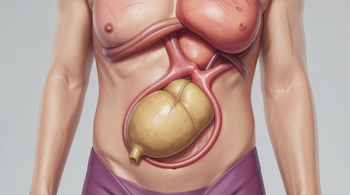
Warning signs of gallbladder disease include upper-right abdominal pain, nausea, vomiting, fever, jaundice, dark urine, and light-colored stools. These symptoms may appear during or after a gallbladder attack, particularly when a gallstone blocks a bile duct. Because similar symptoms can occur with appendicitis, ulcers, pancreatitis, and reflux disease, symptom patterns alone cannot establish a diagnosis. 1
Upper abdominal pain and gallbladder attacks
The most characteristic warning sign is pain in the upper-right abdomen beneath the ribcage. Gallbladder attacks can also cause pain in the upper middle abdomen, back, right shoulder, or the area between the shoulder blades. Episodes commonly follow heavy, greasy, or fatty meals, although pain may occur spontaneously or awaken a person during the night. NIDDK reports that attacks may last several hours, while clinical descriptions commonly place post-meal discomfort within minutes of eating. 1 2
- Repeated episodes of similar pain may indicate recurring obstruction by gallstones. 1
- Severe or persistent pain is more concerning than brief, mild indigestion. 3
Digestive symptoms after eating
Nausea and vomiting frequently accompany gallbladder attacks and acute gallbladder inflammation. Some people report fullness, indigestion, or intolerance of rich foods, but these symptoms are not specific to gallbladder disease and can overlap with other digestive conditions. Merck Manual notes that gallstones themselves do not necessarily cause dyspepsia or fat malabsorption, so persistent bloating or indigestion should not be treated as proof of a gallbladder disorder without medical evaluation. 1 4
- Nausea or vomiting combined with upper-right abdominal pain is more clinically significant than either symptom alone. 5
- Symptoms repeatedly appearing after fatty meals may provide useful information for a clinician, but they do not confirm gallstones. 2
Fever, chills, and inflammation
Fever, including a low-grade fever, or chills during or after a gallbladder attack can signal inflammation or infection involving the gallbladder, liver, or pancreas. Acute cholecystitis, an inflammation of the gallbladder, commonly produces marked abdominal pain with nausea, vomiting, and fever. A blocked duct that remains obstructed for several hours can lead to serious complications, making fever or chills alongside persistent pain a reason for prompt medical assessment. 1 6
- Fever with worsening abdominal pain may indicate acute cholecystitis. 6
- Fever or chills with jaundice may indicate infection or obstruction in the biliary tract. 5
Jaundice, dark urine, and pale stools
Yellowing of the skin or whites of the eyes, known as jaundice, can occur when a gallstone blocks a bile duct and bilirubin builds up in the bloodstream. Tea-colored or dark urine and light-colored stools are additional warning signs of impaired bile flow identified by NIDDK. These changes are particularly important when they occur with abdominal pain, fever, nausea, or vomiting because they may reflect obstruction beyond the gallbladder itself. 1
- Jaundice is not a typical feature of uncomplicated, silent gallstones. 1
- Dark urine and pale stools should be reported as part of the symptom history, especially when they appear together. 1
Silent gallstones and recurring symptoms
Most people with gallstones have no symptoms. NIDDK describes these as silent gallstones, which generally do not interfere with the function of the gallbladder, liver, or pancreas and typically do not require treatment. Symptoms develop when stones block bile ducts or cause inflammation. After one gallbladder attack, additional attacks are more likely, so a recurring pattern of upper abdominal pain deserves clinical review even if each episode eventually subsides. 1
- Gallstones may be discovered incidentally during imaging performed for another reason. 4
- Symptomatic gallstone disease includes biliary colic, acute cholecystitis, duct stones, pancreatitis, and acute cholangitis. 5
Conditions that can resemble gallbladder disease
Gallbladder symptoms are not unique. NIDDK lists appendicitis, ulcers, pancreatitis, and gastroesophageal reflux disease among conditions that may produce similar complaints. Chest pressure, back pain, indigestion, or upper abdominal discomfort can therefore have causes outside the biliary system. A clinical history, physical examination, laboratory testing, and appropriate imaging are needed to distinguish these possibilities rather than relying solely on the location or timing of pain. 1 5
- Ultrasonography is identified as the first-line imaging modality for evaluating right-upper-quadrant pain. 5
- Ultrasound is considered accurate for detecting gallstones. 4
When symptoms require medical attention
Medical assessment is warranted for abdominal pain lasting several hours, nausea or vomiting associated with an attack, fever or chills, jaundice, dark urine, or light-colored stools. These findings may indicate infection, inflammation, duct obstruction, or pancreatic involvement rather than uncomplicated biliary colic. Persistent or escalating symptoms should not be self-diagnosed because gallstone complications and unrelated abdominal emergencies can overlap in their early presentation. 1 5
- Document when the pain began, where it is located, how long it lasts, and whether it follows meals. 2
- Record associated vomiting, fever, chills, jaundice, urine changes, and stool-color changes for the evaluating clinician. 1
- Do not assume that the absence of symptoms excludes gallstones, because many stones remain silent. 1
Sources
- National Institute of Diabetes and Digestive and Kidney Diseases, Symptoms & Causes of Gallstones: https://www.niddk.nih.gov/health-information/digestive-diseases/gallstones/symptoms-causes
- Cleveland Clinic, Gallbladder Attack: Symptoms and How To Stop It: https://health.clevelandclinic.org/when-to-suspect-your-abdominal-pain-is-a-gallbladder-attack
- Harvard Health, Cholecystitis: https://www.health.harvard.edu/digestive-health/cholecystitis-a-to-z
- MSD Manual Consumer Version, Gallstones: https://www.msdmanuals.com/home/liver-and-gallbladder-disorders/gallbladder-and-bile-duct-disorders/gallstones
- American Academy of Family Physicians, Gallstone Disease: https://www.aafp.org/fpe/2026/560-abdominal-pain-syndromes/gallstone-disease
- Harvard Health, What to Do About Gallstones: https://www.health.harvard.edu/digestive-health/what-to-do-about-gallstones
Authored by 24Trendz team