14-day Asia cruise to Japan: itinerary patterns and planning considerations
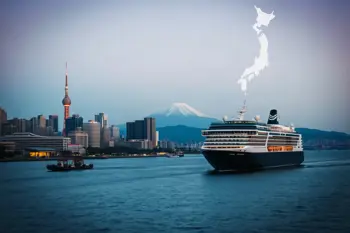
A 14-day Asia cruise to Japan can mean several different travel patterns rather than one standard route. Representative sailings combine Japanese ports with Taiwan, China, South Korea, Southeast Asia, or multiple Japanese regions, so itinerary geography, embarkation point, sea days, and port duration are central comparison factors.
What a 14-day itinerary usually includes
Several published examples are described as 14-night Asia voyages, although the day-by-day schedules label disembarkation as day 15. A Seabourn Encore sailing departs Hong Kong and returns to Tokyo, visiting Japanese ports including Aburatsu, Shimizu, Naha, Shingu, Osaka, Kochi, and Ishigaki Island, alongside Tainan, Keelung, and Taichung in Taiwan. The route contains one listed sea day and a route map identifying 12 ports. 1
Holland America Line's Noordam follows another Hong Kong-to-Tokyo pattern. Its calls include Shimizu, Kagoshima, Nagasaki, Osaka, Shanghai, Kochi, and Fukuoka, with sea days separating parts of the journey. This arrangement is materially different from a Japan-only cruise because it adds a Chinese port and concentrates several Japanese destinations into a northbound or eastbound regional passage. 2
Japan-focused round-trip routes
A circle-Japan itinerary starts and ends in Japan, reducing the need to arrange separate international arrival and departure cities. The Westerdam example embarks and disembarks in Tokyo and visits Hiroshima, Toyama, Hakodate, Aomori, Tsuruga, Sakaiminato, Osaka, Kochi, and Sakata, as well as Busan in South Korea. It includes two listed sea days, illustrating how a two-week voyage can combine coastal coverage with onboard transit time. 3
Round-trip Japan routes can also provide a strong regional overview without beginning in Hong Kong or Singapore. The published Holland America itinerary identifies Tokyo as both start and finish and lists a 15-day, 14-night format, while its route description references Hiroshima, Kyoto, Osaka, Toyama, Hakodate, Sakaiminato, and Tsuruga. A separate Seabourn Encore route begins in Tokyo and includes Miyako, Muroran, Otaru, Hakodate, and three South Korean calls. 8
Open-jaw voyages and regional combinations
Open-jaw cruises use different embarkation and disembarkation cities, which can broaden the geographic range but adds land-transport planning at one or both ends. The Seabourn Taiwan and Japan sailing runs from Hong Kong to Tokyo, while the Noordam China and Japan voyage uses the same endpoints. Such routes may suit travellers who want a gradual progression through East Asia, but flights, hotel nights, and airport-to-port transfers must be assessed separately. 1
A Princess Diamond Princess itinerary travels from Singapore to Tokyo and is described as a 14-day journey visiting Singapore, Vietnam, China, Taiwan, and Japan. Its listed destinations include Ho Chi Minh City, Hong Kong, Okinawa, Keelung, Ishigaki Island, Kagoshima, Osaka, and Tokyo. This is a broader Southeast Asia and Japan format than the Japan-circle examples, with longer regional distances and different entry requirements at successive ports. 4
Ports and shore-planning implications
Tokyo may be represented by Yokohama, the principal cruise gateway used by some itineraries. A sailing on Oceania Riviera begins and ends at Tokyo, with the final port identified as Tokyo, Yokohama. Travellers planning time in central Tokyo therefore need to distinguish the cruise terminal from the city centre and allow substantial transfer time when coordinating sightseeing, accommodation, or onward transport. 5
Osaka is frequently used as an access point for inland cultural destinations. Itineraries in the research include Osaka on the Noordam and Westerdam, while the Osaka tourism authority provides visitor information for Osaka, Kyoto, and Nara. Other Japanese calls create different excursion profiles: Hiroshima is associated with peace and cultural attractions, while Kobe offers a separate urban port experience. The practical value of a port depends on call length and transport distance, not only the destination name. 2
Comparing port density, sea days, and onboard time
Port density varies considerably among 14-day routes. The Seabourn Taiwan and Japan example lists 12 ports, while the Noordam itinerary identifies nine ports and the Westerdam circle-Japan route identifies 12. Published schedules also show consecutive port calls, occasional sea days, and gaps in numbered days where the supplied itinerary does not display every day. These differences affect walking time, excursion feasibility, rest periods, and the amount of time spent onboard. 1
The Oceania Riviera schedule illustrates a particularly port-intensive sequence: Nagoya, Kyoto through Kobe, Beppu, Kitakyushu, Busan, Jeju, Seoul through Incheon, Shanghai, Kagoshima, Kochi, Shimizu, and Tokyo, Yokohama. Two sea days appear in that table. By contrast, an Azamara Pursuit description presents a 14-night Japan-intensive voyage with a mix of Japanese destinations and Busan, plus sea-day time. 5
Documentation and border considerations for UK travellers
British citizens generally may visit Japan for tourism without a visa for up to 90 days, subject to the applicable entry conditions. The UK Foreign, Commonwealth and Development Office advises checking passport and entry requirements, while Japan's Ministry of Foreign Affairs lists countries and regions covered by short-term visa exemption arrangements, including the United Kingdom. The relevant rules concern entry into Japan and should not be treated as permission for other countries on the route. 9
Every itinerary requires separate verification for each country visited, particularly on cruises beginning in Singapore or calling at Vietnam, China, Taiwan, or South Korea. Singapore's Immigration and Checkpoints Authority publishes official entry and transit requirements, and Marina Bay Cruise Centre is a major facility for large cruise ships. Passport validity, onward travel evidence, sufficient funds, transit conditions, and cruise-line document deadlines can all affect boarding or shore access. 10
Costs, inclusions, and practical risks
Published fare information is not directly comparable across operators because inclusions and cabin categories differ. The Oceania page states that fares are based on double occupancy and describes shipboard inclusions such as speciality dining, gratuities, Wi-Fi, and a choice of selected amenities. Other quoted examples show per-person figures in Australian dollars or pounds, but those figures should be treated as source-specific, not as a market-wide benchmark. 5
Important cost and operational variables can sit outside the headline fare, including flights, travel insurance, shore excursions, drinks packages, gratuities, hotels, and independent transfers. A 14-day voyage also creates practical friction through repeated embarkation-style security procedures, changing local transport systems, weather disruption, and tightly timed returns to the ship. Comparing the full travel structure, cancellation terms, documentation requirements, and port time is more informative than comparing duration alone. 11
How the main route types differ
The available evidence supports four broad categories: Japan circle routes, Hong Kong-to-Tokyo China and Japan routes, Taiwan and Japan combinations, and Singapore-to-Tokyo Southeast Asia itineraries. Japan circles maximise domestic coastal coverage, Hong Kong departures add a Chinese gateway and a long eastbound journey, Taiwan routes emphasise island and Japanese port variety, and Singapore departures extend the trip into Southeast Asia before reaching Japan.
Route selection therefore depends on the intended balance between cultural depth, regional breadth, transfer complexity, and sea time. A traveller focused on Japanese history may prioritise Hiroshima, Kyoto access, Nagasaki, or Osaka, while someone seeking a wider East Asian overview may consider calls in Busan, Shanghai, Taiwan, Vietnam, or Singapore. Official destination resources from Japan, Tokyo, Osaka, Hiroshima, Kobe, and Busan provide the most appropriate basis for checking local logistics and attractions. 12
Sources
- Cruises.To, Seabourn Encore, 14-Day Exploring Taiwan and Japan Charming Harbors: https://cruises.to/seabourn/seabourn-encore/14-day-exploring-taiwan-japan-charming-harbors/
- Cruises.To, Noordam, 14-Day China and Japan Discovery: https://cruises.to/holland-america-line/noordam/14-day-china-japan-discovery-shanghai-osaka-overnight/
- Cruises.To, Westerdam, 14-Day Circle Japan: https://cruises.to/holland-america-line/westerdam/14-day-circle-japan/
- Global Journeys, Southeast Asia and Japan, Princess: https://www.globaljourneys.com/trip/princess-sintyo14
- Oceania Cruises, Tokyo to Tokyo, Autumn in Asia: https://www.oceaniacruises.com/cruises/RVA271011/
- Cruises.To, Seabourn Encore, 14-Day Exploration of Hokkaido and Korea: https://cruises.to/seabourn/seabourn-encore/14-day-exploration-of-hokkaido-korea/
- World of Cruising, Japan Intensive Cruise on Azamara Pursuit: https://www.worldofcruising.co.uk/cruises/japan-intensive-cruise-nagasaki-hiroshima-osaka-2
- Global Journeys, Circle Japan, Holland America: https://www.globaljourneys.com/trip/holland-america-o7p14c
- GOV.UK and Japan Ministry of Foreign Affairs, Japan entry requirements: https://www.gov.uk/foreign-travel-advice/japan/entry-requirements
- Singapore Immigration and Checkpoints Authority and Marina Bay Cruise Centre: https://www.ica.gov.sg/enter-transit-depart/entering-singapore
- Research summary on cruise fare inclusions and comparison factors.
- Japan National Tourism Organization, GO TOKYO, Osaka Convention and Tourism Bureau, Hiroshima Convention and Visitors Bureau, Kobe Convention and Visitors Bureau, and Visit Busan.
Authored by 24Trendz team