14-day island cruise to Indonesia: An evidence-based guide to routes, ships, and travel requirements
A 14-day island cruise to Indonesia is not a single standard itinerary. Documented voyages include expedition routes from Darwin to Singapore, specialist sailing journeys from Ambon to Kaimana, and round-trip explorations beginning and ending in Jakarta. The main differences involve vessel size, landing style, marine activities, wildlife access, and the degree of remoteness. 1 2
What a 14-day Indonesian cruise can include
One documented 14-day Heritage Adventurer itinerary departs Darwin and ends in Singapore, visiting Kupang, Wetar, Alor, Lembata, Ende on Flores, Komodo, Satonda and Sumbawa, West Bali National Park, and Camp Leakey in Borneo. Its stated highlights include Komodo dragons, Pink Beach, Kelimutu's tri-coloured lakes, and orangutans in Tanjung Puting National Park. 1
Other voyages use a different geographic emphasis. SeaTrek's 14-day, 13-night route runs from Ambon through the Banda Archipelago, Kei and Aru Islands, and onward to Kaimana and Triton Bay, with whale-shark encounters described as a central feature. Lindblad's 14-day Aqua Blu voyage starts and ends in Jakarta and focuses on the Spice Islands, Misool, Raja Ampat, reefs, lagoons, and historic trading sites. 2 4
Route comparison and embarkation points
| Documented voyage | Duration and route | Primary emphasis |
|---|---|---|
| Heritage Adventurer | 14 days, Darwin to Singapore | Komodo, Flores, Bali, Borneo wildlife |
| MV Katharina | 14 days and 13 nights, Ambon to Kaimana | Spice Islands, reefs, whale sharks |
| Aqua Blu | 14 days, Jakarta round trip | Raja Ampat, Misool, spice history |
Benoa is a documented cruise gateway in southern Bali, while Singapore functions as a major regional embarkation and completion point for some Indonesia-focused voyages. Jakarta is used as both the starting and ending port on the Aqua Blu itinerary. These patterns mean that an apparently Indonesia-centred cruise may require international flights before or after the sailing, particularly when the itinerary is open-jaw rather than round trip. 4 6
Port access also shapes the experience. Expedition vessels use tenders or Zodiacs to reach beaches, national parks, lagoons, and small communities that are not designed for large-ship infrastructure. By contrast, larger conventional cruise itineraries may include Bali, Lombok, and Komodo while also continuing toward Australia. A route's advertised port list therefore does not necessarily indicate the length or difficulty of each shore visit. 1 9
Ships, capacity, and onboard operating style
The Heritage Adventurer was originally designed for 184 guests but the documented expedition program welcomes 140 expeditioners. Southern Sea Ventures describes it as a spacious floating base camp with four accommodation decks, gourmet dining, and an open-bridge policy. These features support a more expedition-oriented format, where daily landings, briefings, and wildlife observations are central to the voyage rather than secondary entertainment. 1 3
At the smaller end, the Naga Biru liveaboard is described as having seven cabins for a maximum of 12 guests on a specialist Komodo and Alor snorkeling journey. Aqua Blu is described as a 14-cabin vessel, while HANSEATIC expedition ships used on another 14-day Indonesia route carry up to 230 guests. Capacity affects privacy, transfer logistics, dining arrangements, and how quickly a group can land at remote sites. 4 5 6
Wildlife, reefs, and cultural activities
Marine activities are a recurring feature across the documented routes. SeaTrek states that snorkeling generally occurs twice daily for an hour or more, with possibilities including whale sharks, manta rays, coral reefs, and reef fish. The Komodo and Alor program describes likely sightings of manta rays, turtles, reef sharks, and potentially mola mola, while also identifying frogfish and varied coral habitats as possible underwater encounters. 2 5
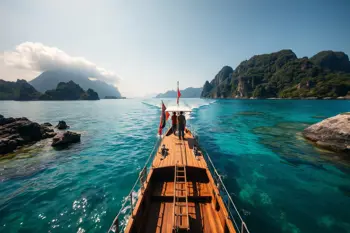
Wildlife is not limited to the water. The Heritage Adventurer route includes Tanjung Puting National Park and Camp Leakey for orangutan observation, plus Komodo National Park. Other expedition descriptions mention birds, rare plants, ancient rock art, stingless jellyfish lakes, volcanic landscapes, and encounters with local communities. Cultural stops can include nutmeg plantations, preserved forts, fishing villages, Bajau communities, and remote boat-building sites. 1 3 4
Indicative fares and what they may exclude
Published examples show substantial variation between vessel categories and routes. Eclipse Travel lists the 14-day Heritage Adventurer voyage from AUD $15,517 per person, Southern Sea Ventures lists a comparable route from AU $16,255 per person with a stated kayaking supplement of AU $1,550, SeaTrek lists its Ambon to Kaimana voyage from $11,150, and Lindblad lists Aqua Blu from $33,976 per person. These are published reference figures, not a guarantee of current availability or final cost. 1 2 3 4
Fare comparisons require attention to inclusions. Research data indicates that flights, some shore excursions, drinks, gratuities, specialty dining, and hotel nights before or after sailing may sit outside a quoted cruise fare. Remote expedition routes can also involve additional transfers, equipment supplements, variable landing conditions, and itinerary changes caused by marine weather. A lower published figure is therefore not directly comparable with a more inclusive luxury or specialist expedition price. 10 11
Timing, documentation, and practical risks
Bali's generally drier period runs from April to October, although conditions vary between islands and marine forecasts can change. Indonesia's meteorological agency, BMKG, is the official source for weather and marine-weather information that may affect ports and excursions. Remote itineraries carry practical uncertainty because snorkeling, Zodiac landings, beach walks, and wildlife observations depend on sea state, local permissions, conservation rules, and safe operating conditions. 7 12
Australian travellers should check that passports meet the required validity period and confirm the applicable Indonesian visa or visa-on-arrival category before departure. The official immigration portal, Australian travel advice, customs authority, embassy, and cruise operator provide the relevant requirements. Health guidance, local laws, insurance conditions, port changes, and conservation restrictions also require verification because regulations and schedules can change between publication and travel. 8 10 13 14
How to assess an itinerary objectively
The most useful comparison begins with geography rather than the ship's headline duration. A traveller prioritising orangutans and Komodo dragons needs a different route from someone prioritising Raja Ampat reefs, whale sharks, or historical spice-trade sites. Embarkation and disembarkation ports should be checked alongside flight connections, hotel requirements, tender operations, and the number of sea days shown in the itinerary. 1 2 4
Eligibility and operating realities should remain part of the assessment. Expedition grades can range from easy to moderate, but repeated snorkeling, uneven landings, heat, humidity, and boat transfers may still affect suitability. The responsible approach is to compare the written inclusions, cancellation terms, capacity, medical arrangements, conservation practices, and current government advice rather than relying solely on photographs, destination names, or a published fare. 3 10
Sources
- Eclipse Travel, Indonesia's Forgotten Islands Expedition Cruise
- SeaTrek Sailing Adventures, Spice Islands to the Whale Sharks
- Southern Sea Ventures, Indonesia's Forgotten Islands
- Lindblad Expeditions, Indonesia's Spice Islands and Raja Ampat aboard Aqua Blu
- Tropical Snorkeling, 14-Day Komodo and Alor Liveaboard
- Peregrine Travel Centre, Unknown Indonesia: Kingdom of a Thousand Islands Cruise
- Indonesia Travel, Official Tourism Portal
- Directorate General of Immigration, Indonesia
- World of Cruising, Across the Archipelago
- Smartraveller, Indonesia Travel Advice
- Cruise fare and inclusion guidance supplied in the research data
- BMKG, Indonesia Meteorology, Climatology and Geophysical Agency
- Australian Embassy in Indonesia
- Indonesia Directorate General of Customs and Excise
Authored by 24Trendz team