Understanding Common Skin Cancer Symptoms in Adults: When to Get Checked
Fast Facts:
- Early detection of skin cancer symptoms dramatically improves prognosis.
- Incidence of melanoma is increasing globally for adults.
Recognizing the Early Signs of Skin Cancer in Adults
Understanding the common symptoms of skin cancer in adults is paramount for early detection and successful treatment. Skin cancer, primarily caused by exposure to ultraviolet (UV) radiation from the sun or tanning beds, is the most common type of cancer worldwide. While often curable when caught early, identifying suspicious changes in moles, freckles, or new growths can be challenging without proper awareness. This comprehensive guide will detail the various manifestations of skin cancer, from the more aggressive melanoma signs to the prevalent basal and squamous cell carcinomas, emphasizing the critical importance of a timely skin check by a healthcare professional.
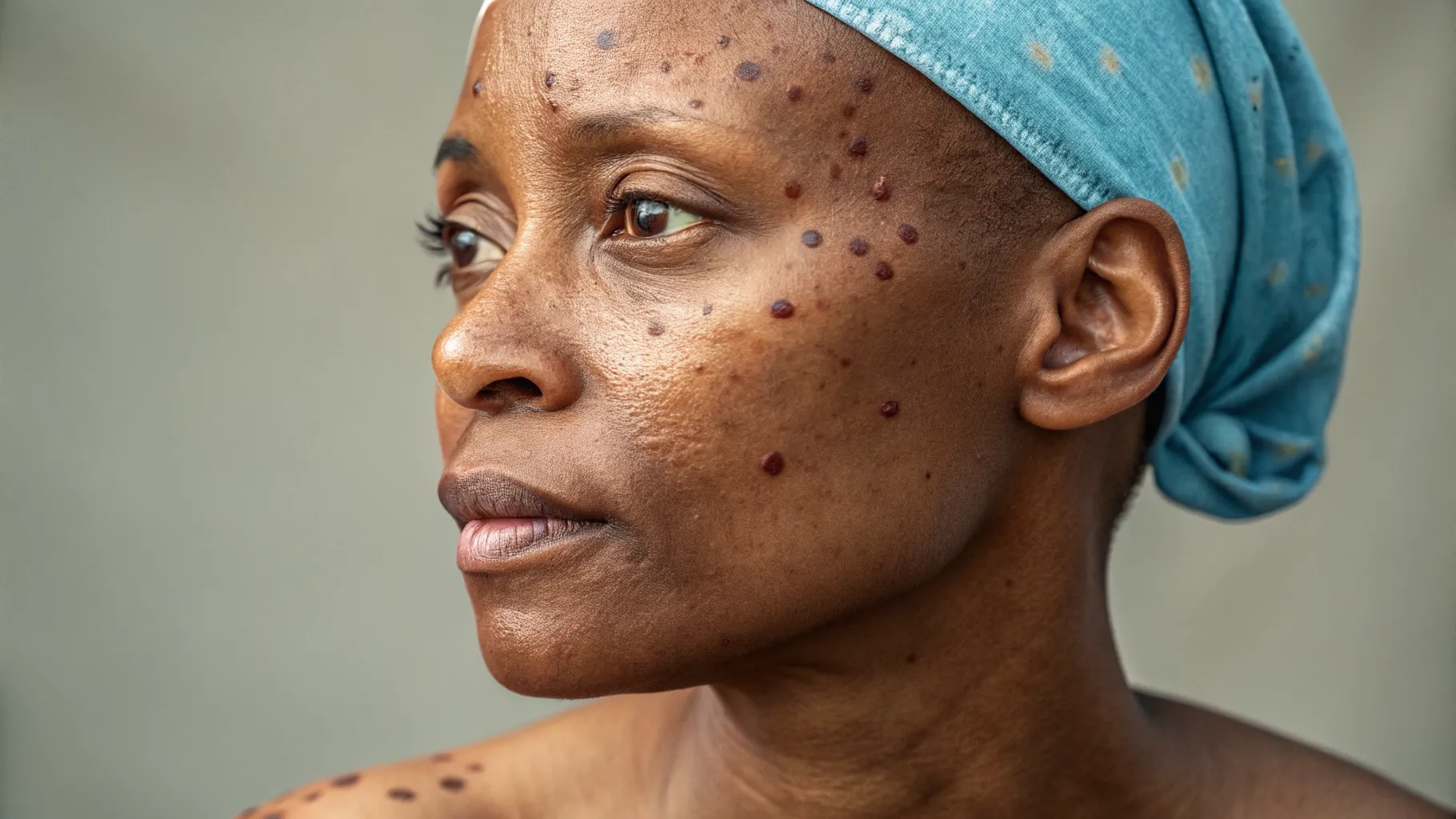
The ABCDEs of Melanoma: Crucial Early Indicators
Melanoma is often considered the most serious type of skin cancer due to its potential to spread rapidly if not detected and treated early. Recognizing melanoma signs is simplified by the ABCDE rule, a widely adopted mnemonic that helps individuals identify suspicious moles or new growths. Each letter represents a distinct characteristic that warrants medical evaluation:
Asymmetry:
A benign mole is usually symmetrical; if you draw a line through it, the two halves will match. A suspicious lesion, however, often exhibits asymmetry, meaning the two halves do not look alike. This irregular shape can be one of the earliest skin cancer symptoms.
Border Irregularity:
Normal moles typically have smooth, even borders. Moles that are cancerous, particularly melanoma, often have irregular, notched, blurred, or ragged borders. This distinct lack of a well-defined edge is a key indicator to observe.
Color Variation:
Benign moles usually have a uniform color. Moles with irregular color patterns, including shades of black, brown, and tan, or the presence of white, red, or blue, are concerning melanoma signs. Multiple colors within a single lesion are a strong warning sign.
Diameter:
Melanomas are typically larger than 6 millimeters (about the size of a pencil eraser) when diagnosed, although they can be smaller. While size alone isn't conclusive, a mole or lesion that is larger than 6mm should be examined by a dermatologist, especially if other ABCDE criteria are met.
Evolving:
Perhaps the most critical of the ABCDEs, "Evolving" refers to any change in a mole's size, shape, color, elevation, or any new symptoms like bleeding, itching, or crusting. Any noticeable change over time, no matter how subtle, is a red flag and requires immediate medical attention for a comprehensive skin check.
Understanding Non-Melanoma Skin Cancers
While melanoma receives significant attention due to its aggressive nature, basal cell carcinoma (BCC) and squamous cell carcinoma (SCC) are far more common. These non-melanoma skin cancers are less likely to spread but can still cause significant local tissue damage if left untreated. Recognizing their unique skin cancer symptoms is crucial for prompt intervention.
Basal Cell Carcinoma (BCC):
Basal cell carcinoma is the most common type of skin cancer, often appearing on sun-exposed areas like the face, neck, and hands. It frequently presents as a pearly or waxy bump, a flat, flesh-colored or brown scar-like lesion, or a bleeding, scabbing sore that heals and then returns. BCCs often have raised, rolled edges and may develop a central indentation. They can be itchy, easily bleed, or crust over, and can slowly enlarge over months or years.
Squamous Cell Carcinoma (SCC):
Squamous cell carcinoma is the second most common type of skin cancer. Like BCC, it typically develops on sun-exposed areas. SCC often appears as a firm, red nodule; a flat lesion with a scaly, crusted surface; or a persistent, red, scaly patch that may bleed easily. These lesions can sometimes resemble warts or open sores and may be tender to the touch. Early detection of these distinct skin cancer symptoms is vital to prevent local invasion.
Other Important Skin Changes to Monitor
Beyond the classic signs of melanoma, BCC, and SCC, there are several other types of skin changes and lesions that warrant attention. These might not always be cancerous but can be pre-cancerous or indicators of increased risk, making regular self-examination and professional consultation imperative for all adults concerned about skin cancer symptoms.
Actinic Keratoses (AKs):
Actinic keratoses are rough, scaly patches on the skin that develop from years of sun exposure. They are considered pre-cancerous and can sometimes progress to squamous cell carcinoma. AKs typically feel like sandpaper and often appear on the face, lips, ears, back of the hands, forearms, scalp, or neck. While not cancerous themselves, their presence indicates significant sun damage and a higher risk for developing squamous cell carcinoma.
New Moles or Growths:
Any new mole or growth that appears in adulthood, particularly if it has an unusual appearance or rapidly changes, should be evaluated. While most new moles are benign, vigilance for any new melanoma signs or atypical features is essential, especially for individuals with a history of extensive sun exposure or multiple moles.
Non-Healing Sores or Wounds:
A sore or wound that does not heal within a few weeks, or repeatedly heals and reopens, can be a subtle but significant indicator of underlying skin cancer. This can be a symptom of basal cell carcinoma or squamous cell carcinoma, particularly if it's accompanied by bleeding, crusting, or itching without any obvious injury.
Distinguishing Benign Moles from Suspicious Lesions
Many adults have numerous moles, and distinguishing between a harmless mole and a potential skin cancer symptom can be challenging. Benign moles are typically symmetrical, have smooth, well-defined borders, uniform color, and remain stable in size over time. They are usually less than 6mm in diameter. In contrast, suspicious lesions often present with one or more of the ABCDE criteria for melanoma, such as asymmetry, irregular borders, varied color, a diameter larger than 6mm, or signs of evolving change. While some benign moles may exhibit one atypical feature, the presence of multiple irregular characteristics significantly increases the likelihood of a cancerous or pre-cancerous condition. If there is any doubt or concern about any lesion on your skin, it is always best to consult a dermatologist for a professional assessment and possible biopsy to determine its nature.
When to Get a Professional Skin Check
Knowing when to seek professional medical advice for a skin check is as important as recognizing the common symptoms of skin cancer in adults. Regular self-examinations are crucial, but a professional dermatologist offers an expert eye and specialized tools to detect subtle changes. Here are key situations that necessitate a dermatologist visit:
Any Suspicious Lesion: If you notice any mole or lesion exhibiting the ABCDE signs of melanoma, or any non-healing sore, pearly bump, or scaly patch, schedule an appointment immediately. Prompt evaluation of potential skin cancer symptoms is vital.
Family History of Skin Cancer: Individuals with a close relative who has had melanoma or other skin cancers are at a higher risk and should discuss a screening schedule with their doctor.
Numerous Moles or Atypical Moles: If you have a large number of moles (over 50) or several atypical (dysplastic) moles, regular professional surveillance is recommended to monitor for new melanoma signs.
Excessive Sun Exposure History: A history of severe sunburns, especially during childhood, or extensive cumulative sun exposure, significantly increases your risk. A baseline skin check and subsequent annual screenings are often advised.
Annual Check-ups: Even without specific concerns, many dermatologists recommend annual full-body skin examinations, particularly for individuals over 40 or those with risk factors, to ensure early detection of any emerging skin cancer symptoms.
Frequently Asked Questions
Can skin cancer symptoms appear suddenly?
Yes, new moles or lesions can appear suddenly, and existing ones can change rapidly. Any new or evolving growth should be promptly evaluated by a dermatologist, especially if it exhibits characteristics of melanoma signs.
Are all changing moles indicative of skin cancer?
Not all changing moles are cancerous, but any mole that changes in size, shape, color, or symptoms (like itching or bleeding) warrants a professional skin check. It's impossible to tell without a medical evaluation.
How often should I perform a self-skin check?
It is recommended to perform a thorough self-skin examination once a month. Familiarize yourself with your skin's patterns of moles, freckles, and blemishes to better notice any new or changing skin cancer symptoms.
What causes basal cell carcinoma and squamous cell carcinoma?
Both basal cell carcinoma and squamous cell carcinoma are primarily caused by prolonged and cumulative exposure to ultraviolet (UV) radiation from sunlight or artificial sources like tanning beds. Genetic factors and a weakened immune system can also play a role.
Is it possible to have skin cancer without being exposed to the sun?
While sun exposure is the leading cause, it is possible for skin cancer to develop in areas not typically exposed to the sun. Rarer forms or those with genetic predispositions can occur anywhere on the body, emphasizing the importance of a full-body skin check.
References
- American Academy of Dermatology Association. Skin Cancer.
- Skin Cancer Foundation. Skin Cancer Facts & Statistics.
- Mayo Clinic. Melanoma.
- National Cancer Institute. Basal Cell Carcinoma and Squamous Cell Carcinoma.
- Centers for Disease Control and Prevention. What Are the Risk Factors for Skin Cancer?
Authored by 24Trendz team