Unlock Your Best Smile: The Best Way to Floss Daily for Superior Oral Hygiene
Facts:
- Daily flossing reduces interdental plaque by up to 80%.
- Studies show regular oral hygiene significantly lowers risk of cardiovascular diseases for adults.
Mastering Your Daily Floss Routine for Optimal Gum Health
Integrating the best way to floss daily into your routine is not just an optional step; it's a critical component of comprehensive oral hygiene. While brushing cleans the surfaces of your teeth, it's the daily use of dental floss that targets the often-missed areas between teeth and just below the gumline, preventing the buildup of harmful plaque and food particles that lead to serious oral health issues. Understanding the correct flossing technique is paramount to achieving effective plaque removal and maintaining pristine gum health.
Understanding the Importance of Daily Interdental Cleaning
Many believe that a thorough brushing is sufficient for maintaining good oral hygiene. However, toothbrushes, even electric ones, cannot effectively reach the tight spaces between teeth or adequately clean below the gumline. These are prime locations for food particles to become trapped and for plaque to accumulate. Over time, this buildup leads to tartar, which cannot be removed by brushing or flossing alone and requires professional dental cleaning. Persistent plaque and tartar contribute significantly to the development of tooth decay, bad breath, and inflammatory conditions such as gingivitis, the early stage of gum disease. Daily interdental cleaning using dental floss is therefore indispensable for comprehensive plaque removal and preventing these issues before they escalate, safeguarding your overall gum health and ensuring long-term cavity prevention.
Step-by-Step Guide to Effective Flossing Technique
Achieving maximum benefit from your flossing requires more than just moving the string between your teeth; it demands a precise flossing technique. This systematic approach ensures that every surface is cleaned thoroughly, maximizing plaque removal without causing harm to your gums. Adhering to these steps will significantly improve your oral hygiene.
Choosing the Right Dental Floss
The first step in mastering the best way to floss daily is selecting appropriate dental floss. While many types exist, the general recommendation is to use a strong, shred-resistant floss. Waxed floss often glides more easily between tight teeth. If you have larger gaps or braces, consider dental tape or super floss. The key is to find a floss that you are comfortable using daily, as consistency is far more important than the specific brand or type, as long as it facilitates effective plaque removal.
The Proper Flossing Method
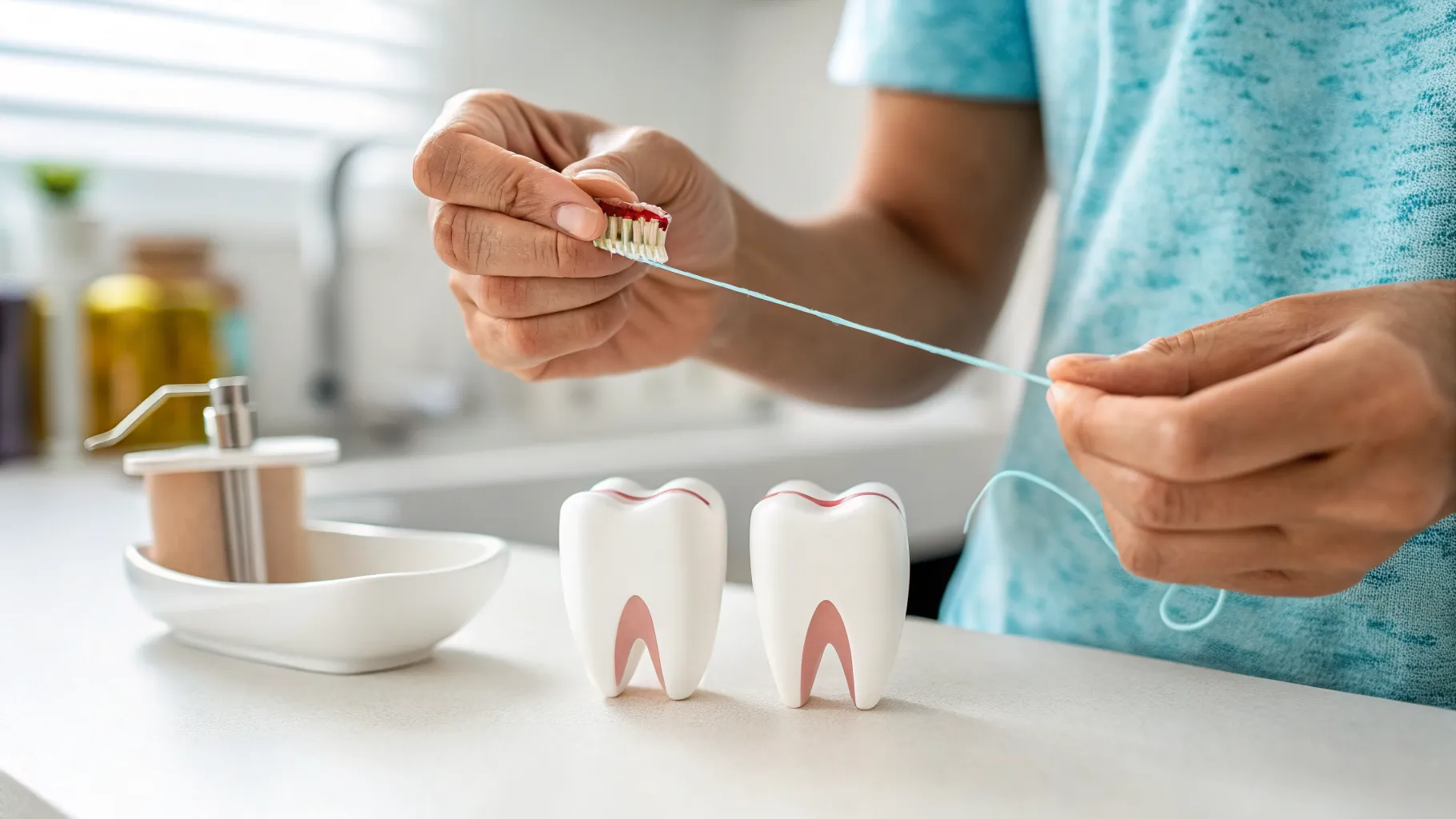
Begin by breaking off about 18 inches (45 cm) of dental floss. Wind most of it around the middle finger of one hand, and the rest around the middle finger of the other hand, leaving a small, usable section in between. Hold the floss tightly between your thumbs and forefingers, leaving about one to two inches of floss to work with. Gently guide the floss between your teeth using a careful rubbing motion, avoiding snapping it down onto your gums. Once between the teeth, curve the floss into a 'C' shape against one tooth and slide it gently up and down, making sure to go slightly beneath the gumline. Repeat this on the adjacent tooth. Unwind a fresh section of floss for each tooth to ensure you're always using a clean surface for optimal plaque removal and improved gum health.
Flossing Hard-to-Reach Areas
Accessing the back teeth and molars can be challenging, but it's crucial for complete plaque removal. For these areas, try using your index fingers to manipulate the floss, or consider a floss holder if you find it difficult to reach. If you have bridges, implants, or particularly wide spaces, specialized tools like floss threaders or interdental brushes can be highly effective. These tools are designed to navigate around dental work and larger gaps, ensuring thorough interdental cleaning and preventing the accumulation of food particles in these vulnerable spots, thus promoting overall gum health.
Exploring Different Types of Floss and Interdental Cleaners
The market offers a variety of products beyond traditional string dental floss, each designed to cater to different needs and preferences, enhancing your flossing technique. Waxed floss is coated, making it easier to slide between tight contacts and less likely to shred, which is excellent for beginners. Unwaxed floss is thinner and can fit into very tight spaces, but it may shred more easily. Dental tape is broader and flatter, ideal for wider gaps between teeth. PTFE (polytetrafluoroethylene) floss, often referred to as glide floss, slides very easily and is highly shred-resistant. For those who struggle with traditional string floss, water flossers offer a convenient alternative, using a stream of pulsating water to dislodge food particles and plaque. While they are effective at removing loose debris, they may not remove sticky plaque as thoroughly as string floss and are best used as an adjunct. Interdental brushes are another excellent option for larger gaps, braces, or around dental implants, providing superior interdental cleaning and plaque removal in these specific circumstances. Each type has its benefits, and choosing the right one can significantly impact your consistency and the effectiveness of your oral hygiene routine for better gum health.
The Long-Term Benefits of Consistent Flossing for Your Smile
Making dental floss a regular part of your daily routine extends far beyond just cleaning between your teeth; it contributes to a lifetime of improved oral and systemic health. Consistent and proper flossing technique is a powerful tool for cavity prevention, as it removes plaque and food particles from surfaces where cavities most frequently start. Regular plaque removal also significantly reduces the incidence of gingivitis and periodontal disease, which can lead to tooth loss if left untreated. Moreover, a clean mouth with healthy gums contributes to fresher breath, boosting confidence. Beyond the mouth, maintaining excellent oral hygiene, particularly through effective interdental cleaning, has been linked to a lower risk of serious systemic conditions, including heart disease and diabetes, highlighting the profound connection between your oral health and overall well-being. Ultimately, committing to the best way to floss daily is an investment in a healthier, brighter smile and a healthier you.
Frequently Asked Questions
When is the best time to use dental floss?
The optimal time to floss is before brushing. This allows the loosened food particles and plaque to be swept away by your toothbrush and toothpaste, ensuring a more thorough clean. However, the most important thing is to floss at least once a day, regardless of the time. Consistency is key for effective plaque removal and maintaining excellent gum health.
Can I damage my gums by flossing too hard?
Yes, aggressive flossing can potentially harm your gums. It's crucial to use a gentle, controlled motion. Avoid snapping the dental floss into your gums. Instead, glide it smoothly, forming a 'C' shape around each tooth and moving it gently up and down. If you experience bleeding, it could indicate gingivitis or improper flossing technique; consult your dentist for guidance on improving your oral hygiene.
What are the signs of poor oral hygiene related to flossing?
Signs of inadequate interdental cleaning include persistent bad breath, bleeding gums during brushing or flossing, swollen or tender gums, and visible plaque or food debris between teeth. These are all indicators that your plaque removal routine needs improvement to restore optimal gum health and prevent more serious conditions like periodontal disease.
References
- American Dental Association.
Authored by 24Trendz team