Affordable community center memberships: A Global Analysis of Public and Nonprofit Wellness Access
Affordable community center memberships remain a critical component of public health infrastructure, providing essential access to fitness, recreation, and social services for diverse populations. According to recent municipal projections, cities are increasingly streamlining their membership models to improve service delivery and facility utility 1. For instance, the City of Vancouver, WA, is set to implement a simplified membership option in 2026 that integrates access across multiple facilities, including the Firstenburg and Marshall community centers 1. This move reflects a broader trend toward consolidated access, where a single pass allows users to utilize distinct amenities such as lap pools, lazy rivers, and specialized fitness training centers across a municipal network 1.
Municipal Tiered Pricing and Residency Frameworks
Public recreation departments frequently utilize tiered pricing models to balance operational costs with community accessibility. Residency status serves as the primary differentiator in fee determination, with those living within park district boundaries often paying a lower rate compared to non-residents 3. In Tacoma, Washington, the 2026 Center Pass rates reflect a strategic adjustment to maintain service quality after several years of price stagnation 3. These rates provide entry to four distinct neighborhood hubs, including the STAR Center and the Center at Norpoint, ensuring that residents can leverage tax-supported facilities at a reduced cost 3.
| Membership Type | Resident Fee (Monthly) | Non-Resident Fee (Monthly) |
|---|---|---|
| Vancouver Adult (19-64) | $41 | $51 |
| Rockville Monthly | $25 | $35 |
| Streamwood Adult EFT | $54 | $64 |
| Vancouver Youth (Under 18) | $22 | $28 |
In Rockville, Maryland, the city maintains several facilities like the Lincoln Park and Twinbrook community recreation centers, each offering specific memberships for fitness and general facility use 4, 6. Resident fees for monthly fitness access at Lincoln Park are set at $25, while non-residents pay $35 4. Furthermore, the City of Green recently introduced charter member rates for its new Center of Recreation and Education (CORE), where individual residents can secure annual access for $100 during the introductory period, compared to the standard $360 annual rate for non-residents 21.
Demographic Specificity in Fee Structuring
Standardized membership models often include specialized categories for seniors, students, and families to promote inclusive participation. Many facilities define senior eligibility beginning at age 60 or 65, offering discounts that range from 25% to nearly 50% of the adult rate 3, 4. For example, in Salisbury, Australia, membership to centers like The Hive and Jack Young Centre is provided at no cost, with small participation fees applied to specific programs 12. Some municipalities, such as Beaumont, offer complimentary access to track facilities and even full memberships for residents aged 75 and older, categorizing them as Super Seniors 13.
| Age Category | Facility Example | Fee Structure |
|---|---|---|
| Youth (10-22) | V3 Sports | Starting at $35/month |
| Senior (60+) | Rockville LPCC | $115 Annual (Resident) |
| Family (Max 6) | Vancouver | $121 - $145 (Resident) |
| Super Senior (75+) | Beaumont | No-Cost Membership |
Family memberships are structured to provide higher value for larger households, typically covering two adults and their dependents. In Streamwood, an annual family membership for all-inclusive access to aquatic and fitness centers is priced at $1,100 for residents 5. Meanwhile, the Rose City Area Community Center offers an annual family rate of $50 for residents, covering open gym and walking track access 2. These structures ensure that the per-person cost decreases as household size increases, facilitating broader participation in organized physical activity.
Nonprofit and Community-Based Wellness Models
Beyond municipal government operations, nonprofit organizations like the YMCA, YWCA, and Boys & Girls Clubs provide essential recreation services. The Marlene Meyerson JCC Manhattan, for instance, offers community memberships ranging from $299 for individuals to $630 for families annually, providing access to rooftop playgrounds and spiritual libraries 10. In Calgary, the YWCA provides a co-ed fitness environment with month-to-month rates of $62.25, which can be reduced to $57.75 for those committing to a 12-month term 15. These organizations often serve as the front door to community life, connecting individuals to programs and shared experiences through tiered membership levels 10.
For younger demographics, the Boys & Girls Clubs of America prioritize affordability through subsidized annual rates. The Boys & Girls Club of Metro North provides teen center access for as little as $12 per month, a rate made possible by corporate sponsors and community donors 17. Similarly, the North Central Illinois branch utilizes a sliding scale and scholarship options to ensure that family circumstances do not serve as a barrier to participation 14. These facilities often include specialized spaces like STEM labs, music recording studios, and esports lounges, reflecting modern recreational interests 17.
Specialized Facility Amenities and Program Integration
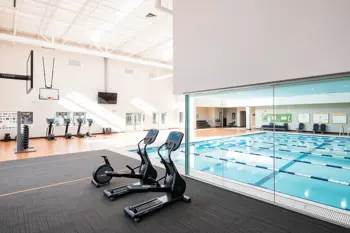
Modern community centers often distinguish themselves through unique amenities that go beyond standard gym equipment. The V3 Center in Minneapolis, for example, features the Genesis Pool and a 5,500-square-foot fitness floor, with memberships starting at $60 per month for adults 16. In Madison, Wisconsin, the Warner Park Community Recreation Center has integrated indoor pickleball courts into its membership options, requiring a specific ID card for access to its blue and green gyms 7. Such specialized amenities often necessitate distinct fee structures, such as add-on fees for group fitness classes or racquetball court reservations 11.
Other facilities, like the MetroRecPlex in Illinois, provide a comprehensive suite of amenities including dual NHL-sized ice rinks and a championship aquatic center 9. Memberships there include unlimited group classes such as HIIT, Yoga, and Aqua Fit, with rates starting at $35 per month 9. This all-in-one approach is also mirrored at the Riekes Center in Menlo Park, which functions as a fitness, art, and nature education hub, mentoring individuals ranging from professional athletes to students exploring photography 24. The inclusion of diverse activities like auto shops and music studios within a single facility highlights the evolution of the community center from a simple gym to a holistic development center 24.
Institutional Support and Insurance-Based Access
Financial assistance programs are fundamental to maintaining the inclusivity of community wellness centers. The YMCA of the USA widely advertises financial assistance to ensure that no individual is turned away due to an inability to pay, often using a sliding scale based on household income 19. Similarly, student-focused facilities like Bruin Fitness near Sheridan College emphasize flexible, low-cost options such as $9.90 weekly rates with no enrollment fees to accommodate tight student budgets 23, 26. These programs are often supported by government grants or private donations intended to bridge the gap between operational costs and user affordability 14, 17.
Furthermore, senior citizens can often leverage insurance benefits to access community centers at no additional cost. Programs like SilverSneakers and Renew Active by UnitedHealthcare are accepted at various locations, including the YWCA Quad Cities, providing members with access to aquatic and fitness centers through their Medicare Advantage plans 18. This integration allows for a seamless transition into wellness programs for the aging population, provided they verify eligibility through their healthcare provider 18. These institutional partnerships represent a significant shift toward viewing community center access as a health necessity rather than a luxury 18.
Operational Friction and Eligibility Realities
While community centers aim for accessibility, several friction points and regulatory requirements exist. Most municipal facilities require proof of residency, such as a utility bill or government ID, to qualify for discounted rates 3, 13. Additionally, some centers charge one-time activation or enrollment fees, which can range from $25 at YWCA Calgary to $100 at the Lewis JCC 15, 11. These fees are sometimes waived for returning members, military personnel, or first responders, but they remain a standard administrative hurdle for new participants 9, 11.
Maintenance and facility upgrades can also impact availability. For example, the Lincoln Park Community Center in Rockville scheduled a full interior renovation starting in 2025, during which memberships were transferred to other city facilities 4. Users must also adhere to specific facility guidelines, such as wearing non-marking shoes on gym floors or completing a fitness orientation before using senior center equipment 7, 4. Understanding these operational realities is essential for prospective members to ensure they meet the specific eligibility and behavioral standards required by their local community hubs 7, 8.
Sources
- City of Vancouver, WA - Community Center Membership
- Rose City Area Community Center - Membership Rates
- Parks Tacoma - Community Center Membership Info
- City of Rockville - Lincoln Park Community Center
- Streamwood Park District - Membership Types
- City of Rockville - Twinbrook Community Recreation Center
- City of Madison, WI - Warner Park Community Recreation Center
- City of Rockville - Thomas Farm Community Center
- McKendree MetroRecPlex - Membership Options
- Marlene Meyerson JCC Manhattan - Community Membership
- Lewis JCC - Membership Tiers
- City of Salisbury - Seniors Centre Membership
- City of Beaumont - Admissions and Memberships
- Boys & Girls Clubs of North Central Illinois - Fees
- YWCA Calgary - Fitness Centre
- V3 Sports - Athletic Membership Options
- Boys & Girls Club of Metro North - Teen Centers
- YWCA Quad Cities - Memberships and SilverSneakers
- YMCA of the USA - Financial Assistance
- Planet Fitness - Membership Tiers
- City of Green - CORE Facility Memberships
- Cairns Spiritual Centre - Membership Benefits
- Fitbase Gymnasium - Affordable Membership Options
- The Riekes Center - Community Programs
- Bruin Fitness - Student Gym Mississauga
- Bruin Fitness - Student Gym Brampton
Authored by 24Trendz team