14 Days Tour to Peru: A Complete Traveler's Intelligence Report
What a Standard 14-Day Peru Route Actually Covers
A 14 days tour to Peru typically follows a southern circuit connecting Lima, the coastal desert region of Paracas and Ica, the highland city of Arequipa, Lake Titicaca at Puno, and then the Inca heartland of Cusco and Machu Picchu. 1 One widely documented itinerary structure runs Lima through Ica, the Nazca Lines, Arequipa, Chivay and the Colca Canyon, Puno, and then Cusco over 14 days and 13 nights, with a return flight to Lima on the final day. 2 Variations exist depending on operator and traveler interest, including routes that substitute or append an Amazon segment at Puerto Maldonado or Tambopata, adding jungle lodge stays and wildlife excursions to an otherwise Andean-focused journey. 3
The most comprehensive versions of this format cover up to ten distinct destinations in 14 days: Lima, Paracas, Huacachina, Nazca, Arequipa, Colca Canyon, Puno, Cusco, the Sacred Valley, and Machu Picchu. 4 Day allocation across operators is fairly consistent: two days in Lima including a city tour and Larco Museum visit, one to two days on the coast at Paracas and Huacachina for wildlife and sandboarding, one day for a Nazca Lines scenic overflight, two days in Arequipa covering Santa Catalina Monastery and the Colca condor viewpoint, two days at Lake Titicaca including the Uros floating islands and Taquile Island, and three to four days in Cusco and the Sacred Valley before Machu Picchu. 5
Key Landmarks and What Each Region Contributes
Lima, founded in 1535 and known historically as the City of Kings, functions as both entry and exit point for most 14-day circuits. 6 Its historic center is a UNESCO World Heritage Site, and standard inclusions cover Plaza Mayor, the Lima Cathedral, the San Francisco Monastery with its catacombs, and the Larco Herrera Museum housing pre-Columbian collections. The Miraflores district provides coastal promenade access and serves as a base for Lima's internationally recognized culinary scene. The Paracas National Reserve and Ballestas Islands add marine wildlife exposure, including Humboldt penguins, sea lions, and the enigmatic Candelabra geoglyph visible from boat.
The Nazca Lines remain one of the most analytically unresolved archaeological sites globally, with scenic overflight from a light aircraft being the primary access method. 7 Arequipa, called the White City for its sillar volcanic stone construction, anchors the Colca Canyon segment, where Andean condors can be observed at the Cruz del Condor viewpoint. Lake Titicaca at Puno sits above 12,000 feet elevation and requires physical preparation. 8 Cusco at 11,000 feet elevation requires one to two days of acclimatization before strenuous activity, a point uniformly stressed across tour operator documentation. 9 The Vinicunca Rainbow Mountain, reached at approximately 5,200 meters, and Humantay Lake at 4,200 meters, appear as optional day extensions from Cusco on multiple documented itineraries. 10
Cost Benchmarks and Package Structures
All-inclusive 14-day Peru tour packages generally fall within the $2,000 to $5,000 per person range, with the final figure driven primarily by accommodation category, private versus group service, and the number of domestic flights included. 11 One operator lists a base starting point of approximately $2,015 USD for a 14-day extended package. A 14-day itinerary listed on a travel aggregator platform from Exodus Adventure Travels carries a price starting at $3,705 per person. 12 Luxury tier itineraries, which feature private guides throughout, curated lodge accommodations, and bespoke cultural experiences such as artisan workshops and traditional culinary classes, operate at the upper end or beyond this bracket.
| Service Tier | Typical Price Range (per person) | Key Inclusions |
|---|---|---|
| Standard Group Tour | $2,000 - $2,800 | 3-star hotels, shared transport, certified guides |
| Mid-Range Semi-Private | $2,800 - $3,800 | 4-star hotels, smaller groups (max 8-12), more flexibility |
| Premium/Luxury Private | $3,800 - $5,000+ | Dedicated guide, select hotels, custom pace, all flights |
Most packages in the mid-range category include 13 nights of accommodation with breakfast, all domestic transportation between destinations, entrance fees for listed attractions, and professional guiding. Domestic flights between Lima and Cusco, and sometimes Arequipa, are commonly included to avoid overland journey times that can exceed 20 hours by bus. 13 Some meals beyond breakfast, specifically lunches on full-day excursion days, are listed as included in operator documentation while dinners typically remain at the traveler's own expense.
Altitude, Health Logistics, and Entry Requirements
Altitude management is a structural consideration that shapes how 14-day Peru itineraries are sequenced. Cusco at 3,400 meters and Puno at 3,800 meters represent the two primary high-elevation stops, with optional extensions reaching above 5,000 meters. 14 Tour operators universally recommend spending at least the first one to two days at altitude resting, staying hydrated, and avoiding alcohol before undertaking physical excursions. Emergency oxygen, first aid kits, and in some cases satellite communication are listed as standard safety provisions by trekking-focused operators. Altitude sickness, formally known as acute mountain sickness, can affect any traveler regardless of fitness level and does not correlate reliably with prior experience at elevation.
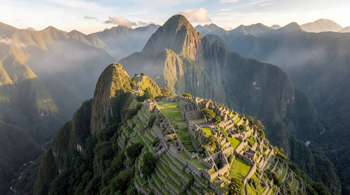
On the regulatory side, US citizens do not require a visa for tourist visits to Peru lasting up to 90 days, though a valid passport with at least six months of remaining validity is required. 15 Travel insurance that covers altitude-related illness, medical evacuation, and trip disruption due to weather is widely recommended by travel health authorities for itineraries including Andean regions. 16 Machu Picchu access has been reorganized since June 2024 into three distinct circuits subdivided into ten ticket types, with daily visitor caps making advance booking three to four months ahead a practical necessity rather than a recommendation. 17
Seasonal Conditions and Optimal Timing
Peru's climate divides cleanly into a dry season from May to October and a rainy season from November to April. 18 The dry season, particularly June through August, produces the clearest visibility at Machu Picchu and on mountain excursions including Rainbow Mountain and the Salkantay Trek. Trail conditions during the dry season are firm, and the Inca Trail to Machu Picchu operates at full capacity. The months of March to November are cited specifically as the best season window by multiple operators, with one operator noting this window explicitly in their tour documentation. Temperatures across the itinerary vary significantly: coastal Lima averages mild temperatures year-round, while Andean highlands experience cold nights regardless of season and the Amazon basin remains humid and warm throughout the year.
The rainy season from November through April brings substantially fewer international tourists, which translates to shorter queues at major sites. However, mountain trails become muddy and can be temporarily closed, views at altitude are frequently obscured by cloud cover, and the Inca Trail closes entirely through February for maintenance and conservation. 18 Travelers considering a 14-day trip during the shoulder months of May or October can access reasonable weather conditions while avoiding peak season congestion. Packing layered clothing for the highlands, light breathable clothing for the coast and Amazon, and waterproof gear regardless of season is consistently recommended across operator pre-departure guidance.
Group Structures, Private Options, and Practical Logistics
The organizational format of a 14-day Peru tour significantly affects both the experience and the logistics. Standard group tours typically cap participation between 10 and 20 travelers, with some operators capping at smaller sizes. One operator explicitly limits trekking groups to a maximum of 8 participants to provide a more personalized experience and increased guide attention. 19 Another operator lists a maximum group size of 12 for adventure-focused itineraries. Group tours operate on fixed departure schedules and itineraries, while private tours allow customized pacing, flexible scheduling, and itinerary adjustments based on specific interests.
From a practical standpoint, travelers should carry Peruvian soles in cash for smaller purchases, markets, and tips, as card acceptance is inconsistent outside major cities and tourist infrastructure. Altitude medication such as acetazolamide is available in Peru but should be discussed with a physician before travel. All itineraries that include the Amazon recommend packing insect repellent, lightweight long-sleeved clothing, and closed footwear. For overland bus segments, particularly the southern Peru coastal route and the Sun Route from Puno to Cusco, carrying water, snacks, and personal medications is advised. 20 Certified and licensed guides are a standard inclusion across most mid-range and premium packages, and operators holding DIRCETUR licensing operate within Peru's national tourism regulatory framework.
Sources
- adventureperutours.com - Peru Travel Package 14 days
- adventureperutours.com - Peru Package Lima-Ica-Arequipa-Puno-Cusco 14 Days Itinerary
- peruincreible.com - Lima, Paracas, Ica, Nazca, Arequipa, Cusco, Sacred Valley, Machu Picchu, Amazon 14 Days
- peruventuretravel.com - Complete Peru: The Full Experience 14 Days
- postcardnarrative.com - Diverse 2 Week Peru Itinerary for First Timers
- southamericanluxe.com - Peru Bolivia 14 Day Tour
- auraandina.travel - 14-Day Peru Adventure: Nazca Lines, Machu Picchu and Rainbow Mountain
- trailsandmaps.com - 2 Week Peru Itinerary: Lima to Machu Picchu in 14 Days
- turismoliberty.pe - 14-Day Peru Tour Package: Itinerary, Hotels and Travel Tips
- unuraymi.com - Peru Adventure: Manu, Salkantay and Machu Picchu 14 Days
- ecotourcusco.com - Peru Extended in 14 days
- tourradar.com - Essential Peru by Exodus Adventure Travels
- infomachupicchu.com - Peru Travel 15 Days 14 Nights
- inkatrailbackpacker.com - Peru Tour Package: New Regulations for Visiting Machu Picchu
- travel.state.gov - U.S. State Department: Peru Country Information
- Lonely Planet - When to Go to Peru
- inkatrailbackpacker.com - Machu Picchu Circuit and Ticket Information
- Lonely Planet - Peru: Best Time to Visit
- wondersofperu.com - Highlights of Peru 14 Day Tour
- turismoliberty.pe - Recommendations for 14-Day Peru Tour
Authored by 24Trendz team