Senior Defense and Safety Classes: A Comprehensive Guide to Programs, Techniques, and What Older Adults Should Know
Why Senior Defense and Safety Classes Are Growing in Demand
Nearly 10% of older adults in the United States experience some form of elder abuse every year, a figure that underscores the real security challenges facing the aging population. 1 Researchers further note that perpetrators frequently target older adults because of perceived vulnerability or a lower likelihood of reporting incidents, and law enforcement data indicates that 50% of older victims of violent crime were assaulted by a family member rather than a stranger. 1 Globally, estimates suggest that 4 to 10% of individuals aged 60 and older are currently being abused by relatives, caregivers, or acquaintances. 1
These realities have driven a measurable increase in community-based programming. Senior centers, martial arts academies, law enforcement agencies, and nonprofit organizations have developed structured curricula specifically addressing the physical and psychological needs of older adults. Programs now operate across formats ranging from one-hour community workshops to multi-week certified courses, and both in-person and hybrid delivery models exist to accommodate varying mobility levels.
Common Program Formats and Their Structures
Senior defense and safety classes generally fall into several recognizable formats. Karate and martial arts academies, such as South KC Shotokan in Grandview, Missouri, offer self-paced 8-week courses designed for men and women ages 50 and older, with curriculum spanning situational awareness, avoidance, de-escalation, physical technique, and balance and core strengthening. 2 Krav Maga programs tailored for seniors, such as those offered by Invictus Krav Maga in Poway, California, run as 4-week courses emphasizing controlled movements, individual physical adaptation, and confidence building, with no prior experience required. 3
Community center programs represent another major format. Madison Senior Center, for example, introduced Monday morning 45-minute self-defense sessions alongside taekwondo classes, with an instructor emphasis on leverage, balance, and natural center of gravity rather than brute strength matching. 4 Law enforcement-led seminars, such as the collaboration between Oak Park Arms Senior Living and the Cook County Sheriff's Office, deliver actionable training on carjackings, home invasion, street robbery, and violence in public spaces. 5 Nonprofit organizations like Seniors Fight Back, formed in May 2021 following a surge in attacks on older adults during the COVID-19 period, have provided tools and resources to nearly 10,000 community members and received the Nonprofit of the Year Award from the California State Legislature. 6
Core Curriculum Components Across Program Types
Regardless of the specific discipline or delivery format, effective senior defense and safety programs share a recognizable cluster of curriculum components. Situational awareness consistently appears as a foundational element, teaching participants to read environments and people, identify high and low-risk spaces, and recognize behavioral warning signs before physical confrontation becomes necessary. De-escalation and assertive communication skills are integrated as a priority layer, reflecting the reality that most serious incidents can be interrupted or avoided through non-physical responses. 7
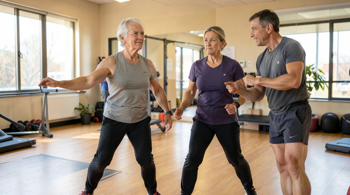
Physical technique instruction in senior-adapted programs focuses on leverage, balance, and movements calibrated to existing mobility levels rather than demanding the strength profiles of younger adults. Fall-safe movements, simple escape techniques from grabs, use of everyday items as deterrents, and basic strikes represent typical physical content. Scam prevention, identity theft protection, digital security, emergency planning, and home safety rounds out the non-physical safety curriculum offered by broader programs such as the Personal Safety and Confidence course for women ages 60 to 99 developed by Women of Color on the Move, which runs six to eight weeks in flexible in-person, online, or hybrid formats. 8
Defensive Driving as a Senior Safety Discipline
Personal safety for seniors extends beyond physical confrontation preparedness into road safety, and defensive driving courses represent a distinct and widely available category of senior safety education. AARP operates one of the most recognized defensive driving programs specifically designed for drivers age 50 and older, covering updated traffic laws, technology-assisted driving, and hazard anticipation techniques, with participation potentially qualifying drivers for insurance rate reductions. 9 Online courses such as those offered by DriveSafe are structured for drivers 50 and older and priced at approximately $29.99, with topics including identifying personal driving tendencies, collision prevention, the What-If hazard strategy, and adapting to age-related changes in vision, hearing, and reaction time. 10
Senior centers frequently host in-person defensive driving courses as part of their wellness programming. The Colonie Senior Service Center in New York conducts split-session classes priced at $25 per person, requiring attendance at both sessions for certification. 11 The Greater Palm Bay Senior Center in Florida offers a similar class priced at $25, referencing Florida Statute 627.0652, which permits insurance cost reductions for seniors who complete state-certified defensive driving training. 12 Survival and situational street safety programs, like the Mugger Slugger Surviving the Streets program hosted at SourcePoint Enrichment Center in Delaware, Ohio, extend the training into shopping, traveling, and daily routine environments for participants ages 55 and older. 13
National Resources and Evidence-Based Programs
Several nationally recognized organizations provide frameworks and resources supporting senior defense and safety education. The National Council on Aging promotes evidence-based fall prevention programs, including A Matter of Balance, designed to improve physical confidence and reduce injury risk in older adults. 14 The CDC recommends balance and strength training as core components of fall prevention programming, disciplines that align directly with the physical conditioning foundations taught in senior self-defense curricula. 15 Local police agencies frequently host Senior Citizen Police Academies to educate older adults on fraud prevention, home security, and crime avoidance, building direct relationships between law enforcement and senior communities. 16
SAFE International, operating since 1994, has taught more than 180,000 women and maintains a dedicated seniors program among its core offerings, covering scenarios including elevator attacks, safe car approach techniques, and psychological dimensions of personal safety alongside physical techniques. 17 Research consistently shows that regular self-defense training improves confidence, balance, reaction time, and overall quality of life in adults aged 60 and above, making participation a recognized wellness activity rather than purely a security measure. 7
Important Considerations and Limitations Before Enrolling
Several practical and health-related factors merit careful consideration before an older adult selects a senior defense or safety class. Most reputable programs, including South KC Shotokan's senior course, recommend consulting a physician or healthcare provider before beginning any fitness or self-defense training regimen, particularly for participants managing chronic conditions, joint issues, or post-surgical recovery. 2 Programs vary in their eligibility criteria: some, like the Madison Senior Center classes, are currently open only to registered center members, while others such as Oak Park Arms' law enforcement seminar were capped at the first 30 registrants and required advance registration. 4 5
Cost structures differ substantially across program types. Community center and law enforcement-partnered sessions frequently carry no fee, while multi-week martial arts courses, firearms safety training for adults 55 and older, and certified self-defense academies involve tuition that varies by location and duration. Participants should also recognize that physical safety training requires consistent practice to retain effectiveness, and one-time workshop attendance alone does not replicate the retention benefits of ongoing structured coursework. Program quality varies significantly by instructor credentials, so verifying instructor background in both the specific discipline and senior-adapted instruction is a practical due diligence step before committing to any program.
Sources
- C2 Martial Arts Perth - Self-Defence For Seniors: Safe And Effective Techniques For Older Adults (c2ma.com.au)
- South KC Shotokan Karate - Senior Self-Defense Program (southkcshotokan.com)
- Invictus Krav Maga - Krav Maga for Seniors Program (invictus-kravmaga.com)
- The Madison Record - Self-defense and taekwondo classes open at Madison Senior Center (themadisonrecord.com)
- Oak Park Arms - Free Self-Defense Class Offered To Oak Park Seniors (oakparkarms.com)
- Eventbrite - Seniors Fight Back FREE Self-Defense Class (eventbrite.com)
- National Council on Aging - A Matter of Balance and Senior Safety Resources (ncoa.org)
- Women of Color on the Move - Personal Safety and Confidence Course for Women Ages 60-99 (womenofcoloronthemove.org)
- AARP - Driver Safety Program (aarp.org)
- DriveSafe - Mature Driver Defensive Driving Course (drivesafe.com)
- Colonie Senior Service Center - Defensive Driving Class (colonieseniors.org)
- Greater Palm Bay Senior Center - Defensive Driving Class (gpbsac.org)
- Active.com - Surviving the Streets at SourcePoint Enrichment Center, Delaware OH (active.com)
- National Council on Aging - Preventing Falls: Tips for Older Adults (ncoa.org)
- CDC - STEADI Fall Prevention Resources (cdc.gov)
- National Sheriffs' Association - Senior Citizens Police Academy (sheriffs.org)
- SAFE International - Self Defense Courses for Seniors (safeinternational.biz)
Authored by 24Trendz team