South Africa Vacation Tours: An Objective Analysis of Regional Itineraries and Logistical Frameworks
South Africa Vacation Tours encompass a broad spectrum of geographic and cultural experiences, ranging from high-altitude safaris to cosmopolitan coastal exploration. As a premier destination in the Southern Hemisphere, the country provides a diverse array of environments including the expansive savannahs of the Greater Kruger region, the temperate forests of the Garden Route, and the mountainous wine valleys of the Western Cape. For travelers seeking structured immersion, these tours are typically organized around major logistical hubs such as Cape Town and Johannesburg, which serve as primary entry points for international arrivals. The tourism sector in this region is characterized by a mix of public national parks and private game reserves, offering varying levels of accessibility and specialized focus areas, from active adventure treks to highly curated research-based wildlife encounters 1, 12.
Primary Urban Hubs and Cultural Gateways
Cape Town remains a foundational component of many South Africa vacation itineraries due to its unique position where the Atlantic and Indian Oceans converge. The city is defined by iconic landmarks such as Table Mountain, which is frequently accessed via an aerial cableway, and the Victoria and Alfred (V&A) Waterfront, a central district for historical and maritime commerce 3, 13. Urban tours often extend to the Cape Peninsula, incorporating visits to the African penguin colony at Boulders Beach and the dramatic cliffs of the Cape of Good Hope. Historical analysis of the region often includes the Bo-Kaap district, known for its distinct architecture and the heritage of the Cape Malay community, alongside sites of national significance like Robben Island 12, 13.
Johannesburg serves as the economic and logistical core of the country, frequently functioning as the starting point for tours heading toward the northern wildlife regions. As the largest city in South Africa, it offers deep historical context through the Apartheid Museum and Constitution Hill, which document the complex social evolution of the nation 4, 8. Many tour structures include guided visits to Soweto, specifically Vilakazi Street, to examine the former residences of global figures such as Nelson Mandela and Desmond Tutu 10. The city is also a vital link for those transiting to the Greater Kruger Area, providing necessary infrastructure for internal flights and long-distance road transfers to various safari lodges 7, 9.
Wildlife Conservation and Safari Infrastructure
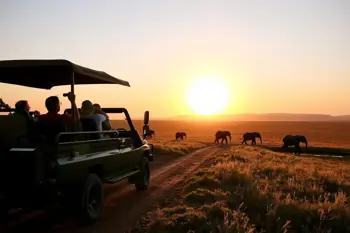
The wildlife sector is largely centered around Kruger National Park, one of the largest game reserves in the world, covering approximately 2 million hectares 1, 11. This vast ecosystem is managed by South African National Parks (SANParks) and is home to the Big Five: the lion, leopard, rhinoceros, elephant, and African buffalo. Professional tours often utilize open 4x4 vehicles for game drives, which are conducted during early morning and late afternoon hours when animal activity is most frequent 6, 12. Data indicates that the dry season, occurring from May to September, remains the optimal period for wildlife viewing as vegetation thins and animals congregate at established water sources 15.
Private game reserves, such as Sabi Sands and Kapama, provide an alternative to the public park experience by offering unfenced borders with Kruger while maintaining restricted vehicle access for a more controlled environment. These reserves often feature specialized luxury lodges that emphasize immersive conservation, with expert rangers and trackers guiding small groups through the bushveld 2, 14. Some itineraries incorporate malaria-free reserves like the Mabula Game Reserve or the Pilanesberg National Park, which are often preferred for family-oriented travel or individuals with specific health considerations 11, 16.
The Garden Route and Coastal Geography
The Garden Route is a notable scenic corridor stretching along the southern coast between Mossel Bay and the Storms River 12. This region is characterized by its lush vegetation, diverse lagoons, and ancient forests. Itineraries typically include stops in Knysna, famous for its sandstone cliffs known as the Heads, and Tsitsikamma National Park, which offers suspension bridges and diverse hiking trails 5, 9. The coastal geography of this route facilitates a variety of marine-based activities, including seasonal whale watching in Hermanus and marine protected area exploration in Maputaland 10, 13.
For those interested in the environmental variety of the coast, the following sites are frequently included in standard 10 to 14-day circuits:
- Tsitsikamma National Park: Known for the Storms River Mouth and extensive forest canopy tours 5, 11.
- Mossel Bay: Recognized as an adventure capital with historical European settlement sites 19.
- Oudtshoorn: Located in the Klein Karoo, this area is known for the Cango Caves and ostrich farming 11, 16.
- Plettenberg Bay: A coastal destination offering diverse beaches and proximity to the Robberg Nature Reserve 15.
Cape Winelands and Gastronomic Landscape
The Cape Winelands, primarily located in Stellenbosch, Franschhoek, and Paarl, represent the center of the South African viticulture industry. These valleys are characterized by Cape Dutch architecture and dramatic mountain backdrops 2, 7. Tours in this region focus on the historical development of the wine industry, which dates back over 350 years, and often include cellar tours and technical tastings of signature varieties like Pinotage 6, 18. The culinary landscape here is deeply integrated with the agricultural environment, featuring farm-to-table dining experiences that utilize local produce and traditional cooking methods 4, 11.
| Region | Primary Focus | Key Attractions |
|---|---|---|
| Stellenbosch | Viticulture and Academia | Historical Dorp Street, Vineyard Estates 2 |
| Franschhoek | Gastronomy and Heritage | Huguenot Monument, Boutique Wineries 11 |
| Constantia | Historical Production | Groot Constantia (Oldest Wine Farm) 16 |
Beyond the primary wine regions, some itineraries explore the Cederberg wilderness, located approximately three hours north of Cape Town. This area is noted for its rugged rock formations and ancient San rock art 3. Stays in the Cederberg often utilize unique architectural structures, such as cave suites or wilderness huts, allowing for a different perspective on the Western Cape's geological history compared to the lush valleys of the Winelands 20.
Logistical Variables and Cost Analysis
South Africa vacation tours vary significantly in duration, with common packages ranging from 8 to 19 days 5, 12. Shorter 8-day itineraries typically focus exclusively on Cape Town and a single safari region, whereas 19-day indepth tours often cover the entire perimeter of the country, including the Drakensberg mountains and the coastline of KwaZulu-Natal 5, 27. Domestic travel between major hubs is frequently conducted via air, as the distance between Cape Town and Kruger is approximately 1,800 kilometers. Road-based tours utilize diverse transport methods, including air-conditioned microbuses or private chauffeurs for smaller groups 11, 16.
The cost of these journeys is influenced by the level of accommodation, the exclusivity of game reserves, and the inclusion of internal flights. Market data suggests that multi-day packages generally range from 2,000 USD to over 8,000 USD per person 12. Luxury private tours can exceed these figures, with rates between 850 USD and 3,000 USD per person per night depending on the season and specific lodge selection 18. Mid-range options often provide a balance of 3 and 4-star hotels with scheduled group activities, while premium tours focus on 5-star properties and private guiding services 9, 11.
Regulatory Oversight and Safety Guidance
Entry into South Africa requires a valid passport with at least six months of remaining validity from the date of arrival 10. For many international visitors, including US and UK citizens, tourist visas are typically granted on arrival for stays up to 90 days, though requirements should be verified through the Department of Home Affairs 10, 13. It is also common for tours to include stops in neighboring countries like Zimbabwe or Eswatini, which may necessitate additional visa arrangements or border crossing fees 11, 27. Travelers are encouraged to verify current health requirements, including recommendations for yellow fever vaccinations if transiting from other African regions 10.
Safety and security remain primary considerations for international travelers. The U.S. Department of State provides ongoing country-specific guidance, emphasizing situational awareness in urban centers 13. Travelers are advised to utilize the Smart Traveler Enrollment Program (STEP) to receive localized alerts and embassy support during their stay 13. While many regions are low-risk for malaria, certain safari areas in the north and east require preventative measures; travelers should consult a medical professional regarding prophylaxis based on their specific itinerary 11, 15.
Sources
- African Blue Tours
- Zicasso
- Much Better Adventures
- Rough Guides
- Nomad Africa Tours
- IntelSafari
- VacationOtrips
- Rolfs Tours
- Gem Tours and Travels
- Ravina Tours and Travel
- Africa Wetu Tours
- South African Tourism
- U.S. Department of State
- SANParks (South African National Parks)
- Safari Bookings
- Myriad Travel
- Keep Travelling
- Ker & Downey Africa
- Gem Travels
- Much Better Adventures (US)
- Best Safari Adventure
- AVG Travels
- Africa Travel Designers
- Haleys Holidays
- Africa Travel Designers (Euphoria)
- African Blue Tours (Garden Route)
- Destinations Unlimited
- Adventure Caravans
Authored by 24Trendz team