Comparing Sleep Apnea Medical Device Costs: Market Trends and Economic Realities in 2026
When an individual is diagnosed with obstructive sleep apnea (OSA), understanding the various costs involved is a critical component of planning the journey toward restorative sleep 7. These medical devices represent a significant financial investment, and the total expenditure can vary considerably based on the type of technology selected, specific features, and whether the patient utilizes insurance or pays out of pocket 7. This guide examines the price structures for continuous positive airway pressure (CPAP) systems, oral appliances, and advanced surgical alternatives to provide a comprehensive look at the financial commitments required for modern sleep therapy.
Diagnostic Testing and Initial Evaluation Fees
The path to obtaining a sleep apnea medical device begins with a formal diagnosis, which carries its own set of professional fees. Home sleep apnea testing (HSAT) has become a highly validated and cost-effective diagnostic pathway for adults with a moderate to high pretest probability of OSA 13. In 2026, self-pay pricing for home kits typically ranges between $150 and $500, depending on the provider and the number of data channels recorded, such as airflow, oxygen saturation, and respiratory effort 13. These kits are often shipped directly to the patient, though the final cost may include separate charges for board-certified physician interpretation 13.
For more complex cases, such as suspected central sleep apnea or patients with significant comorbidities, an in-lab polysomnography (PSG) study remains the clinical benchmark. These overnight lab studies are substantially more expensive, commonly costing between $1,000 and $3,000 or more 13. The price difference is primarily driven by the use of brain wave monitoring (EEG), leg movement sensors, and constant supervision by sleep technicians, which are absent in basic home tests 19. Patients must also account for initial specialist consultation fees, which can add several hundred dollars to the diagnostic phase 1.
Positive Airway Pressure (PAP) Device Acquisition Costs
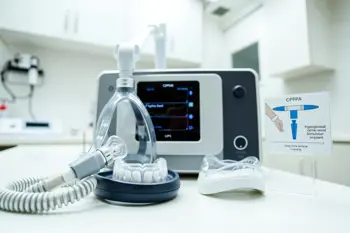
Positive airway pressure therapy remains the most common treatment for OSA, with multiple categories of machines catering to different physiological needs. Standard fixed-pressure CPAP units generally retail between $550 and $900 in the 2026 market 12. However, many new patients are prescribed auto-adjusting (APAP) flagship models, which use sensors to modify air pressure dynamically throughout the night 7. These premium APAP models typically retail between $950 and $1,350 12. In the Canadian market, basic setups start around $500 CAD, while full configurations including humidifiers and heated tubing can exceed $1,500 CAD 26.
Bi-level Positive Airway Pressure (BiPAP) machines are significantly more advanced, providing two distinct pressure settings for inhalation and exhalation 6. These are often prescribed for complex sleep apnea, COPD, or for patients who require pressures exceeding 15 cm H2O 6. Because of their dual-pressure technology, BiPAP machines are usually two to three times more expensive than standard CPAP units, with costs ranging from $1,700 to $3,000 or more 12. Regional price factors also apply; in Europe, device costs for standard PAP therapy generally fall between 800 and 2,000 EUR 1.
| Device Type | Upfront Cost (Low) | Upfront Cost (High) | Primary Function |
|---|---|---|---|
| Standard CPAP | $400 | $900 | Fixed continuous pressure |
| Auto-CPAP (APAP) | $700 | $1,600 | Auto-adjusting sensors |
| BiPAP | $1,700 | $3,000+ | Dual-pressure support |
| Travel CPAP | $600 | $900 | Portable, lightweight design |
Economic Analysis of Oral Appliance Therapy
Oral appliances, specifically mandibular advancement devices (MADs), serve as a sleek and portable alternative for patients with mild to moderate OSA or those who cannot tolerate PAP therapy 10. These custom-fabricated devices hold the lower jaw in a forward position to maintain an open airway during sleep 10. The cost for a professionally fitted, custom MAD typically ranges from $1,800 to $3,500 8. This price includes the initial evaluation, digital impressions or dental molds, device fabrication in a specialized lab, and several follow-up titration visits over the first few months to ensure effectiveness and comfort 8.
While over-the-counter (OTC) options exist for primary snoring, they are not typically recommended as medical-grade treatments for diagnosed OSA. OTC devices are available for as low as $45 to $200, but they lack the custom fit and clinical validation of prescription models 16. In Europe, the cost for custom oral appliances is cited between 500 and 2,500 EUR 1. The device fabrication itself represents approximately 50% to 60% of the total treatment package cost, with the remainder covering clinical expertise and adjustment appointments 8.
Surgical Interventions and Implantable Technology
For patients who fail conventional therapies, surgically implanted devices like the Inspire hypoglossal nerve stimulation system represent a major technological advancement. This system acts like a pacemaker for the tongue, stimulating the hypoglossal nerve to keep the airway open 17. The initial investment for this technology is substantial, with the device itself costing between $30,000 and $45,000 18. When accounting for surgical facility fees and the implantation procedure, the total cost often reaches $40,000 to $60,000 before insurance 18.
Public price anchors for other types of sleep apnea implants in the United States, such as those used for airway stabilization, range from $17,200 to $22,000 per system 15. While these upfront costs are exceptionally high, proponents argue that they may be cost-effective over a lifetime compared to the cumulative expense of decades of PAP therapy and the risks associated with untreated apnea 18. These procedures require strict candidacy criteria, including specific AHI thresholds and a documented history of failing CPAP therapy 24.
Maintenance and Lifecycle Expenses
The acquisition of a sleep apnea device is not a one-time expense; ongoing maintenance and supply replacement represent a significant portion of the total cost of ownership. For PAP users, annual supplies including masks, filters, and tubing can add $200 to $500 to the budget every year 12. Standard replacement cycles suggest new masks every 3 to 6 months and new filters every few weeks to maintain hygiene and device efficiency 11. Over a five-year period, the total cost for CPAP therapy in Europe is estimated between 2,100 and 4,600 EUR when factoring in all consumables 1.
- PAP Masks: Typically range from $40 to $250 each depending on style 11.
- Consumables: Annual costs for tubing, water chambers, and filters average $70 to $400 11.
- Oral Appliance Maintenance: Annual professional adjustments can cost $100 to $300 1.
- Device Life Span: Most PAP machines require replacement every 5 years, while custom oral appliances last 2 to 5 years 1.
- Disposable Options: Nasal stents represent a monthly recurring cost of 30 to 50 EUR with no upfront hardware fee 1.
Insurance Reimbursement and Coverage Realities
Navigating insurance coverage is essential for managing the costs of sleep apnea medical devices. In the United States, Medicare Part B typically covers 80% of the cost for CPAP machines and related supplies after the annual deductible is met, provided the patient demonstrates medical necessity and therapy adherence 27. Private insurers often have similar structures, covering 60% to 90% of approved devices, though prior authorization is almost universally required 27. Many insurers will only cover advanced devices like BiPAP or surgical implants if a trial of standard CPAP is documented as unsuccessful 6.
Insurance coverage for oral appliances is usually processed through medical insurance rather than dental insurance 8. Many plans apply a coinsurance rate of roughly 50% after the deductible is reached 27. In Europe, coverage varies dramatically by country; for example, healthcare systems in France, Germany, and the Netherlands may cover 60% to 100% of CPAP costs 1. For those without coverage or facing high deductibles, some providers offer monthly rental options for PAP machines ranging from $30 to $75, which can lower the initial barrier to starting treatment 27.
Sources
- back2sleep.eu
- Sleep Review (Oral Appliances)
- SleepApnea.org (No Insurance CPAP)
- Sleep Review (HST Devices)
- SleepApnea.org (CPAP vs Oral)
- Wearable Wellness Guide (CPAP vs BiPAP)
- SLIIIP (CPAP Costs)
- Recovery Central (Oral Appliance)
- Sleep Review (CPAP Systems)
- SLIIIP (Dental Device)
- Cost Answers
- iSLEEP (BiPAP vs CPAP)
- Dumbo Health (HST Pricing)
- LiveWorkSleep (Inspire)
- IndexBox (Implants)
- Snorple (MAD Comparison)
- back2sleep.eu (Inspire Cost)
- Doctronic (Inspire Cost)
- MyMedicineAdvisor (HST vs Lab)
- Dumbo Health (HSAT clinical)
- Wearable Wellness Guide (BiPAP comparison)
- DentalEcoSmile
- AJMC
- Canopy Press
- back2sleep.eu (Nasal Stents)
- PAPSmart
- General Research Data (LLM)
Authored by 24Trendz team