Fitness Programs for Older Adults: An Analysis of Evidence-Based Protocols for Healthy Aging
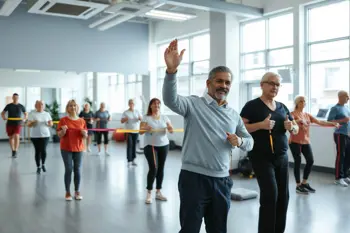
Fitness Programs for Older Adults serve as a critical intervention for maintaining physiological independence and cognitive function as the global population ages. Research published in the MSD Manual indicates that a significant majority of individuals over age 65 do not engage in exercise at recommended levels, despite documented benefits including improved sleep quality, mood stabilization, and enhanced survival rates 1. The transition from physical inactivity to even modest aerobic and strength routines is associated with the largest measurable health gains, particularly in mitigating the decline of physical capabilities that occur naturally with age 1.
Clinical Frameworks for Strength and Functional Independence
Strength training is a primary component of geriatric fitness, targeting the natural decline of muscle mass known as sarcopenia. Studies have shown that increasing muscle strength in the lower extremities directly correlates with improved walking speed and the ability to navigate stairs safely 1. A 36-week personalized resistance training protocol demonstrated significant improvements in body fat percentage, grip strength, and the Timed Up and Go (TUG) test results for older women with possible sarcopenic obesity 18. These improvements are supported by changes in serum myokines, including increased IGF-1 and decreased myostatin levels 18.
Structured progression models, such as the 90-Day Independence System, emphasize a sequential approach to building physical capacity. This framework prioritizes stability and balance reflexes during the first 30 days before transitioning to functional muscle building in the subsequent phases 8. Historical data suggests that after the age of 60, the physiological response is most favorable when interventions utilize gradual progression and consistent repetition rather than high-intensity bursts 8. The following table summarizes the typical focus areas within structured 90-day protocols:
| Phase | Duration | Primary Objective | Key Movements |
|---|---|---|---|
| Foundation | Days 1-30 | Stability and Joint Comfort | Balance and basic support |
| Build | Days 31-60 | Endurance and Muscle Re-activation | Controlled repetition |
| Independence | Days 61-90 | Functional Mobility | Daily living task simulation |
Multicomponent Training and Falls Prevention Strategies
Falls prevention is a central goal for programs like the SAFE initiative developed by the Geriatric Division of Medicine at the McGill University Health Centre. This program utilizes a four-level video series to help older adults overcome the fear of falling while building physical confidence through joint loosening and muscle activation 2. Research published in BMC Geriatrics further supports these multicomponent approaches, showing that functional gait training using specialized tools like the sequential square mat (SSM) can significantly improve mobility and muscle strength in adults aged 60 and older 1416.
Clinical trials in rural settings have also validated the efficacy of multicomponent training (MCT). A six-week intervention in rural India observed significant improvements in lower-body strength and endurance, with female participants showing greater relative gains despite lower baseline performance levels 22. Similarly, the WellREP intervention compared medically underserved and well-served older adults, finding that a 12-week multicomponent program narrowed the functional fitness gap between the two groups, particularly in 12-minute walk performance and chair stand tests 26.
Technological Advancements in Remote Fitness Assessment
The integration of digital health technology has introduced new methods for monitoring and personalizing fitness for aging populations. A randomized controlled trial published in the Journal of Medical Internet Research examined the use of a smartphone platform for remote motor fitness assessment 4. This platform utilizes AI-generated personalized exercise programs to move beyond the one-size-fits-all approach, focusing on specific motor components rather than solely on aerobic activity 4. Wearable sensors are also being employed to assist in gait training and cognitive monitoring, providing real-time data to adjust intensities for frail older adults 15.
Digital tools are often paired with psychological strategies, such as the HOPE-FIT model, which combines professional health coaching with smart-home monitoring and Acceptance and Commitment Performance Training (ACPT) 21. These hybrid frameworks aim to bridge the gap for mobility-restricted populations, ensuring they remain integrated into health promotion systems. The use of technology allows for continuous tracking of vital signs and functional reach, which has been shown to improve balance and stability over a 10-week period 29.
Comparative Analysis of Exercise Modalities and Efficacy
Different exercise modalities offer varying degrees of benefit for specific aging-related challenges. A study comparing low-impact specialized Pilates to Low-Intensity Steady-State (LISS) exercise found that Pilates was significantly more effective at increasing fitness levels, core strength, and balance among older adults with mild disabilities 27. Meanwhile, high-intensity interval training (HIIT) has been researched for its time efficiency. A 65-week HIIT intervention showed significant improvements across upper and lower body strength, aerobic endurance, and agility 24.
- Resistance Training: Essential for bone density and muscle mass preservation 17.
- Pilates: Targeted at core stability and joint flexibility 327.
- Yoga: Often used as a low-impact entry point for chair-based mobility 8.
- Neuroplasticity Exercises: Programs like Ageless Grace focus on cognitive-motor synergy 6.
Community-Based Interventions and Long-Term Adherence
Community senior centers act as anchors for health promotion, offering diverse programs tailored to local needs. Evaluation of statewide programs in Delaware indicated that the type of class (aerobic versus muscular strengthening) influences health outcomes differently based on the participant's baseline activity level 7. Long-term enrollment in such community programs is associated with a slower decline in cardiorespiratory fitness and muscle strength compared to established age-related decline rates, suggesting that sustained participation is a key factor in successful aging 11.
Sustainability remains a challenge for many inactive older adults, especially men over 60. To address this, sport-oriented exercise concepts have been developed, integrating traditional fitness training with introductory recreational sports like karate or archery 20. These programs emphasize social engagement and psychosocial well-being alongside motor performance, which helps foster long-term adherence 20. Professional guidance in small group settings, such as those found in clinical Pilates or gym-based programs, provides the supervision necessary for participants with chronic conditions like arthritis to exercise safely 35.
Regulatory Considerations and Health Monitoring
Before beginning any new exercise protocol, clinical screening is recommended to identify potential risks. Certain heart disorders, uncontrolled high blood pressure, or advanced diabetes may necessitate modifications to standard fitness routines 1. Health organizations emphasize that exercise intensity should be individualized, often calculated through the Rating of Perceived Exertion Scale to ensure safety 9. Furthermore, clinical assessments, such as one-on-one evaluations with a physiotherapist, help ensure that the selected movements align with an individual's health history and physical limitations 3.
For women over age 50, specific attention is given to the decline in estrogen, which can accelerate muscle loss and bone density reduction. Structured 12-week plans often include a mix of strength training three to four times weekly alongside mobility work to support hormonal transitions and cardiovascular health 12. Overall, the objective of these diverse fitness programs is to provide a sustainable pathway for maintaining functional autonomy and quality of life well into the senior years 125.
Sources
- MSD Manual Consumer Version
- SAFE | Exercises for Seniors
- Geelong Sports Medicine Centre
- Journal of Medical Internet Research
- Urban Personal Training
- Ageless Grace
- OBM Geriatrics
- Seniors Fitness Circle
- Turkiye Klinikleri Journal of Sports Sciences
- Clinical Interventions in Aging
- Exercise Sport and Movement
- Nourish Move Love
- Levite Jewish Community Center
- BMC Geriatrics (Alegre-Tamariz)
- Translational Exercise Biomedicine
- BMC Geriatrics (Motoyama/Schneider)
- Forged Alpha
- BMC Geriatrics (36-Week Resistance Training)
- Health for Senior
- Frontiers in Sports and Active Living
- Journal of Clinical Medicine
- European Journal of Clinical and Experimental Medicine
- Doctor Jess Fitness
- Applied Sciences (HIIT Study)
- Journal of Gerontology and Geriatrics
- Medicine & Science in Sports & Exercise (WellREP)
- Physical Education and Sports Studies and Research (Pilates Study)
- Retos (Multimodal Intervention Study)
- Medicine & Science in Sports & Exercise (Get Fit Seniors)
Authored by 24Trendz team