Understanding the GLP-1 Diet: A Clinical Guide to Nutrition on GLP-1 Medications
How GLP-1 Medications Change the Body's Relationship with Food
Glucagon-like peptide-1 (GLP-1) receptor agonists, including semaglutide (Wegovy, Ozempic) and tirzepatide (Zepbound, Mounjaro), work by mimicking a hormone the gut naturally produces to regulate blood sugar and signal satiety to the brain. 1 These medications slow gastric emptying, reduce appetite signals, and increase early feelings of fullness, creating a physiological state where patients consume substantially less food than before. 2 Research shows that people taking GLP-1 medications typically reduce total calorie intake by 16 to 39% compared to their intake before starting the medication. 3
Because gastric emptying slows by a clinically significant margin, food remains in the stomach longer. This mechanism amplifies the effect of poor food choices: high-fat meals, large portions, and ultra-processed foods are far more likely to trigger nausea, bloating, and reflux. 4 Understanding these biological changes is the foundation of any effective nutritional approach during GLP-1 therapy. The medication manages the appetite signal; the patient's food choices determine whether the resulting weight loss is fat, muscle, or a damaging combination of both.
The Protein Imperative: Preserving Muscle During Rapid Weight Loss
Protein is consistently identified across clinical sources as the single most critical macronutrient during GLP-1 therapy. When caloric intake drops sharply, the body does not selectively burn fat. Without adequate dietary protein, lean tissue declines alongside fat mass. Research estimates that without deliberate protein intake, 25 to 40% of total weight lost on GLP-1 medications may come from muscle rather than fat. 5 This outcome slows metabolic rate and substantially increases the risk of weight regain once medication is discontinued.
Clinical guidance from researchers at Harvard Medical School recommends beginning each meal with 20 to 30 grams of protein from sources such as fish, beans, chickpeas, eggs, or tofu. 6 Daily targets generally range from 1.0 to 1.5 grams of protein per kilogram of body weight for moderately active individuals, though some registered dietitians recommend ranges as high as 1.2 to 2.0 grams per kilogram for those engaged in resistance training. 7 A preliminary study published in the Journal of Translational Medicine in April 2026 analyzed 387 adults on GLP-1 or dual GIP/GLP-1 agonists and found average daily protein intake was only 33.4 grams, with fewer than 10% of participants meeting recommended protein intakes. 8
Fiber, Carbohydrate Quality, and Blood Sugar Stability
Dietary fiber serves two essential functions in GLP-1 therapy: it combats the constipation that these medications commonly cause, and it extends post-meal satiety by slowing glucose absorption. Recommended fiber-rich options include leafy greens, legumes such as lentils and beans, oats, quinoa, and farro. 9 The same 2026 Journal of Translational Medicine study found average daily fiber intake among GLP-1 users was only 7.2 grams, well below the dietary reference intake, highlighting how significantly nutritional gaps emerge when appetite is suppressed. 8
Carbohydrate quality matters more than carbohydrate quantity on GLP-1 therapy. Slowly digested complex carbohydrates, such as sweet potatoes, brown rice, and whole grain bread, produce more gradual glucose rises and work synergistically with the medication's blood sugar-regulating effects. 6 Refined carbohydrates and sugary beverages deliver rapid glucose spikes followed by crashes and offer minimal nutritional value per calorie consumed, making them counterproductive when total food intake is already reduced. The American College of Lifestyle Medicine, in a joint scientific statement with the American Society for Nutrition and The Obesity Society, emphasized that multimodal care combining dietary quality with GLP-1 therapy is essential for sustainable outcomes. 10
Foods to Avoid and Why
Certain food categories consistently worsen gastrointestinal side effects associated with GLP-1 medications. High-fat and fried foods slow gastric emptying beyond the effect already imposed by the medication, significantly increasing the likelihood of nausea and prolonged stomach discomfort. Spicy foods fall into a similar category. Alcohol is also widely discouraged, as it adds empty calories and can impair judgment around portion sizes and food choices. 4
| Food Category | Reason to Limit |
|---|---|
| Fried and high-fat foods | Worsens nausea; compounds slowed gastric emptying |
| Refined sugars and sugary beverages | Rapid glucose spikes; minimal nutritional value per calorie |
| Ultra-processed snack foods | Crowds out nutrient-dense food in a reduced appetite window |
| Alcohol | Empty calories; impairs dietary decision-making |
| Very large meals | Exceeds stomach tolerance; triggers bloating and reflux |
| Spicy foods | May aggravate GI discomfort and nausea in sensitive individuals |
Obesity medicine physician Dr. Luis Santana Lopez notes that eating right can actively ease gastrointestinal side effects including nausea, diarrhea, constipation, vomiting, and heartburn, rather than those symptoms being an unavoidable feature of therapy. 11 The practical implication is that dietary choices directly modulate tolerability.
Meal Structure, Timing, and Hydration
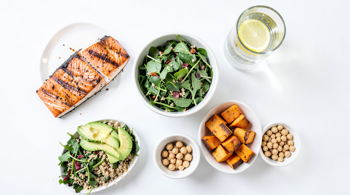
Because GLP-1 medications reduce stomach volume tolerance, large traditional three-meal-per-day structures often need to be modified. Most clinical guidance points toward two to three smaller main meals per day with one or two light snacks, starting each meal with a protein source before vegetables and complex carbohydrates. 12 Thomas Wadden at the University of Pennsylvania, who contributed to the STEP semaglutide trials, frames practical guidance around three priorities: adequate protein, manageable portions, and avoiding foods that reliably worsen gastrointestinal symptoms. 13
Hydration is frequently underestimated during GLP-1 therapy. Reduced appetite often extends to reduced fluid intake, and GLP-1 medications can alter thirst signaling. Dehydration compounds constipation risk and can worsen fatigue. Clinicians generally recommend water-rich foods such as cucumbers, broths, and fruits in addition to consistent water intake throughout the day. 14 Electrolyte balance also warrants attention, particularly for individuals experiencing vomiting or persistent diarrhea during dose escalation phases.
Clinical Risks, Regulatory Considerations, and Long-Term Sustainability
GLP-1 receptor agonists carry specific medical contraindications that require pre-treatment evaluation. These medications are not recommended for individuals with a personal or family history of medullary thyroid carcinoma or multiple endocrine neoplasia syndrome type 2. 15 Common side effects, including nausea, vomiting, and constipation, are typically most pronounced during initial dose escalation and tend to diminish as the body adjusts. Among US adults surveyed in 2024, approximately 6% reported current use of GLP-1 receptor agonists. 10 GLP-1 receptor agonists have been shown in randomized clinical trials to reduce weight by 5 to 18% among individuals with obesity or overweight and weight-related comorbidities. 10
A critical long-term consideration is that weight regain is common following discontinuation of GLP-1 medications, as the appetite-suppressing effects reverse when treatment stops. 16 This reality underscores why the dietary habits built during therapy, particularly adequate protein intake, fiber consumption, and avoidance of ultra-processed foods, need to be established as durable behavioral patterns rather than temporary compliance. The STEP 1 trial reported mean weight loss of approximately 14.9% over 68 weeks with semaglutide, while high-dose tirzepatide reached roughly 20.9% in SURMOUNT-1; sustaining even a portion of those results without medication depends heavily on maintained dietary quality. 17
Micronutrient Gaps and Supplement Considerations
A reduced total food intake creates measurable risks for micronutrient deficiency. When daily calorie intake drops, vitamins and minerals that would normally be obtained through dietary variety, including iron, magnesium, calcium, and B vitamins, become harder to meet from food alone. 3 The 2026 Journal of Translational Medicine study confirmed that across 387 GLP-1 users, average daily energy intake was only 753 kilocalories, a level at which meeting all recommended dietary intakes from food alone is practically impossible without strategic food selection. 8
GLP-1 prescriptions saw a 587% spike in recent years among people with overweight or obesity, creating a large population navigating nutritional adequacy on reduced intake without always having formal dietary support. 18 Healthcare providers and registered dietitians may recommend targeted supplementation to address specific gaps, but supplementation decisions should be made in consultation with a licensed medical provider rather than based on general assumptions. The overarching principle remains consistent across all clinical sources: on GLP-1 therapy, every calorie carries greater nutritional responsibility, and structural dietary planning is not optional, it is foundational to safe and durable outcomes.
Sources
- Mayo Clinic - mayoclinic.org
- Cleveland Clinic - my.clevelandclinic.org
- Baylor Scott and White Health - bswhealth.com
- Dibesity - dibesity.com
- Fueled Framework - fueledframework.com
- JAMA Internal Medicine, Mehrtash F., Dushay J., Manson J.E. - jamanetwork.com
- The Diabetes Link, Cheever M. MPH, RD - thediabeteslink.org
- Journal of Translational Medicine, Springer Nature - link.springer.com
- Modern Weight Science - modernweightscience.com
- Gastroenterology Advisor, Joint Scientific Statement - gastroenterologyadvisor.com
- Memorial Health System, Dr. Luis Santana Lopez - mhs.net
- GLP-1 Explained - glp1explained.com
- Modern Weight Science, Wadden T. reference - modernweightscience.com
- YourNutritionDoc, Dr. Maria's Nutrition and Wellness - yournutritiondoc.com
- Verywell Health - verywellhealth.com
- Harvard Health Publishing - health.harvard.edu
- Modern Weight Science, STEP 1 and SURMOUNT-1 trial data - modernweightscience.com
- Stacker, Daisy Brand partnership report - stacker.com
Authored by 24Trendz team