Weight loss capsules daily serving guide for appetite management support
Millions of people researching weight loss capsules for appetite management support encounter a wide spectrum of daily serving protocols, ingredient combinations, and timing recommendations. Understanding the science behind these dosing structures, rather than relying solely on product marketing, is essential for making informed decisions and avoiding potential health risks.
The Science of Appetite Management in Capsule Form
The dominant active ingredient across glucomannan-based weight loss capsules is a high-molecular-weight, water-soluble dietary fiber extracted from the konjac plant (Amorphophallus konjac). At supplemental doses, glucomannan acts locally in the gastrointestinal tract, forming a viscous gel that promotes early satiety, slows gastric emptying, and reduces postprandial glucose excursions. 1 Clinical trials have commonly studied 2 to 4 grams per day divided before meals, reporting modest but consistent reductions in body weight and LDL cholesterol when used alongside dietary measures. 1
The mechanism is entirely mechanical rather than chemical or hormonal. When glucomannan contacts water in the stomach, it hydrates and expands into a thick gel that physically stretches stomach walls, sending fullness signals along the vagus nerve to the brain's appetite centers. 2 This slows the rate at which the stomach empties, prolonging the feeling of satisfaction after a meal. Because it operates through physical volume rather than stimulation, it is caffeine-free and does not produce the cardiovascular side effects associated with stimulant-based appetite suppressants. 2
Standard Daily Serving Protocols Observed Across Products
The most consistently replicated dosing structure across glucomannan capsule products involves 6 capsules per day, divided into 2 capsules taken 20 to 30 minutes before each of three main meals, each administration paired with 1 to 2 large glasses of water. 3 Products such as NOVYRA Appetite Control and Nupo Slim Boost Fill My Tummy both specify this structure, delivering a total of 3,000 mg (3 grams) of glucomannan per daily serving. 3 This aligns with the European Food Safety Authority (EFSA) approved claim for glucomannan as the only fiber with a regulatory-recognized weight loss effect at this dose level.
Most human clinical trials used approximately 1.33 grams of glucomannan taken three times daily, totaling roughly 4 grams per day, with administration 30 to 60 minutes before meals to allow the gel to fully form and reduce appetite before food is consumed. 4 The practical takeaway from trial design is that timing precision significantly affects outcome: glucomannan taken with inadequate water or immediately before eating has meaningfully reduced efficacy compared to the protocol used in controlled studies.
Ingredient Profiles by Category: What the Data Shows
Beyond glucomannan, weight loss capsules formulated for appetite management incorporate a range of secondary active compounds. The following table summarizes commonly documented ingredient combinations and their functional roles as reported across clinical and product literature.
| Ingredient | Mechanism | Commonly Studied Daily Amount |
|---|---|---|
| Glucomannan | Gel formation, gastric expansion, satiety signaling | 3,000 to 4,000 mg |
| Chromium (picolinate) | Supports normal blood glucose levels | 50 to 108 mcg |
| Carob Fiber | Delays gastric emptying, prolongs fullness | 500 mg |
| Inulin | Prebiotic gut fermentation, satiety support | 200 mg |
| Vitamin B6 (P-5-P) | Metabolic co-factor for protein and energy processing | 5 mg |
| Sea Buckthorn Extract | Metabolism support, source of Vitamin C | 900 mg |
| Berberine HCL | Metabolic regulation, blood sugar balance | Varies by formulation |
Formulations using DNF-10, a patented gut-brain mediator found in products like Sativin, have been studied over a period from 2008 to 2023 with no adverse events reported in clinical observations. 5 Plant-extract blends, such as those in GOLO Release containing 7 plant extracts and 3 minerals, have been examined in randomized, double-blind, placebo-controlled studies, with participants in one trial losing nearly 79% more weight and more than twice as many waist-circumference inches compared to the placebo group. 6
Water Intake Requirements and the Choking Risk Factor
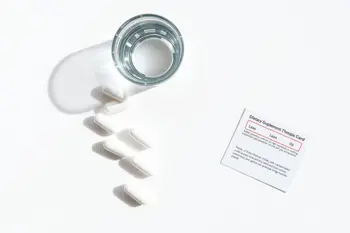
The single most consistent safety instruction across all fiber-based weight loss capsules is the requirement for substantial water intake at the time of consumption. Regulatory and product-level guidance uniformly specifies a minimum of 240 to 360 mL (approximately 8 to 12 ounces) of water per capsule serving. 1 Without adequate fluid, glucomannan and similar viscous fibers can begin expanding in the esophagus before reaching the stomach, creating a mechanical obstruction risk that ranges from discomfort to serious choking or esophageal impaction.
This risk is specifically flagged for individuals with swallowing difficulties, for whom capsule-based fiber products are generally not appropriate without medical guidance. 3 The FDA's dietary supplement labeling requirements mandate that Supplement Facts panels include serving size and directions for use, and for fiber-based products, the water requirement is a critical safety directive rather than a general recommendation. 7 Capsules should never be taken immediately before lying down, and administration with only a small amount of liquid is a documented risk factor for adverse outcomes.
Regulatory Oversight and Consumer Verification Standards
In the United States, dietary supplements, including weight loss capsules for appetite management, do not require FDA premarket approval before being sold. 7 This distinction from pharmaceutical drugs means that label claims are not vetted for accuracy by a government body before a product reaches the market. The FDA advises consumers not to exceed the serving size or directions printed on supplement labels, since taking more than the recommended amount increases the risk of adverse effects. 8
Third-party testing organizations such as ConsumerLab provide independent verification of whether products contain the ingredient amounts stated on their labels and whether those amounts match the concentrations used in clinical research. 9 Consumers are advised to prioritize products manufactured in FDA-registered, cGMP-certified facilities and that carry third-party quality certification seals. The NIH Office of Dietary Supplements recommends following label directions precisely and consulting a healthcare provider when taking any supplement alongside prescription medications, as interactions can occur even within labeled serving guidelines. 10
Population-Specific Considerations and Realistic Expectations
Appetite management capsules are not universally appropriate for all adults. Individuals under 18 years of age, pregnant or breastfeeding women, and those with pre-existing conditions such as diabetes, swallowing disorders, or cardiovascular disease should consult a licensed healthcare practitioner before beginning any capsule-based fiber or botanical supplement regimen. 11 People taking medications should be particularly cautious: PGX Daily's published guidance, for example, specifies that medications should be taken one hour before or two hours after fiber supplementation to prevent interference with drug absorption. 12
Clinical research consistently indicates that 4 to 12 weeks of consistent daily use, combined with a calorie-restricted diet, is necessary before measurable results are likely to appear. 13 Gastrointestinal side effects, including bloating, flatulence, and altered bowel habits, are dose-dependent and typically resolve within 5 to 10 days as the gut microbiome adjusts to increased soluble fiber load. 14 Weight loss occurring in clinical studies consistently reflects the combined effect of the supplement alongside an energy-reduced diet and should not be attributed to the capsule alone. All products reviewed in available literature carry legal notices to this effect.
Sources
- DietarySupplementDB - Glucomannan: Complete Science-Based Guide 2026 (dietarysupplementdb.com)
- PhenAprin - Glucomannan for Appetite and Fullness: How It Works and How to Take It (phenaprin.com)
- Novyra Labs - NOVYRA Appetite Control Product Page (novyralabs.com); Nupo Malta - Slim Boost Fill My Tummy (nupo.mt)
- Tonum - Glucomannan Dosage for Weight Loss: 1.33g x3 Guide (tonum.com)
- SimpliPur - Sativin Appetite Control Capsules with DNF-10 (simplipur.com)
- GOLO - GOLO Release Product Page (golo.com)
- U.S. Food and Drug Administration - Dietary Supplements (fda.gov/food/dietary-supplements)
- U.S. Food and Drug Administration - Using Dietary Supplements Safely (fda.gov)
- ConsumerLab - Weight Loss Products Review (consumerlab.com)
- NIH Office of Dietary Supplements - Warnings About Supplements (ods.od.nih.gov)
- PGX Daily - PGX Daily Softgels Product Page and Caution Section (pgx.com)
- PGX Daily - PGX Daily Softgels Recommended Dosage and Drug Interaction Guidance (pgx.com)
- Verywell Fit - Weight Loss Supplements Overview (verywellfit.com)
- RestartMed - How to Use Glucomannan For Easy Weight Loss (restartmed.com)
Authored by 24Trendz team