An Industry Analysis of Available electric boat motors for immediate purchase: Market Trends, Technical Specifications, and Integration Challenges
The global marine market is experiencing a significant shift toward zero-emission propulsion, driving interest in available electric boat motors for immediate purchase 1. This article provides a comprehensive, objective overview of current electric outboards, trolling systems, and high-voltage auxiliary motors currently on the market. By examining technical specifications, performance metrics, and battery integration frameworks, maritime operators can evaluate the direct applicability of these quiet, efficient propulsion systems to their specific hulls and operational environments 1.
Market Dynamics of Portable Electric Propulsion Systems
Portable electric outboards in the 1 kW to 3 kW range have transitioned from niche options to mainstream alternatives for small crafts, tenders, and daysailers 1. For example, the ePropulsion Spirit 2 offers a continuous output of 2 kW with a sport mode boosting performance up to 3 kW 2. Operating on an integrated 1.5 kWh battery, this lightweight configuration weighs approximately 45.4 pounds for its extra-short shaft variation 3. This direct-drive motor replaces standard combustion components, delivering silent operation without fuel exhaust 4.
Similarly, alternative lightweight designs emphasize integrated portability. The TEMO 1000 features a 1.1 kW motor with approximately 60 pounds of static thrust, suitable for vessels up to 26 feet in length or 3,300 pounds in weight 5. It operates via a removable 949 Wh lithium-ion cassette battery and features a patented 360-degree rotating mount 5. In the same segment, the Remigo One 3HP outboard incorporates a brushless DC motor and a 1 kW input capacity inside a sealed aluminum housing to protect the internal battery and controller 6.
Mid-Range Electric Motors and Workhorse Configurations
Mid-range configurations, typically delivering between 3 kW and 10 kW of power, serve larger displacement vessels up to 3 tons 7. The Torqeedo Cruise 3.0 R is available in both 24V and 48V versions, delivering a propulsive equivalent of approximately 6 horsepower 7 8. The 24V model operates on 3,000 watts of input power and integrates a GPS-equipped onboard computer to track real-time range, speed, and power draw 8. Scaling this system is possible, as the unit supports up to 16 parallel lithium batteries for extended range 7.
For permanent inboard replacements, other systems provide robust mechanical propulsion. The QuietTorque 10.0 is a 48V system utilizing a permanent magnet AC motor to generate up to 10 kW of input power, commonly replacing 15 to 20 horsepower diesel engines in sailboats up to 35 feet 9. Additionally, the Yamaha Harmo Outboard offers a 3.7 kW rim-drive propulsion system with 227 pounds of static thrust 10. This extra-long shaft motor integrates with advanced steering systems, enabling a maximum steering angle of 140 degrees for precise harbor maneuvering 10.
High-Power Propulsion and Next-Generation High-Voltage Units
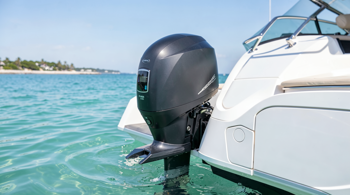
High-power electric outboards exceeding 10 kW represent a growing segment designed for heavy-duty hulls, rigid inflatable boats, and commercial watercraft 11. The ePropulsion X-Series includes the X12 and X20 outboards, which operate on a 96V architecture 12 13. The X12 delivers 12 kW of continuous output (equivalent to an 18 horsepower combustion engine) while utilizing an integrated electric steering system and power tilt 12 14. The X20 elevates output to 20 kW, utilizing a compact footprint that occupies approximately 60% less space on the transom compared to traditional combustion outboards 13.
At the top tier of high-voltage marine outboards, systems like the ePropulsion X40 deliver 40 kW of zero-emission power with an industry-leading 88.2% powertrain efficiency 15. This flagship unit features a closed-loop liquid-cooling design to maintain sustained performance over long operational cycles 15. For even larger vessels, commercial developers like Evoy offer the Storm 300+, an 800V liquid-cooled motor producing 225 kW of continuous output and peak outputs up to 450 kW 11. These complex units require specialized marine integration and designated high-voltage battery architecture 11.
Compact Trolling and Auxiliary Maneuvering Motors
For shallow-water angling and secondary propulsion, smaller electric trolling motors provide highly localized control. The Minn Kota Endura 40 C2 is a 12V long-shaft outboard producing 18.14 kg of maximum thrust, making it a reliable option for leisure boats and light sailboats 16. Similarly, the Vevor Electric Trolling Motor operates on 24V to deliver 86 pounds of thrust, suitable for both saltwater and freshwater environments 17. These systems offer multi-speed control and telescopic handles to improve manual handling during transit 18.
| Model Name | Thrust / Power | Operating Voltage | Key Features |
|---|---|---|---|
| Minn Kota Endura 40 C2 | 18.14 kg thrust | 12V DC | Telescopic tiller, lightweight design |
| Vevor Trolling Motor | 86 lbs thrust | 24V DC | Saltwater and freshwater compatible |
| Sleipner SP200/se210 | High maneuvering thrust | 24V DC | Dual-direction bow/stern installation |
Integration Realities, Hydrogeneration, and Battery Scalability
Modern electric marine motors frequently utilize advanced energy recovery mechanisms to enhance on-water efficiency. Hydrogeneration is a primary technological feature in the ePropulsion Spirit and X-Series lines, allowing the motor to recharge its battery pack using the passive flow of water while sailing 3 13. For instance, the Spirit 2.0 recharges automatically when the vessel travels at speeds between 3 and 16 knots 3. This capability enables sailors to maintain sustainable power systems without relying solely on shore connections or solar panels 21.
In addition to kinetic recovery, battery scalability remains a crucial element of electric marine design. While portable models often utilize lightweight, floating lithium batteries like the 8.7 kg Spirit battery pack, larger outboards demand substantial energy storage systems 21. Systems utilizing ePropulsion's unified smart architecture connect to 96V G-Series batteries through keyed connectors 13. These setups frequently require a separate 12V battery to power secondary electronics, helm displays, and steering systems, demonstrating the complexity of marine electrical networks 15.
Market Friction Points and Compliance Oversight
Transitioning to electric propulsion involves specific regulatory and practical considerations that boaters must evaluate. Under standard conversions, mechanical power equivalent is calculated by dividing total electrical power in watts by 746 22. However, static thrust and torque curves differ significantly from combustion counterparts, meaning raw horsepower ratings do not fully reflect performance 22. Furthermore, high-power systems over 20 horsepower require dedicated dealer consultations to ensure correct battery sizing and weight distribution 23.
Safety compliance also introduces logistics friction. Lithium-ion batteries used in marine propulsion are subject to strict hazardous materials transport regulations, rendering them non-returnable once delivered 5 13. Additionally, the overall range of electric systems is highly dependent on speed and hull dynamics; high-speed cruising dramatically reduces runtimes compared to displacement-speed operations 11. Understanding these operational limitations ensures realistic performance expectations when deploying electric propulsion systems 1.
Sources
- Rightboat
- EMO Electric
- Blue Marine (Spirit 2.0 Specs)
- Rover Marine
- Blue Marine (TEMO 1000)
- Eco Fishing Shop (Remigo One)
- Eco Fishing Shop (Torqeedo Cruise 3.0 R 48V)
- Blue Marine (Torqeedo Cruise 3.0 R 24V)
- eMarine Systems (QuietTorque 10.0)
- Marine Outboard Store (Yamaha Harmo)
- Powerboat News (Big Electric Outboards)
- Blue Marine (ePropulsion X12)
- Blue Marine (ePropulsion X20)
- ePropulsion Australia (X12 Complete Package)
- Blue Marine (ePropulsion X40)
- SVB (Minn Kota Endura 40)
- FactoryPure (Vevor 86 Lb)
- Blandon Group (80LBS Electric Trolling Motor)
- Ferniecorp (12V 45LBS)
- Elmar Global Service (Sleipner SP200)
- Navigator Boat (Spirit 1.0 Evo)
- Newport Vessels (Electric Outboard Horsepower Guide)
- Weenav (Complete Guide)
Authored by 24Trendz team