What to know before buying a modular tiny home in the United States: A Comprehensive Guide
A growing number of individuals are exploring modular tiny homes as a practical way to enter the housing market, manage rising costs, and reduce their environmental footprint 1. Built in climate-controlled factories and assembled on-site, these structures are gaining attention across the United States as highly efficient alternatives to traditional homes 2. However, navigating this market requires understanding complex legal classifications, zoning rules, site preparation requirements, and distinct financing pathways before committing to a purchase 3. Aligning your design choices with local constraints is the first and most critical step in transitioning to small-scale living 4.
Understanding the Classifications: Modular Units vs. THOWs and Park Models
A primary point of confusion for buyers is the difference between a modular tiny home, a Tiny House on Wheels (THOW), and a park model RV 3. These distinctions are not merely semantic; they dictate legal status, financing options, and placement rights 3. A THOW is built on a trailer chassis and is classified as a recreational vehicle (RV), making it subject to temporary placement rules in most jurisdictions 3. A park model is also built on wheels but is certified to ANSI A119.5 standards, limiting its use primarily to RV parks and campgrounds 3, 4.
Conversely, a modular tiny home is factory-built in sections or modules, transported to the site, and placed on a permanent foundation 2, 5. Because of this, it is legally classified as a real property dwelling 1, 2. Modular homes must comply with local and state building codes, such as the International Residential Code (IRC) or state-specific modular standards, making them equivalent to traditional site-built homes 1, 2.
| Home Type | Legal Classification | Governing Code | Foundation Requirement |
|---|---|---|---|
| Tiny House on Wheels (THOW) | Recreational Vehicle (RV) | RV Industry Standards | Temporary / Trailer Chassis |
| Park Model RV | Recreational Vehicle (RV) | ANSI A119.5 Standards | Temporary / Chassis |
| Modular Tiny Home | Real Property / Dwelling | Local IRC or State Code | Permanent Foundation |
The Reality of Zoning, Land Suitability, and Municipal Rules
Before purchasing a modular tiny home, verifying local zoning laws is crucial because land ownership does not automatically grant the right to build 6. Municipal planning departments control land use through strict zoning classifications 6. Many local jurisdictions impose minimum square footage requirements for primary residences, which can effectively ban tiny modular structures in residential zones unless they are registered as Accessory Dwelling Units (ADUs) 7, 8.
Property evaluation also requires analyzing site conditions 6. Sloped terrain, poor soil quality, and lack of direct road access can halt a project or cause budget overruns 1, 6. Deliveries of modular homes require wide roads, clearance from low branches, and staging space for crane placement 2, 9. If a site cannot accommodate heavy transport vehicles, additional coordination or alternative construction paths will be necessary 9.
Decoding the Real Cost: The 60/40 Budgeting Rule
In the United States, tiny modular homes typically cost between $100,000 and $250,000 for configurations of 600 to 800 square feet 1. However, buyers often make the mistake of budgeting only for the factory sticker price of the modular unit 10. Experienced builders recommend utilizing the 60/40 budgeting rule, where 60% of the total project cost is allocated to the factory-built structure, and the remaining 40% is reserved for site preparation, foundations, delivery, permits, and utility hookups 2.
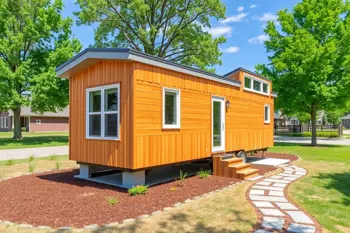
Site preparation is a highly variable expense that is rarely included in the manufacturer's base price 10. Excavation, soil testing, and engineering assessments can add substantial costs 1. Standard utility hookups for electricity, municipal water, and sewer lines can range from several thousand dollars to over ten thousand dollars, depending on the distance from the nearest connection point 11. If public sewer lines are unavailable, installing a private septic system will add further expenses 1.
Navigating Financing Options and Mortgage Barriers
Financing a modular tiny home is different than securing a standard mortgage for a pre-existing home 12. Because modular homes are built to local state building codes and installed on permanent foundations, they are legally eligible for conventional mortgages once construction is complete 1, 2. However, during the build phase, buyers typically need a specialized construction-to-permanent loan, which transitions into a standard mortgage after the home receives its certificate of occupancy 10.
Lenders and appraisers can still present challenges in conservative financial markets 1. Traditional mortgage lenders often require minimum loan amounts or home sizes that compact modular homes do not meet, forcing buyers to seek specialized lenders, personal loans, or manufacturer-sponsored financing 1, 12. Researching financing partners who are familiar with factory-built housing models early in the process is highly recommended 1.
Logistical Complexities of Transport and Installation
The journey from the factory to the permanent site is a critical phase of modular home ownership 2, 9. Moving oversized structural sections across state lines requires compliance with state-specific transport rules, including overweight permits and designated hauling hours 13. Professional transportation services must manage these logistics, coordinate route escorts, and secure the necessary state and local permits before departure 13.
Once the components arrive at the destination, installation requires local coordination 10. A crane operator must lift the modules from the transport trailer and set them precisely onto the pre-built permanent foundation 2. Local contractors must then seal the connections, complete the utility tie-ins, and finish any interior structural joins 10. This multi-step process requires synchronized planning between the factory shipping department, the delivery driver, and the local site crew 10.
Long-Term Management: Property Taxes, Insurance, and Warranties
Once a modular tiny home is installed, annual operating costs like property taxes and insurance depend directly on its legal classification 14. Because a modular home is fixed to land on a permanent foundation, it is assessed as real property, meaning you will pay local real estate taxes based on the combined value of the land and the structure 2, 14. This differs from vehicles or homes on wheels, which are taxed under personal property rules 3, 14.
Insurance coverage must also align with the home's building standard 15. Standard homeowners insurance policies apply to modular homes because they meet local IRC codes, whereas homes on wheels require specialized RV or specialty personal property policies 3, 15. Finally, buyers should verify the manufacturer's warranty coverage terms 10. Understanding who is responsible for structural, plumbing, or electrical defects after delivery ensures that any post-installation repairs are resolved quickly and correctly 10.
Sources
- https://keystonesandrivets.com/tiny-modular-homes-the-complete-guide-to-affordable-flexible-living-in-2026/
- https://www.qtoestimating.com/modular-home-construction-costs/
- https://prefabricatedtinyhomes.com/articles/top-things-to-consider-before-you-buy-prefabricated-tiny-homes
- https://tinyhomestate.com/tiny-home-builders/south-carolina/
- https://www.jackcooper.com/is-it-worth-investing-money-in-a-modular-house/
- https://moduulize.com/can-you-put-a-modular-home-on-any-land/
- https://www.thedecorholic.com/amazon-tiny-home-your-complete-buying-guide/
- https://www.planning.org/knowledgebase/tinyhomes/
- https://echelontinyhomes.com/tiny-home-delivery-guide/
- https://tenants.site/buying-a-modular-or-prefab-home-a-practical-guide-for-renter
- https://grillcoinc.com/tiny-house-purchase-your-complete-guide-to-buying-smart-in-2026/
- https://www.earnest.com/blog/so-you-want-to-buy-a-tiny-house
- https://ops.fhwa.dot.gov/freight/sw/oversize.htm
- https://www.hud.gov/program_offices/housing/rmra/mhs/faq
- https://content.naic.org/consumer-information/homeowners-insurance
Authored by 24Trendz team