Budget-friendly way to buy smartphones: A Consumer's Analytical Guide to Paying Less in 2026
Why Smartphone Prices Keep Rising and What That Means for Buyers
The era of flagship phones priced below $700 is largely over. According to reporting from Android Police, crucial hardware components such as RAM and storage have been hit by price increases driven by the AI sector's demand for memory, and the smartphone market's stockpile buffer that delayed consumer-facing price hikes is running out. 1 Projections suggest budget phones will see price increases of approximately $30, while flagship devices may rise by $100 to $200 per unit. 1 For buyers who want capable hardware without absorbing those increases, understanding the full landscape of acquisition strategies is increasingly important.
The definition of a cost-conscious smartphone purchase has also evolved. Industry analysts now define the category not by the lowest sticker price alone, but by cost per functional year. A $199 device that receives four years of OS updates and lasts 36 months in daily use delivers stronger value than a $249 model abandoned after 18 months due to slow performance or discontinued security patches. 2 That analytical framework shapes every strategy discussed below.
The Certified Refurbished Market: Scale, Grading, and Realistic Savings
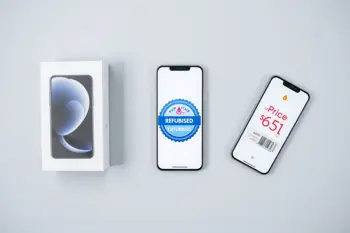
The refurbished smartphone market has undergone a structural shift toward legitimacy over the past several years. Refurbished phones now account for 19% of all smartphone sales in France, up from 13% in 2022, and platforms such as Back Market are now valued at over €5 billion. 3 Major refurbishers now offer 12 to 24 months of warranty coverage as a standard practice, a significant change from earlier years when the category lacked quality controls. Certified refurbished programs from manufacturers such as Apple and Samsung provide factory-inspected devices with verified warranties, and third-party platforms like Back Market, Gazelle, and Swappa enforce grading and listing standards that make cosmetic condition predictable before purchase.
Savings in this channel are substantial and well-documented. Buyers can realistically expect to pay 30% to 50% less than the original retail price for a device that is 12 to 18 months old. 3 Concrete examples from market data illustrate the scale: an iPhone 14 refurbished has been observed at approximately €301 compared to €700-plus new, and a Galaxy S24 Ultra refurbished at roughly €723 versus €1,200-plus new. 3 Platforms like Swappa operate on a peer-to-peer model with strict listing enforcement, which frequently results in lower prices than refurbisher retail markups. 4 Buyers should verify battery health minimums (typically 80% or above), confirm whether the device is carrier-unlocked, and review the return window before purchasing from any platform.
New Budget Smartphones: What the $199 to $499 Range Actually Delivers in 2026
The new budget segment has improved meaningfully. The Samsung Galaxy A17 5G, priced at $199 at launch, ships with a 6.7-inch Super AMOLED display at 90Hz, a 50MP primary camera with optical image stabilization, a 5,000mAh battery supporting 25W wired charging, and Samsung's commitment to six years of operating system and security updates through One UI. 5 Wirecutter's testing independently named the Galaxy A17 5G a top budget pick, citing its vivid display, battery endurance, and software support through 2031. 6 The phone's Exynos 1330 chipset is not class-leading, and its 4GB of RAM will produce noticeably slower multitasking than mid-range or flagship alternatives.
At the upper end of the budget tier, Google's Pixel 10a at $499 pairs a Tensor G4 processor, a 6.3-inch 120Hz OLED display, a 48MP main camera, and guaranteed Android updates through 2032. 7 The Apple iPhone 17E, priced at $599, enters this conversation as the most accessible new iOS device, carrying an A18 processor and a 6.1-inch OLED display but omitting MagSafe and an ultrawide camera. 8 The Moto G Power 2026, noted for its IP69 rating and multi-day battery endurance, sits at $299 and targets buyers for whom battery life is the primary variable. 2
Carrier Structures, MVNOs, and the Real Cost of Installment Plans
Major US carriers routinely advertise smartphones at dramatically reduced prices, but the actual cost structure requires scrutiny. Installment-based carrier promotions often spread the device cost across 24 to 36 months and tie the buyer to a specific plan for the full term. Wired's analysis noted that a Samsung Galaxy S26 Ultra advertised at $36 per month over 36 installments results in spending more than $1,000 on the device, and the phone may remain locked to the carrier network until the balance is paid. 9 Trade-in eligibility requirements are frequently restrictive; major carriers such as Verizon and T-Mobile commonly require a qualifying trade-in device to access advertised promotional pricing, making the effective savings conditional on owning an eligible prior device. 4
Mobile Virtual Network Operators (MVNOs) present a structurally different cost model. Because MVNOs lease network capacity from major carriers rather than operating physical retail infrastructure, their service plans carry lower overhead. Klarna Mobile, running on AT&T's network, offers an unlimited 5G plan at $35 per month with no activation fees, compared to $90 per month for Verizon's Unlimited Ultimate and $95 per month for T-Mobile's comparable tier. 10 Pairing an unlocked budget device purchased outright with an MVNO plan avoids long-term contracts and provides flexibility to switch carriers. Buyers should verify that an unlocked device supports the specific frequency bands used by their chosen MVNO before purchasing.
Trade-In Programs and Open-Box Units as Cost-Reduction Tools
Manufacturer and retailer trade-in programs represent one of the most direct mechanisms for reducing the out-of-pocket cost on a new device. Apple's Trade In program provides instant credit toward eligible iPhone purchases based on the condition of the surrendered device. Samsung's US trade-in program applies credit at the point of sale when buying directly from Samsung. Google Store similarly allows trade-in value to be applied toward new Pixel purchases. 4 The credit amounts vary by device condition and model, and buyers should check trade-in estimates across multiple channels, including Best Buy's Trade-In program, before committing to a single vendor, as valuations differ.
Open-box units available through major retailers such as Best Buy represent another underutilized channel. These are customer-returned devices that remain in near-original condition but are resold at a discount relative to sealed-box units. Clearance sections on retailer websites sometimes feature open-box smartphones from recent model years at prices that overlap with certified refurbished offerings, but with the added assurance of the retailer's return policy. The key risk in this channel is variability: condition, included accessories, and remaining warranty coverage differ by unit, so inspecting listed details carefully before purchase is essential.
Risks, Limitations, and Factors That Affect Long-Term Value
Every cost-reduction strategy carries friction points that buyers should evaluate objectively. Refurbished devices, even from certified programs, carry residual risks including shorter remaining software support windows if the base model is more than two years old. A refurbished phone with only one or two years of remaining OS support may become a security liability faster than a new budget model with a full support commitment. Battery health is another material variable; reputable refurbishers publish battery health minimums, but degraded batteries in devices purchased through informal channels may require replacement, adding cost that erodes the initial savings.
Carrier-tied promotions impose plan lock-in that limits flexibility if service quality or pricing changes. Buyers who switch carriers before completing a device installment plan typically forfeit remaining bill credits and may owe the unpaid device balance. Peer-to-peer marketplaces like Swappa require buyers to verify IMEI status independently to confirm a device has not been reported lost or stolen, as fraudulent listings, while controlled by platform policies, are not eliminated entirely. Finally, one-generation-old flagship devices purchased refurbished may lack hardware features such as the latest modem standards or camera sensor generations, which matters most for buyers in regions where newer network bands are being actively deployed.
Sources
- Android Police - You should start buying refurbished phones, here's why (androidpolice.com)
- Alibaba Electronics Buying Guide - Cheapest Smartphones Guide: How to Choose Wisely in 2026 (electronics.alibaba.com)
- Upgrade Verdict - Refurbished vs New Phone in 2026: The Truth Nobody Tells You (upgradeverdict.com)
- LLM General Research - Trade-in programs, Swappa peer-to-peer marketplace, and carrier eligibility conditions
- Digital Trends - Samsung's new budget Galaxy phone brings 5G and long-term support at $199 (digitaltrends.com)
- The New York Times Wirecutter - The Best Budget Android Phone of 2026 (nytimes.com/wirecutter)
- Wired - The Best Cheap Phones for Almost Every Budget (wired.com)
- CNET - Best Cheap Phone of 2026 (cnet.com)
- Wired - The Best Cheap Phones for Almost Every Budget, carrier installment analysis (wired.com)
- Klarna Mobile - Unlimited phone plan comparison (klarna.com)
Authored by 24Trendz team