Achieve Clearer Skin: The Power of Laser Treatment for Dark Spots and Pigmentation
Facts:
- Laser treatment for dark spots is a leading solution for skin tone concerns.
- Demand for effective pigmentation removal procedures is steadily increasing for aesthetic improvement.
Understanding Laser Treatment for Dark Spots and Pigmentation
Laser treatment for dark spots and pigmentation has revolutionized the approach to achieving a more even and radiant skin tone. This advanced dermatological procedure specifically targets melanin deposits responsible for conditions such as sun spots, age spots, melasma, and other forms of hyperpigmentation. By utilizing concentrated light energy, lasers break down the excess pigment into smaller particles, which the body's natural processes then eliminate. The effectiveness and precision of modern laser technologies allow for significant improvements in the appearance of various types of skin discoloration, offering a non-invasive or minimally invasive alternative to more traditional methods. Patients seeking to address persistent dark spots often find laser therapy to be a highly effective and long-lasting solution, significantly enhancing their skin's clarity and overall aesthetic appeal.
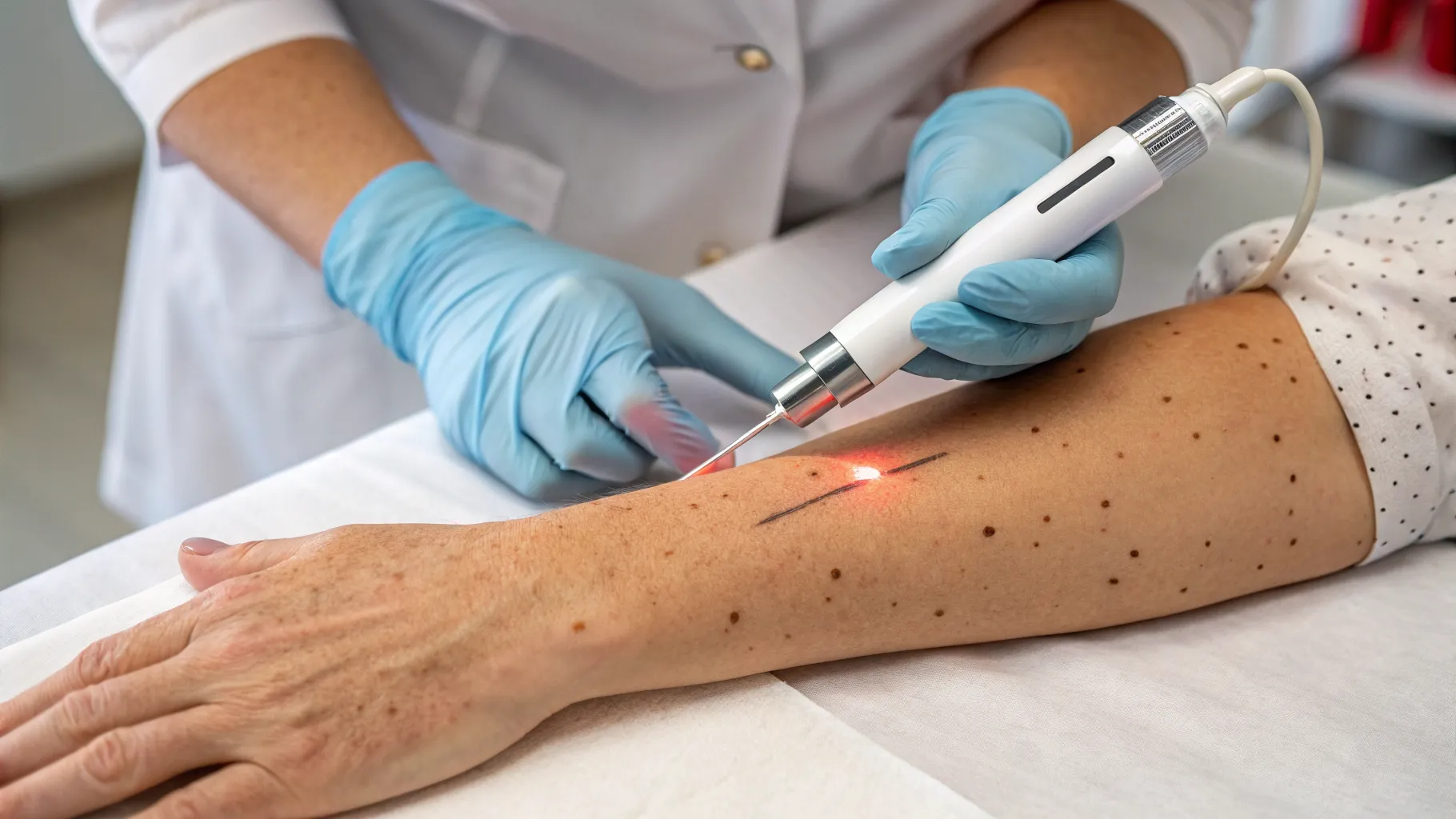
Types of Laser Skin Treatment for Hyperpigmentation
There are several types of laser skin treatment tailored to address different forms and severities of hyperpigmentation and dark spots. Each laser operates on a specific wavelength designed to target melanin without causing extensive damage to surrounding healthy tissue. Understanding the distinctions between these technologies is crucial for determining the most appropriate and effective treatment plan for individual skin concerns. The choice often depends on the type of pigmentation, skin type, and desired outcome, ensuring a customized approach to pigmentation removal.
Ablative Lasers for Deep Skin Discoloration
Ablative lasers, such as CO2 and Er:YAG lasers, work by removing the outer layers of the skin, effectively vaporizing the pigmented cells. This process stimulates the growth of new, healthy skin cells and significantly reduces the appearance of deep skin discoloration and severe dark spots. While highly effective, ablative lasers require a longer recovery period due to the removal of skin layers, making them suitable for individuals with more stubborn pigmentation and those willing to undergo a more intensive treatment. The results from ablative laser treatment for dark spots are typically dramatic and long-lasting, providing significant improvement in skin texture and tone.
Non-Ablative Lasers for Moderate Hyperpigmentation
Non-ablative lasers, including Q-switched lasers, picosecond lasers, and some fractional lasers, penetrate the skin without removing the top layer. Instead, they heat the underlying tissue, targeting the melanin pigment and stimulating collagen production. This results in a gradual lightening of dark spots and improved skin tone with minimal downtime. Non-ablative laser treatment for dark spots is ideal for individuals with moderate hyperpigmentation who prefer a less invasive option with a quicker recovery. Multiple sessions are often required to achieve optimal results, as the treatments are gentler and more gradual.
Pulsed-Dye Lasers for Vascular Pigmentation
Pulsed-Dye Lasers (PDL) are primarily used to treat vascular lesions, but they can also be effective for certain types of pigmentation that have a vascular component, such as post-inflammatory erythema. These lasers emit a concentrated beam of light that is absorbed by oxyhemoglobin in red blood cells, which can help in reducing redness associated with some dark spots. While not the primary choice for melanin-based pigmentation removal, PDLs can play a complementary role in achieving a uniformly clear complexion, especially when dealing with complex cases of skin discoloration.
The Science Behind Pigmentation Removal: How Lasers Work
The efficacy of laser treatment for dark spots hinges on the principle of selective photothermolysis. This scientific concept means that a specific wavelength of light is chosen to target a particular chromophore—in the case of pigmentation, melanin—while minimizing damage to surrounding tissues. When the laser energy is absorbed by the melanin in the dark spot, it converts into heat, which shatters the pigment into microscopic particles. These tiny fragments are then naturally processed and eliminated by the body's lymphatic system over several weeks. The precision of modern laser skin treatment allows for highly targeted action, ensuring that only the pigmented areas are affected, leading to effective and safe pigmentation removal. This sophisticated mechanism is what makes lasers an indispensable tool in dermatology for treating various forms of hyperpigmentation.
Preparing for Your Laser Treatment for Dark Spots Session
Proper preparation is crucial for ensuring the safety and effectiveness of your laser treatment for dark spots session and for minimizing potential side effects. Adhering to pre-treatment guidelines provided by your dermatologist can significantly impact your results and recovery. This proactive approach helps the skin respond optimally to the laser energy, leading to better pigmentation removal outcomes and a smoother healing process. Always discuss any medications, supplements, or medical conditions with your practitioner during your consultation to tailor the preparation steps specifically for you.
- Avoid Sun Exposure: Stay out of direct sunlight and refrain from tanning (including artificial tanning beds) for at least 4-6 weeks before your laser skin treatment. Sun exposure can increase the risk of side effects like hyperpigmentation or hypopigmentation.
- Discontinue Certain Medications: Your dermatologist may advise you to stop taking certain medications, such as aspirin, ibuprofen, blood thinners, or photosensitizing drugs, for a specified period before the procedure to reduce bruising and light sensitivity.
- Avoid Topical Products: Discontinue the use of retinoids, alpha hydroxy acids (AHAs), and other irritating topical products on the treatment area for at least one week prior to your laser treatment for dark spots. These products can make your skin more sensitive.
- Cleanse Skin Thoroughly: On the day of your appointment, ensure your skin is clean and free of makeup, lotions, creams, perfumes, and any self-tanning products in the treatment area.
- Inform Your Doctor: Provide your dermatologist with a complete medical history, including any previous treatments for skin discoloration, current medications, allergies, and any history of cold sores, as antiviral medication may be prescribed.
Post-Treatment Care and Expected Results for Skin Discoloration
After undergoing laser treatment for dark spots, diligent post-treatment care is essential for optimal healing and achieving the best possible results. The treated area may appear red, swollen, or slightly bruised, and the dark spots might temporarily darken before flaking off. This is a normal part of the pigmentation removal process. Following your dermatologist's instructions meticulously will help prevent complications and accelerate recovery, ensuring the successful resolution of skin discoloration. Protecting your skin from sun exposure post-treatment is paramount to maintaining the clarity achieved by the laser therapy and preventing new dark spots from forming.
Patients can expect a gradual fading of dark spots over several weeks as the body naturally eliminates the shattered pigment particles. The number of sessions required for complete pigmentation removal varies depending on the type and depth of the dark spots, as well as the individual's skin type and response to the laser skin treatment. Most individuals achieve significant improvement after a series of treatments. Long-term results are best maintained by consistently protecting the skin from sun exposure, using broad-spectrum sunscreen, and adhering to a personalized skincare regimen. Regular follow-up appointments with your dermatologist can help monitor progress and address any new concerns regarding hyperpigmentation.
Frequently Asked Questions
Is laser treatment for dark spots painful?
Most patients describe the sensation of laser treatment for dark spots as a rubber band snapping against the skin. Discomfort is usually minimal and temporary, often managed with topical numbing cream applied before the procedure. Newer laser technologies are designed to be more comfortable, and many clinics use cooling devices during the treatment to enhance patient comfort.
How many sessions of pigmentation removal are needed?
The number of pigmentation removal sessions required varies widely based on the type, size, depth, and color of the dark spots, as well as the laser technology used and individual skin response. On average, patients may need anywhere from 2 to 6 sessions, typically spaced 3-4 weeks apart, to achieve optimal results for their skin discoloration.
What are the side effects of laser skin treatment?
Common side effects of laser skin treatment include temporary redness, swelling, and mild discomfort, which usually subside within a few days. Less common side effects can include blistering, scabbing, temporary darkening of the treated spot before it fades, or changes in skin pigmentation (either lightening or darkening), especially if proper aftercare or sun protection is not followed. Serious complications are rare when performed by a qualified professional.
How long does recovery take after laser treatment for dark spots?
Recovery time for laser treatment for dark spots depends on the type of laser used. Non-ablative treatments typically have minimal downtime, with redness and swelling lasting a few hours to a couple of days. Ablative laser treatments, which are more intensive, may require a longer recovery period, potentially up to 1-2 weeks, during which the skin will heal and new skin cells will emerge.
Can hyperpigmentation return after laser treatment?
While laser treatment for dark spots effectively removes existing pigmentation, new hyperpigmentation can develop if the skin is not adequately protected from sun exposure post-treatment. Consistent use of broad-spectrum sunscreen, protective clothing, and avoidance of direct sun are crucial to prevent new dark spots from forming and maintain the results of your laser skin treatment.
References
- American Academy of Dermatology Association. Laser treatment for dark spots.
- Journal of Clinical and Aesthetic Dermatology. Advances in laser and light-based therapies for pigmentation.
- Mayo Clinic. Laser resurfacing: What to expect.
- Dermatologic Surgery. The use of Q-switched lasers for benign pigmented lesions.
Authored by 24Trendz team