Discovering Your Perfect Match: A Guide to Hearing Aid Styles for Your Daily Routine
Facts:
- Modern hearing aids offer diverse solutions for hearing loss.
- Technological advancements for hearing aid styles improve user experience.
Navigating the World of Modern Hearing Aid Styles
Choosing the right auditory solution is a crucial step towards enhancing your hearing and improving your quality of life. The landscape of available hearing aid styles is vast and continually evolving, offering personalized options to suit various degrees of hearing loss, aesthetic preferences, and lifestyle requirements. Understanding these different styles is paramount in making an informed decision that seamlessly integrates into your daily routine integration, ensuring comfort, clarity, and confidence. From discreet, nearly invisible devices to powerful models designed for severe hearing loss, each style presents a unique set of features and benefits that directly impact your auditory experience. This comprehensive guide aims to demystify the options, helping you identify the most suitable hearing aid styles for your individual needs and lifestyle.
Understanding the Primary Categories of Hearing Aids
The classification of hearing aid styles primarily revolves around their placement on or within the ear, influencing their size, power, battery life, and visibility. Each category is designed with specific users in mind, addressing a spectrum of hearing needs and personal preferences for daily routine integration. Delving into these distinct types provides a clearer picture of what to expect from each option, aiding in your journey towards optimal hearing.
Behind-the-Ear (BTE) Hearing Aids
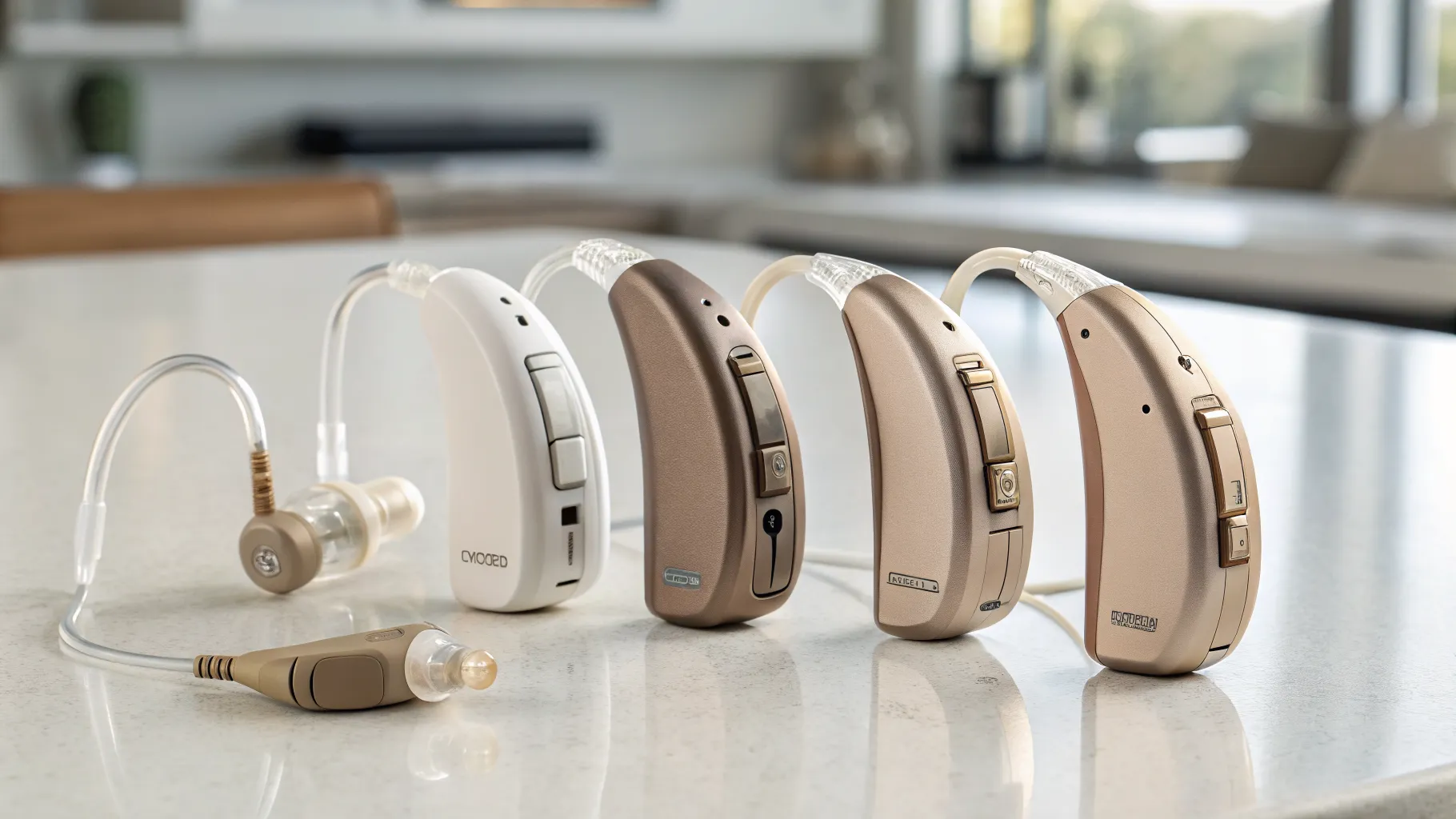
Behind-the-ear (BTE) hearing aids are among the most common and versatile hearing aid styles, characterized by their casing resting behind the outer ear, connected to an earmold or thin tube that directs sound into the ear canal. These devices are known for their robustness, power, and ability to accommodate a wide range of hearing loss, from mild to profound. Their larger size allows for bigger batteries, longer battery life, and more features such as directional microphones and telecoils, which are beneficial for diverse listening environments. BTE models are often chosen for children due to their durability and the ease with which earmolds can be replaced as the child grows. For adults, their ease of handling and robust nature make them a reliable choice, especially for those with dexterity issues or specific daily routine requirements that demand a powerful and resilient device. The flexibility of BTE designs also means they can be adapted with various earmold types, offering personalized comfort and sound delivery. Their adaptability ensures seamless daily routine integration for many users.
In-the-Ear (ITE) Hearing Aids
In-the-ear (ITE) hearing aids are custom-made devices that fit directly into the outer ear bowl. These hearing aid styles are often preferred for their balance of discretion and functionality, being less visible than BTE models while still offering a substantial array of features. ITE hearing aids come in two main types: full shell, which fills most of the outer ear bowl, and half shell, which fills only the lower part. The larger size of ITE aids compared to smaller in-canal options allows for more features, including volume controls and program buttons, and larger batteries for longer use. They are suitable for individuals with mild to severe hearing loss and are particularly popular among those who desire a less conspicuous device without sacrificing performance. Their custom fit ensures comfort and secure placement, making them an excellent choice for active individuals seeking a reliable solution for their daily routine integration.
In-the-Canal (ITC) and Completely-in-Canal (CIC) Hearing Aids
Moving towards more discreet options, in-the-canal (ITC) hearing aids and completely-in-canal (CIC) hearing aids offer a significant step up in terms of invisibility. ITC devices fit within the ear canal but are still slightly visible, while CIC devices are almost entirely hidden within the ear canal, making them practically unnoticeable to others. These hearing aid styles are custom-made to fit the unique contours of the user's ear canal, providing a snug and comfortable fit. Their smaller size means they might have fewer features and shorter battery life compared to BTE or ITE models, and they may not be suitable for severe hearing loss due to power limitations. However, for individuals prioritizing aesthetics and discretion, particularly for social or professional settings, ITC and CIC aids are an excellent choice. Their discrete nature allows for confident daily routine integration without drawing attention to the device itself.
Invisible-in-Canal (IIC) Hearing Aids
The pinnacle of discreet hearing aid styles is the invisible-in-canal (IIC) hearing aids. These are the smallest custom-made devices available, designed to fit deep within the ear canal, making them virtually undetectable. IIC aids are an ideal option for those who prioritize absolute invisibility, making them perfect for individuals with an active social life or professions where appearance is critical. Due to their minuscule size, IIC hearing aids typically have the shortest battery life and may not accommodate features like directional microphones or manual controls. They are generally recommended for mild to moderate hearing loss. Despite their limitations in features and power, their unmatched discretion and comfort make them a highly desirable choice for individuals whose daily routine integration depends on a truly hidden solution.
Receiver-in-Canal (RIC) Hearing Aids
Receiver-in-canal (RIC) hearing aids, also sometimes called RITE (receiver-in-the-ear), represent a modern hybrid approach to hearing aid styles. Similar to BTE aids, the main casing sits behind the ear, but instead of a sound tube, a thin electrical wire connects to a miniature receiver (speaker) that sits directly in the ear canal. This design allows for a smaller behind-the-ear unit and often provides a more natural sound quality because the speaker is closer to the eardrum. RIC aids are extremely popular due to their small size, comfortable open fit (which reduces the occluded feeling), and versatility for mild to severe hearing loss. They are less visible than traditional BTEs and often include advanced features like Bluetooth connectivity and rechargeable batteries, making them highly adaptable for seamless daily routine integration across various listening environments.
Choosing Hearing Aids: Matching Style to Your Lifestyle
When it comes to choosing hearing aids, the decision extends beyond simply addressing your hearing loss; it's about finding a device that complements your lifestyle, personal preferences, and the demands of your daily routine integration. Consider an active individual who frequently exercises or participates in sports; a durable, sweat-resistant BTE or a secure, custom-fit ITE might be more appropriate than a tiny IIC that could be dislodged or affected by moisture. Conversely, someone in a professional setting who values discretion above all else might gravitate towards CIC or IIC styles, even if it means sacrificing some advanced features or battery life. The degree of your hearing loss is also a critical factor; severe or profound hearing loss often necessitates the power and capabilities of larger BTE or RIC models. Battery life considerations are important for those with long workdays or limited access to charging, favoring larger styles or rechargeable options. Ultimately, the best hearing aid styles will seamlessly blend into your life, enhancing communication without adding burden or discomfort. Consult with an audiologist to assess your specific hearing needs and discuss which styles best align with your personal and professional life, ensuring a truly tailored and effective solution for your unique daily routine integration.
Practical Advice for Daily Routine Integration
- Understand Your Needs: Before choosing hearing aids, get a comprehensive hearing test. This will determine the type and severity of your hearing loss, guiding you towards appropriate hearing aid styles.
- Consider Your Lifestyle: Reflect on your typical day. Are you active? Do you attend many meetings? Is discretion a priority? Your answers will help narrow down the best hearing aid styles for your daily routine integration.
- Trial Different Styles: Many audiologists offer trial periods. Take advantage of this to experience different hearing aid styles in your everyday environments. This hands-on experience is invaluable for making an informed decision.
- Prioritize Comfort: Regardless of the style, comfort is paramount. An uncomfortable hearing aid will likely be left unused. Ensure the fit is snug but not painful, especially for custom-molded devices.
- Explore Features: Modern hearing aid styles come with a plethora of features like Bluetooth connectivity, rechargeability, directional microphones, and noise reduction. Discuss which features are most beneficial for your specific needs and daily routine integration.
- Plan for Maintenance: All hearing aids require regular cleaning and maintenance. Consider which hearing aid styles are easiest for you to handle and maintain, especially if you have dexterity challenges.
- Seek Professional Guidance: Work closely with an experienced audiologist. They can provide personalized recommendations, fit your devices properly, and offer ongoing support and adjustments to ensure optimal performance.
Frequently Asked Questions
What are the most discreet hearing aid styles?
The most discreet hearing aid styles are the Invisible-in-Canal (IIC) and Completely-in-Canal (CIC) aids. These devices are custom-made to fit deep within the ear canal, making them virtually unnoticeable to others, ideal for those prioritizing aesthetics in their daily routine integration.
Are rechargeable hearing aid styles available for all types?
While rechargeable technology is rapidly advancing, it is most commonly found in Behind-the-Ear (BTE), Receiver-in-Canal (RIC), and some In-the-Ear (ITE) hearing aid styles. Smaller models like IIC and CIC often have limitations due to battery size constraints, though options are expanding.
How do I know which hearing aid styles are best for my daily routine integration?
The best way to determine the ideal hearing aid styles for your daily routine integration is to consult with an audiologist. They will assess your hearing loss, discuss your lifestyle, and help you try out different options to find the perfect match for comfort, functionality, and aesthetic preference.
References
- World Health Organization (WHO) reports on hearing loss solutions.
- Audiology industry journals and publications on hearing aid technology.
- Clinical studies on user satisfaction with various hearing aid types.
- Guidelines from national hearing health associations regarding hearing aid selection.
- Research on the impact of hearing aid use on quality of life and daily activities.
Authored by 24Trendz team