Common Skin Cancer Indicators and Red Flags for Early Detection
Facts:
- Skin cancer is the most common cancer globally.
- Incidence of **melanoma detection** is rising, especially in younger demographics.
Recognizing the Early Signs of Skin Cancer
Understanding the **common skin cancer indicators** is paramount for proactive health management. Early recognition of **skin changes** and potential red flags can significantly improve outcomes and save lives. This guide will delve into what to look for, distinguishing benign concerns from those requiring immediate medical attention. We will explore key visual cues and provide practical advice for self-examination and when to consult a dermatologist, emphasizing the importance of **early detection skin cancer**.
Understanding Different Types of Skin Cancer and Their Manifestations
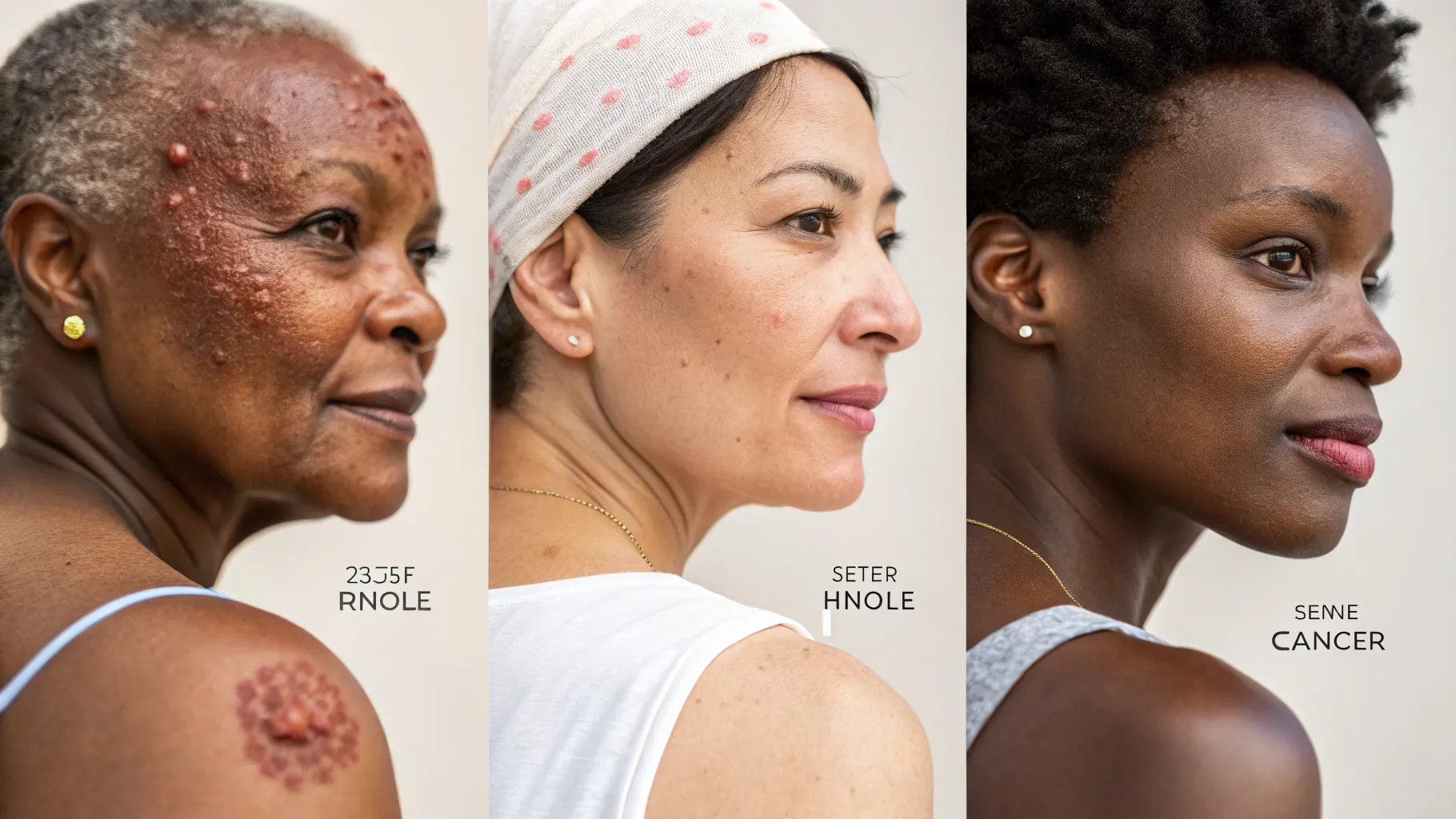
Skin cancer isn't a single disease; it encompasses several types, each with its own set of characteristics and common presentations. The most prevalent forms include basal cell carcinoma (BCC), squamous cell carcinoma (SCC), and melanoma. Each of these requires a keen eye for different **skin cancer signs**. BCC often appears as a pearly or waxy bump, sometimes with visible blood vessels, or a flat, flesh-colored or brown scar-like lesion. SCC frequently manifests as a firm, red nodule or a flat, scaly, crusted lesion. Melanoma, while less common, is the most aggressive and is characterized by its irregular appearance, often arising from existing **unusual moles** or appearing as new, dark lesions. Recognizing these distinctions is crucial for effective **melanoma detection** and identifying other forms of **skin cancer signs** promptly. Every individual should be aware of how these various types can present themselves, as atypical presentations are not uncommon, making vigilance regarding any **skin changes** essential.
The ABCDEs of Melanoma: A Critical Self-Check Guide
The ABCDE method is a widely recognized tool for identifying potential melanoma, focusing on specific characteristics of **unusual moles** and other pigmented lesions. This mnemonic helps individuals systematically evaluate their skin for suspicious **skin cancer signs**. 'A' stands for Asymmetry, meaning one half of the mole doesn't match the other. 'B' is for Border, referring to irregular, ragged, notched, or blurred edges. 'C' is for Color, indicating moles with uneven coloration, shades of brown, black, tan, white, red, or blue. 'D' is for Diameter, where moles larger than 6 millimeters (about the size of a pencil eraser) are concerning. Finally, 'E' is for Evolving, noting any **skin changes** in size, shape, color, elevation, or any new symptoms like bleeding, itching, or crusting. Regularly performing self-checks using the ABCDE guide is a vital component of **early detection skin cancer** and significantly aids in timely **melanoma detection**.
Basal Cell Carcinoma: What to Look For Beyond Moles
Basal cell carcinoma (BCC) is the most common type of skin cancer, often appearing in sun-exposed areas like the face, neck, and arms. While not typically life-threatening, it can be disfiguring if not treated early. The **skin cancer signs** for BCC differ from melanoma and often don't involve pigmented **unusual moles**. Instead, look for a pearly or waxy bump that might be translucent, allowing you to see tiny blood vessels through it. It might also present as a flat, flesh-colored or brown lesion resembling a scar, or a bleeding, crusting sore that heals and then reappears. Sometimes, BCC can appear as a red or pink patch that is itchy or tender. These subtle **skin changes** might be easily overlooked, emphasizing the need for thorough skin examinations, especially if you have a history of sun exposure. Proactive observation of these specific **skin cancer signs** is key for **early detection skin cancer**.
Squamous Cell Carcinoma: Spotting Rough, Scaly Patches
Squamous cell carcinoma (SCC) is the second most common type of skin cancer and is also primarily caused by cumulative UV exposure. SCC commonly manifests on sun-exposed skin, such as the face, ears, lips, and back of the hands, but can also appear in other areas. Key **skin cancer signs** for SCC include a firm, red nodule that may grow rapidly, or a flat lesion with a scaly, crusted surface that may bleed or itch. Unlike BCC, SCC can be more aggressive and has a higher risk of spreading if not treated early. Be vigilant for any persistent, non-healing sores or lesions that might be tender to the touch. These types of **skin changes** are critical red flags. Regular self-examination and professional skin checks are essential for identifying these **skin cancer signs** early, contributing significantly to **early detection skin cancer** efforts.
Beyond the Obvious: Less Common but Important Skin Changes
While BCC, SCC, and melanoma cover the majority of skin cancer cases, it's important to be aware of other, less common **skin cancer signs** and types, and general **skin changes** that warrant attention. These include Merkel cell carcinoma, Kaposi's sarcoma, and sebaceous gland carcinoma, among others. These might present as rapidly growing, firm, dome-shaped, or shiny lesions (Merkel cell), purplish lesions on the skin (Kaposi's), or yellowish, firm nodules (sebaceous gland). Any new or evolving lesion, especially one that doesn't fit the typical descriptions of benign conditions, should be considered suspicious. Particular attention should be paid to lesions in areas not typically exposed to the sun, or those that are painful, itchy, or bleeding without clear cause. The overarching principle for **early detection skin cancer** is to be aware of your skin's normal appearance and to promptly investigate any persistent or concerning **skin changes** with a healthcare professional. While **melanoma detection** often focuses on pigmented lesions, non-pigmented lesions also require thorough evaluation.
Proactive Steps for Skin Health and Early Detection
- Regular Self-Examinations: Dedicate time each month to perform a full-body skin check. Use a mirror to inspect hard-to-see areas. Look for new growths, or any **skin changes** in existing moles, freckles, and blemishes, keeping the ABCDEs in mind for **melanoma detection**.
- Professional Skin Screenings: Schedule annual visits with a dermatologist, especially if you have a high risk of skin cancer (e.g., fair skin, history of severe sunburns, many **unusual moles**, or a family history of skin cancer). These professional checks are vital for **early detection skin cancer**.
- Sun Protection Practices: Limit exposure to UV radiation by seeking shade, wearing protective clothing, hats, and sunglasses, and applying broad-spectrum sunscreen with an SPF of 30 or higher daily. Sun protection is the primary prevention against developing new **skin cancer signs**.
- Know Your Skin: Be familiar with your own unique pattern of moles and blemishes. Take photos of your skin to track **skin changes** over time. This personal knowledge is your first line of defense against the **common skin cancer indicators**.
- Promptly Address Concerns: Do not delay if you notice any suspicious **skin changes**. Consult a doctor or dermatologist immediately for any lesion that bleeds, doesn't heal, or shows characteristics of **skin cancer signs**. Early intervention is critical for effective treatment.
Frequently Asked Questions
What are the most common **skin cancer signs** I should look for?
The most common **skin cancer signs** include new growths, sores that don't heal, or changes in existing moles. For melanoma, use the ABCDE guide: Asymmetry, irregular Border, varied Color, Diameter greater than 6mm, and Evolving characteristics or **skin changes**.
Can **unusual moles** always be a sign of skin cancer?
Not all **unusual moles** are cancerous. Many people have benign atypical moles. However, any mole that is new, growing, changing in color or shape, or starts to itch or bleed should be examined by a dermatologist for proper **melanoma detection**.
How often should I check myself for **early detection skin cancer**?
It is recommended to perform a self-skin examination once a month. If you have a higher risk, your doctor may recommend more frequent checks. Regular checks are crucial for identifying **skin cancer signs** early.
Is **early detection skin cancer** truly effective in improving outcomes?
Absolutely. **Early detection skin cancer** is critical. When detected and treated early, skin cancers, especially melanoma, are highly curable. Delay in diagnosis allows the cancer to grow deeper or spread, making treatment more challenging and reducing survival rates.
What kind of doctor should I see if I notice concerning **skin changes**?
If you notice concerning **skin changes** or potential **skin cancer signs**, you should consult a dermatologist. They specialize in skin conditions and are best equipped to diagnose and treat skin cancer, including performing biopsies for **melanoma detection**.
References
- American Academy of Dermatology Association
- Skin Cancer Foundation
- National Cancer Institute
- Mayo Clinic Skin Cancer Overview
- World Health Organization UV Radiation and Skin Cancer Facts
Authored by 24Trendz team